Digital twins: Your gateway to smarter, connected operations
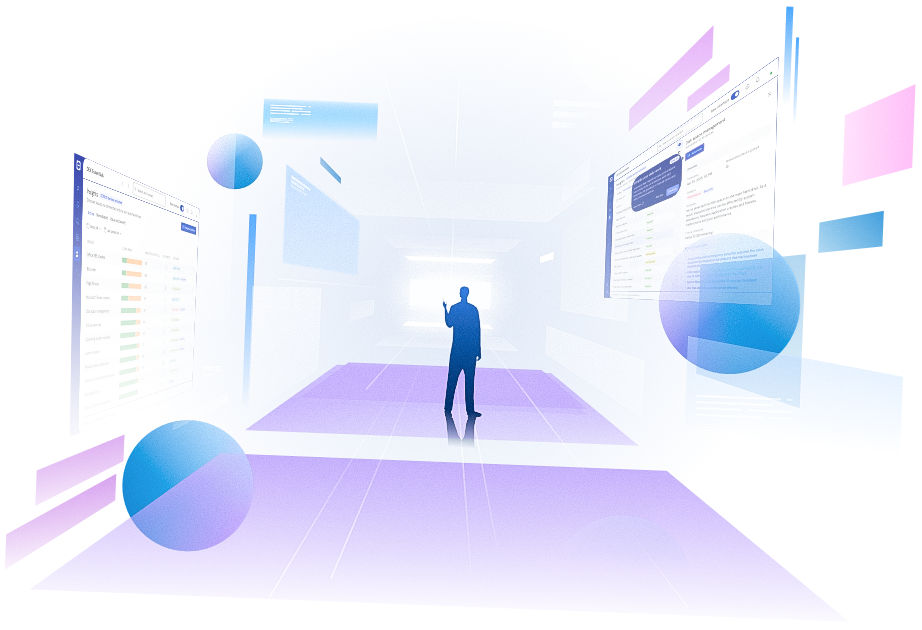
At its core, digital twin technology enables a seamless connection between the physical and digital worlds. The commonly accepted digital twin definition describes it as a dynamic, real-time virtual model of a physical asset, system, or process. It uses real-time data, simulation tools, and analytics to mirror the asset’s behavior and status. This could be a turbine, a factory floor, a vehicle fleet, or even an entire city grid.

Depending on its design and use case, a digital twin may receive and process data from its real-world counterpart through Internet of Things (IoT) sensors and other connected systems. It adapts to changes, detects anomalies, and can even simulate future scenarios. This combination of real-time feedback and predictive modeling can support better-informed decisions and help reduce risk long before physical intervention is needed.
Put simply, a digital twin provides a continuously updated view of physical infrastructure. It helps teams understand current conditions, test possible scenarios, and make informed decisions before changing the physical asset.
What makes a digital twin powerful is not just what it shows, but what it enables. Businesses can simulate future usage scenarios, optimize resource consumption, test responses to extreme conditions, and validate upgrades, all without making immediate changes to the physical asset.
This capability turns the digital twin into an always-on decision-support system that evolves along with the physical world.
This can help reduce maintenance costs, improve safety, and allow teams to focus on innovation rather than firefighting. The digital twin can provide a shared reference point across departments, helping break down data silos and improve collaboration.
When integrated with remote connectivity and augmented reality tools, digital twin data can also give technicians, engineers, and analysts more context when inspecting or maintaining physical assets, even when expert support is not available on site.
The future of digital twin technology is tightly intertwined with the rise of AI, edge computing, and 5G. As connectivity becomes faster and computing power moves closer to the asset, digital twins could become even more responsive, autonomous, and intelligent.
Future developments may include:

Digital twins could also play an increasingly important role in digital thread strategies.
This would help organizations connect information about products, processes, and decisions across the full lifecycle.
Getting started with digital twins doesn’t have to be complex. Begin with one asset, one process, or one site. Learn, iterate, and then scale.

Discover how digital twins can support training, workflows, and troubleshooting across complex industrial environments.
The four main types are:
No, a digital twin isn’t a form of artificial intelligence. It’s a virtual representation of a physical object, system, or process. However, it can use AI to process data, detect patterns, make predictions, and optimize decisions. AI can make digital twins smarter and more proactive, helping businesses simulate scenarios, prevent failures, and improve operations.
The maturity of a digital twin typically follows these stages: