Digital twins: Your gateway to smarter, connected operations
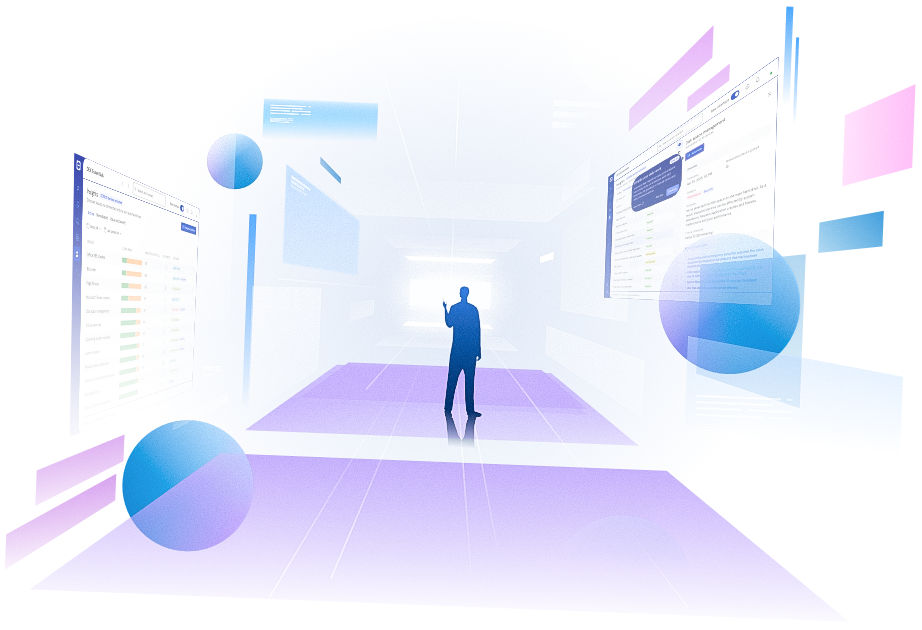
In today’s data-driven world, digital twins are emerging as a key technology that bridges the gap between physical systems and digital insights.


Whether you're optimizing factory floors, managing remote equipment, or designing the next smart city, digital twins can combine visibility, simulation capabilities, and predictive insights within a connected digital model.

Digital twins at a glance

  • Definition: A digital representation of a physical asset, system, or process that can be updated with data from its real-world counterpart
  • Core components: IoT data, 3D models, analytics, and simulation engines
  • Key benefits: Improved visibility, scenario testing, performance optimization, and, where supported by underlying systems, predictive maintenance
  • Industries using digital twins: Manufacturing, energy, healthcare, logistics, smart infrastructure
  • Why now? Advances in AI, connectivity, and data availability are making implementation more scalable and accessible

What is digital twin technology? 

At its core, digital twin technology enables a seamless connection between the physical and digital worlds. The commonly accepted digital twin definition describes it as a dynamic, real-time virtual model of a physical asset, system, or process. It uses real-time data, simulation tools, and analytics to mirror the asset’s behavior and status. This could be a turbine, a factory floor, a vehicle fleet, or even an entire city grid.

How digital twins are changing industries

Digital twins are no longer a futuristic concept limited to aerospace or automotive giants. They’re now being used across sectors to increase resilience, agility, and efficiency.

Manufacturing
  • Digital twins can represent production lines to test configurations, monitor operating conditions, and support maintenance planning without changing the physical environment first.
Logistics
  • Digital twins of warehouses or fleets provide real-time visibility into routes, storage, and bottlenecks, enabling better planning and smoother last-mile delivery.

Healthcare
  • Providers use digital twinning to simulate patient care pathways and monitor complex medical equipment in real time, supporting more precise and reliable care.

Energy and utilities
  • Digital twin solutions monitor infrastructure such as wind turbines and smart grids, helping detect issues early and optimize maintenance schedules.

Inside the digital twin model 

A well-designed digital twin model isn’t built in isolation. It integrates various data sources, modeling techniques, and computational tools to offer a complete view of an asset or system’s behavior.

ⓘ Typically, the model includes a geometric representation of the asset, such as a 3D computer-aided design model; operational data from embedded sensors; simulation tools that predict performance under different conditions; and AI algorithms that learn from historical patterns to help optimize outcomes.

Why digital twinning enables better decision-making

One of the strongest advantages of digital twinning is how it shifts operations from reactive to proactive and, in some cases, predictive. By combining real-time data with a virtual representation of physical assets, organizations can:
 

  • Identify warning signs before a failure occurs using data from the digital twin and connected systems
  • Validate new setups in a virtual environment before conducting extensive physical testing
  • Access relevant information for remote assets and support diagnosis and troubleshooting from virtually anywhere

This can help reduce maintenance costs, improve safety, and allow teams to focus on innovation rather than firefighting. The digital twin can provide a shared reference point across departments, helping break down data silos and improve collaboration.

When integrated with remote connectivity and augmented reality tools, digital twin data can also give technicians, engineers, and analysts more context when inspecting or maintaining physical assets, even when expert support is not available on site.

What’s next for digital twin technology? 

The future of digital twin technology is tightly intertwined with the rise of AI, edge computing, and 5G. As connectivity becomes faster and computing power moves closer to the asset, digital twins could become even more responsive, autonomous, and intelligent.

Future developments may include:

  • real-time synchronization between thousands of assets and their twins
  • multiscale modeling that connects individual components, such as sensors, with larger systems, such as supply chains
  • generative design, where AI suggests new configurations based on real-world constraints

Digital twins could also play an increasingly important role in digital thread strategies.
This would help organizations connect information about products, processes, and decisions across the full lifecycle.

How to get started

Getting started with digital twins doesn’t have to be complex. Begin with one asset, one process, or one site. Learn, iterate, and then scale.

Here’s a simple roadmap:

  1. Identify an operational challenge where visibility or predictability is lacking.
  2. Connect physical assets using IoT sensors or existing data sources.
  3. Build the first digital twin model and define key performance indicators.
  4. Integrate the twin into daily decision-making and operations.
  5. Scale across sites, departments, or regions.
Checklist

Conclusion

Final thoughts: From insight to impact

  • Digital twins aren’t just digital models. They can help organizations understand what’s happening, explore what could happen next, and make more informed operational decisions.
  • Successful digital twin initiatives start with a clearly defined operational need, reliable data, and a practical use case. By starting small and scaling based on measurable results, organizations can turn digital insights into meaningful improvements across the physical world.

Explore digital twins in action

Discover how digital twins can support training, workflows, and troubleshooting across complex industrial environments.

FAQs: Digital twins

A digital twin of a wind turbine, for instance, mirrors its physical structure and real-time performance. Engineers can use the twin to monitor vibrations, predict failures, and simulate upgrades without making immediate changes to the physical turbine.

The four main types are: 

  1. Component twins: Digital models of individual parts, like a motor or valve.
  2. Asset twins: Digital models that combine components into a functional asset, such as a machine or engine.
  3. System twins: Digital models of multiple assets working together, such as a production line or fleet.
  4. Process twins: Digital models of entire processes or workflows, such as a manufacturing process or supply chain.

No, a digital twin isn’t a form of artificial intelligence. It’s a virtual representation of a physical object, system, or process. However, it can use AI to process data, detect patterns, make predictions, and optimize decisions. AI can make digital twins smarter and more proactive, helping businesses simulate scenarios, prevent failures, and improve operations.

The maturity of a digital twin typically follows these stages: 

  1. Descriptive
  2. Diagnostic
  3. Predictive
  4. Prescriptive
  5. Autonomous