Protecting sensitive data is a fundamental requirement in modern IT environments. Whether information is being stored on a device, transferred across a network, or accessed remotely, organizations rely on encryption to prevent unauthorized access.
One of the most widely used encryption standards is the Advanced Encryption Standard (AES). AES helps secure everything from online banking and cloud applications to enterprise communications and remote access platforms.
What is AES?
AES stands for Advanced Encryption Standard, a symmetric encryption algorithm used to protect digital information.
A symmetric encryption algorithm uses the same key to:
- Encrypt data
- Decrypt data
This means both the sender and recipient must have access to the same encryption key.
AES was adopted by the U.S. National Institute of Standards and Technology (NIST) in 2001 and has since become one of the most widely used encryption standards in the world.
Why is AES important?
AES helps protect data from unauthorized access.
It is commonly used to secure:
- Files and documents
- Cloud storage
- Wireless networks
- VPN connections
- Databases
- Messaging platforms
- Enterprise applications
Its combination of security and performance has made it the industry standard for many business and consumer technologies.
How AES encryption works
At a high level, AES transforms readable information (plaintext) into an unreadable format (ciphertext).
The process involves:
- Plaintext data is entered.
- An encryption key is applied.
- Multiple rounds of mathematical transformations occur.
- The data becomes encrypted ciphertext.
Only someone with the correct key can reverse the process and restore the original information.
AES key lengths
AES supports three key sizes:
- AES-128
- AES-192
- AES-256
The number refers to the key length in bits.
AES-128
Uses a 128-bit key and provides strong security for most applications. Because it balances speed and protection, AES-128 is often used in systems where performance is important.
AES-192
Uses a 192-bit key and offers additional security. It provides a middle ground between AES-128 and AES-256, with a longer key for organizations that want an extra security margin.
AES-256
Uses a 256-bit key and is generally considered the strongest AES variant available. It is commonly chosen for highly sensitive data, enterprise security requirements, and environments where maximum encryption strength is preferred.
Longer keys increase the number of possible combinations, making brute-force attacks significantly more difficult.
What happens during encryption?
AES uses a series of mathematical operations performed in multiple rounds.
These operations include:
- Substitution
- Permutation
- Mixing data
- Applying encryption keys
Each round further transforms the data until it bears no visible resemblance to the original content.
The exact number of rounds depends on the key length:
This layered approach helps make the encrypted data extremely difficult to decipher without the correct key.
Is AES secure?
AES is widely regarded as one of the most secure encryption standards available today.
When implemented correctly, AES remains resistant to practical attacks.
Its security is trusted by:
- Governments
- Financial institutions
- Healthcare organizations
- Technology companies
- Enterprise software providers
In most cases, weaknesses arise from poor key management or implementation errors rather than flaws in AES itself.
AES vs. asymmetric encryption
AES is a symmetric encryption algorithm, meaning the same key is used for encryption and decryption.
Asymmetric encryption uses two keys:
- A public key
- A private key
Modern systems often combine both approaches.
For example:
- Asymmetric encryption may establish a secure connection.
- AES may then encrypt the actual data being exchanged.
This combination provides both security and performance.
Common uses of AES
AES is used throughout modern computing.
Examples include:
- HTTPS website traffic
- Wi-Fi security protocols
- Cloud storage encryption
- Secure file sharing
- Mobile applications
- Virtual private networks (VPNs)
- Remote access solutions
Many users interact with AES-protected systems every day without realizing it.
How TeamViewer uses AES
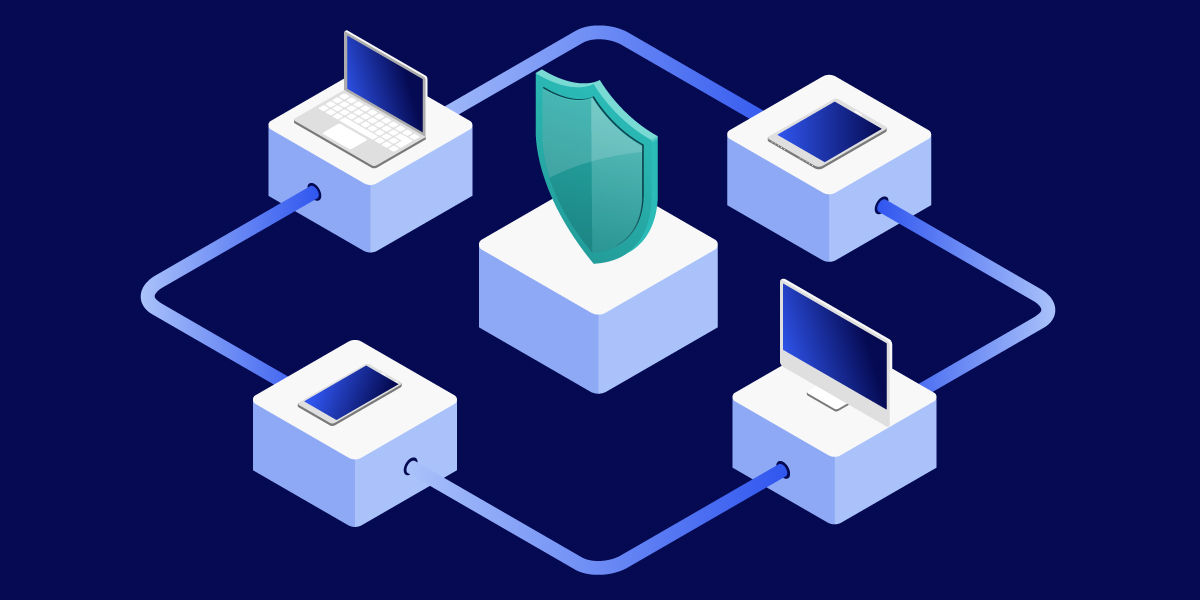
Secure remote access depends on protecting data while it travels between devices.
TeamViewer uses AES 256-bit encryption to help secure remote sessions, file transfers, and communications between endpoints. Combined with additional security measures such as device authentication and access controls, encryption helps ensure that data remains protected during remote connections.
For organizations supporting remote work and distributed IT environments, strong encryption is an essential component of maintaining secure access to systems and information.
Best practices for encryption
Encryption is most effective when combined with broader security measures.
Organizations should:
- Use strong authentication methods
- Protect encryption keys
- Keep software updated
- Implement access controls
- Monitor for suspicious activity
- Train employees on security best practices
Encryption protects data, but it should be part of a comprehensive cybersecurity strategy.
Final thoughts
How does AES work
AES is one of the most widely used and trusted encryption standards in the world. By transforming readable data into encrypted ciphertext, it helps protect information from unauthorized access across networks, devices, and applications. As organizations continue to rely on cloud services, remote work, and digital collaboration, technologies like AES remain essential for maintaining the confidentiality and integrity of sensitive data.