Organizations invest heavily in innovation. New tools, automation, AI gets the spotlight almost all the time. New capabilities signal progress, competitive differentiation, and strategic ambition.
But in daily operations, progress looks different.
At Google’s SRE book, comprehensive guide to site reliability, it is stated that “reliability is the most important feature of any system”. It is a corner stone for user trust and sustainable operational performance. Trustworthiness depends on consistent product performance, early identification of potential disruptions, and a clear commitment to protecting customers’ business continuity. As a result, organizations are increasingly investing in reliability as a foundation of success and customer loyalty.
In this article:
- Daily Operations Depend on Predictability
- Why Innovation Often Gets More Attention
- The Cost of Unreliability Is Often Underestimated
- Reliability as a Strategic Enabler
- Building Sustainable Operational Performance
- Conclusion
Daily Operations Depend on Predictability
Daily operations are built on repeatability. Systems must function at the start of every shift. Remote connections must be established instantly. Incidents must be resolved before they affect productivity.
In these moments, teams are not looking for innovation. They are looking for certainty. Ben Treynor Sloss, Google’s VP for 24/7 Operations, claims that reliability is the most fundamental feature of any product. Operational environments demand tools and infrastructure that behave exactly as expected. Because when unpredictability enters the system, even small disruptions create cascading effects:
- Delayed resolutions
- Increased pressure on IT teams
- Reduced confidence in workflows
- Time lost to troubleshooting instead of execution
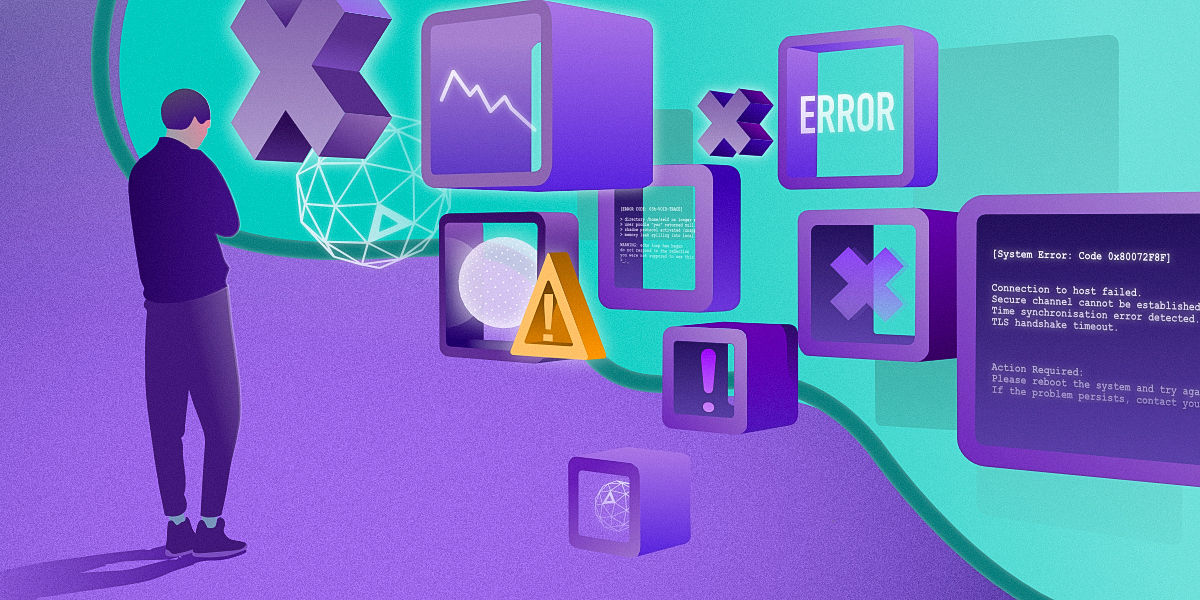
Reliability minimizes these disruptions. And in doing so, it reduces downtime and increases productivity.
Why Innovation Often Gets More Attention
Innovation is visible and measurable. It appears in product launches, strategic initiatives, and transformation programs. It signals forward movement and competitive ambition.
Reliability, on the other hand, is measured by absence:
- No outages
- No failed connections
- No unnecessary escalation
When reliability succeeds, it is almost invisible. But invisibility does not mean insignificance.
In operational contexts, dependability is not a passive trait, it is engineered. It requires secure architecture, consistent performance, and tools designed for real-world conditions, not ideal scenarios.
The Cost of Unreliability Is Often Underestimated
Unreliability rarely begins with a dramatic system failure. More often, it surfaces as subtle but persistent friction: a connection that takes longer than expected, a tool that behaves inconsistently under pressure, or a process that requires repeated workarounds to produce a predictable result. Individually, these disruptions may appear minor. Over time, however, they accumulate and begin to shape how teams operate. Employees adapt, but adaptation requires mental effort and constant vigilance. Attention shifts away from core objectives toward managing uncertainty. Confidence in systems gradually erodes, and decision-making becomes slower and more cautious. In high-pressure operational environments, this erosion of trust can be more damaging than the absence of a new feature or capability. Innovation may expand what organizations are able to achieve, but reliability determines whether those achievements can be sustained consistently.
From the customer’s perspective, unreliability is rarely experienced as a technical issue; it is experienced as unpredictability. When systems do not behave as expected, customers lose confidence not only in the tool, but in the organization behind it. Even small disruptions can raise questions about dependability, responsiveness, and long-term stability. Over time, that uncertainty influences purchasing decisions, renewal considerations, and overall brand perception. Reliability, therefore, is not merely an operational concern, it is a customer trust issue. When customers can rely on consistent performance, they focus on outcomes rather than contingencies, and that confidence becomes part of the product’s value.

Reliability as a Strategic Enabler
Reliability is not the opposite of innovation. It is the foundation that allows innovation to deliver value.
When remote support, device management, or monitoring tools function seamlessly, teams can focus on outcomes instead of contingencies. Platforms such as TeamViewer are often embedded into daily operations precisely because they provide that consistent, secure, stable connections that reduce uncertainty during critical moments.
This kind of reliability creates trust, which is something essential in modern operations. Trust in systems enables faster decision, reduces hesitation, and allow teams to scale with confidence.
Building Sustainable Operational Performance
As organizations increase their reliance on distributed teams, automation, and interconnected systems, operational complexity inevitably grows. With each additional integration, platform, or workflow, the technological ecosystem becomes more interdependent and therefore more sensitive to disruption. In such environments, fragility does not remain isolated; it multiplies. A single weak point can affect multiple processes, teams, or customer touchpoints.
The competitive edge, therefore, lies not only in introducing new capabilities, but in reinforcing the reliability of the operational core. Innovation continues to shape both present performance and future potential. Software services and automated systems are expanding into new sectors and becoming deeply embedded in everyday business operations. As this integration increases organizational dependence on technology, the need for reliability grows in parallel. In daily operations, it is this consistency, rather than novelty alone, that ultimately determines long-term performance.
Conclusion
Innovation will continue to shape how organizations compete and grow. New technologies, automation, and digital capabilities will expand what businesses are able to achieve. But as operational environments become more complex and interconnected, the margin for instability narrows.
In this context, reliability cannot be treated as a background requirement. It must be regarded as a strategic priority. Without consistent performance, even the most advanced innovations struggle to deliver lasting value. Reliability enables organizations to move quickly without sacrificing confidence, to scale without increasing fragility, and to build trust that extends beyond individual features or releases.
Sustainable performance is not defined solely by how rapidly an organization innovates. It is defined by how consistently it delivers. In daily operations, reliability is not a constraint on progress. It is what makes progress possible.

Explore more insights
-
Historically, brands have treated employee experience (EX) and customer experience (CX) as separate initiatives, but as the market evolves, the significant link between the two has become undeniable. In fact, one might say that EX and CX are two sides of the same coin.
-
The digital experiences that take place in person and contribute to overall DEX. Let's explore how DEX tools can strengthen both areas and revolutionize digital experiences.
-
In this blog, we dive into four digital workplace trends for enterprise organizations to keep their eyes on. From AI to DEX equity, read on and get inspired.