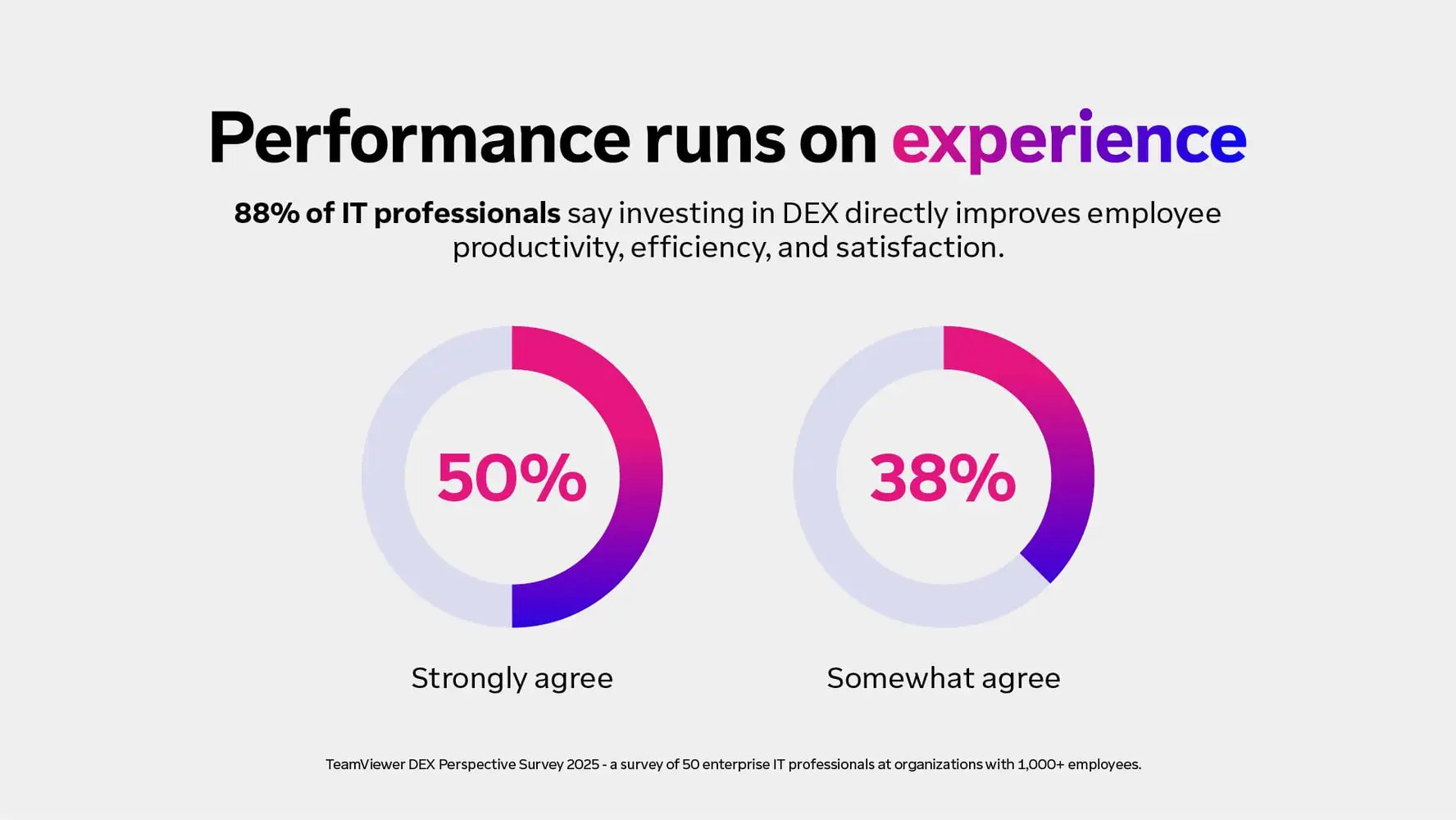
DEX tools help IT support, asset management, procurement, and other teams whose work depends on reliable information.
In essence, DEX helps you address the challenges of supporting a digital workforce—wherever they’re working from.
DEX vs traditional endpoint management
DEX is an evolution of endpoint management that goes past identifying the digital problems faced by employees, instead providing real-time insights and solutions.
But why the evolution? With devices replacing traditional offices, cloud-first initiatives overtaking on-premises servers, and the increase in hybrid working, priorities have changed when it comes to providing employees with a good experience.
Take for example traditional digital experience monitoring (DEM) tools. As Gartner VP Research Analyst, Dan Wilson, explains, DEM tools provide advanced monitoring, early issue detection, and root cause analysis for web-based applications. They support both employee and customer experience use cases for IT operations teams.
In contrast, DEX tools focus on enhancing employee experience by monitoring technology usage. They gather sentiment, and automate responses to issues, primarily for internal IT teams.
So, what does this mean for you? Let’s dive in.
Why does DEX matter?
It is estimated that by 2026, 50% of digital workplace leaders will have established a DEX strategy and tool. Furthermore, by 2028, digital workplace teams that have fully implemented DEX tools will have a competitive advantage over those that haven’t.