The complete guide to warehouse automation
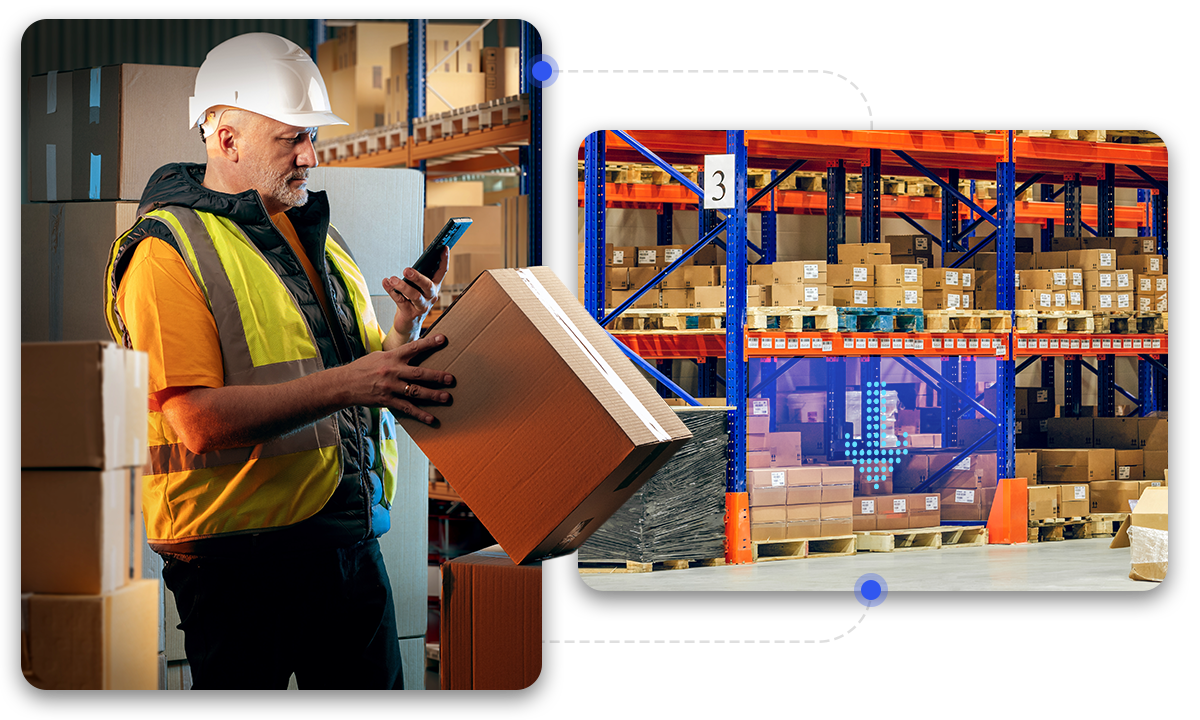
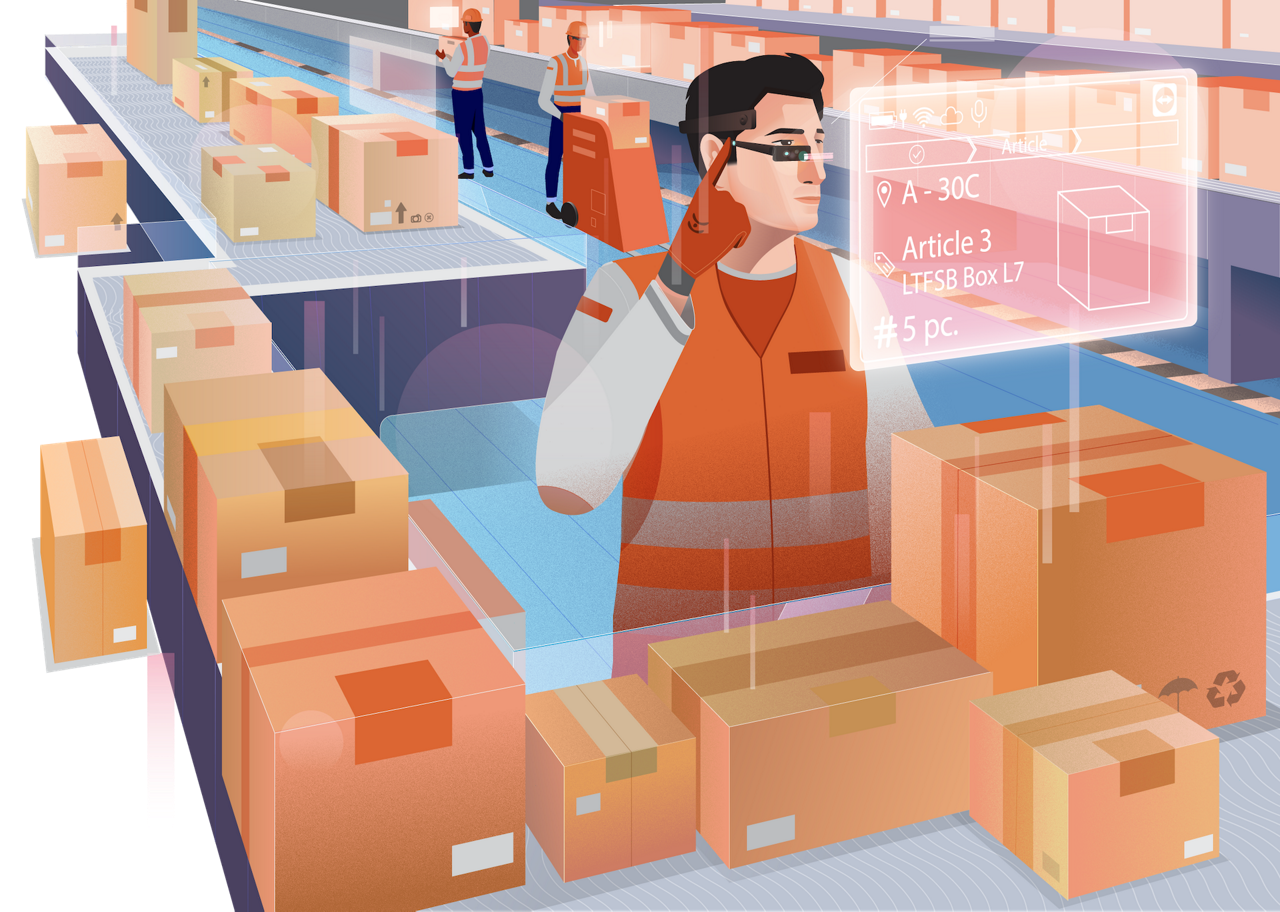
Definition: Warehouse automation streamlines inventory movement and warehouse processes with minimal human intervention.
Key benefits: Increased efficiency, reduced costs, improved accuracy, enhanced workplace safety, and scalability.
Main technologies: AS/RS, robotic picking systems, AMRs, conveyor and sortation systems, warehouse management software.
Current trends: AI, IoT, cloud-based WMS solutions, and sustainable automation practices.
Warehousing and logistics have rapidly evolved in recent years. Driven by surging e-commerce demands, global supply chain disruptions, and rising labor costs, companies are under pressure to modernize their warehouse operations. Speed, accuracy, and scalability are no longer optional—they're expected.
This is where warehouse automation comes in. It enables businesses to meet modern expectations while reducing operating costs and increasing agility. Automation equips warehouses to do more, faster, and with fewer errors, creating a strategic edge that strengthens the entire value chain.
From small e-commerce hubs to global distribution networks, companies that embrace automation are more competitive, resilient, and better equipped for growth.
Warehouse automation refers to the use of digital technologies, robotics, and intelligent systems to handle the physical and data-driven aspects of warehousing. This includes receiving, storing, picking, packing, and shipping—all managed through a combination of automated hardware and software.
Automation solutions can be deployed in stages, starting with barcode scanners or mobile tools and evolving into full-scale warehouse management supported by robotics and real-time data systems.
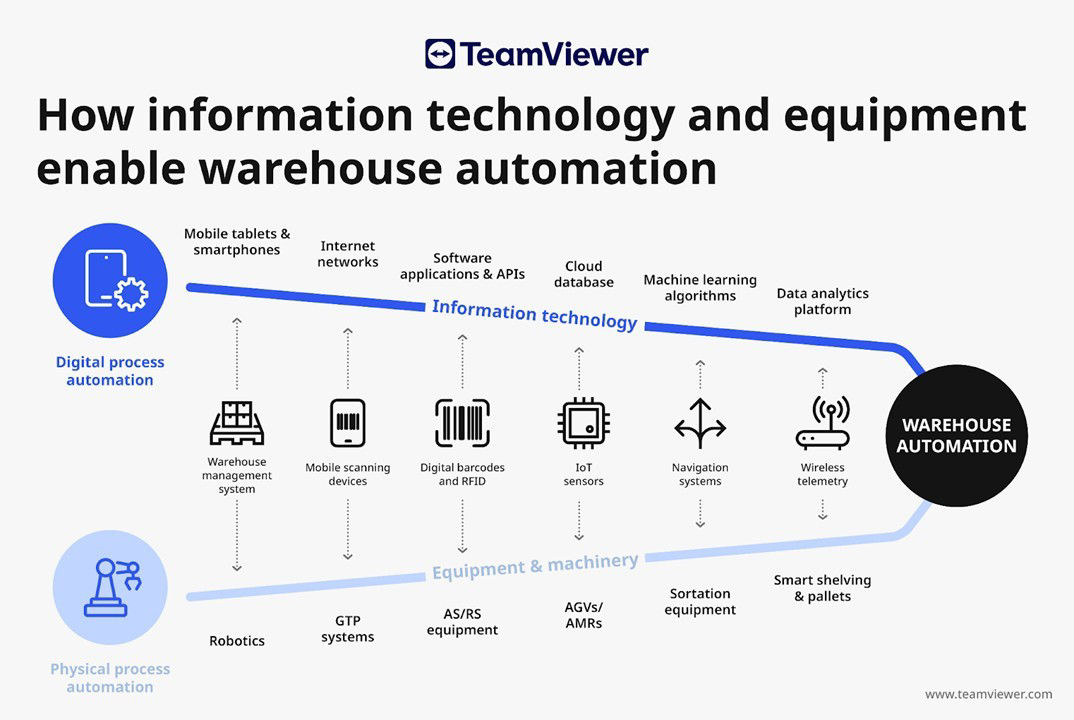
By integrating these systems, businesses unlock a smarter, safer, and more responsive warehouse environment. The following graphic shows how digital and physical automation components work together. They span information technology and equipment layers to form a fully integrated warehouse automation ecosystem.
The benefits of transitioning to an automated warehouse extend beyond speed. Modern warehouse automation systems redefine workflows, enhance data accuracy, and deliver scalable solutions across all logistics functions.
Manual tasks are slow and error-prone. Automation replaces repetitive processes with real-time, consistent performance, allowing for higher throughput without proportional increases in labor.
Real-time data capture through radio frequency identification (RFID), barcode scanners, and Internet of Things (IoT) sensors reduces the risk of stockouts and mispicks, while also streamlining inventory audits and reconciliation.
Labor shortages are a global concern. Automation mitigates this by reducing reliance on manual roles, allowing staff to focus on strategic, high-value tasks.
As demand increases, automation systems scale with minimal disruption. Whether handling seasonal peaks or long-term growth, automation success depends on smart planning. Our complete guide to warehouse optimization explains how to align technology, layout, and workflows effectively.
Automation reduces the need for manual lifting, repetitive motion, and exposure to hazardous conditions. This leads to lower injury rates and improved compliance.
Choosing the right warehouse automation systems depends on your business size, complexity, and goals. Here’s a breakdown of the key technologies:
Each system plays a critical role in building a connected, responsive, and intelligent warehouse ecosystem.
Together, these technologies form the backbone of modern logistics strategies. Discover smart logistics solutions from TeamViewer.
To maintain a competitive edge, businesses must embrace the innovations reshaping modern logistics.
Warehouse automation can be challenging, which is why it’s important to have a thoughtful strategy and the right technology partnerships. Below are four of the most common hurdles—and how to overcome them:
If you’re hesitant to automate due to the initial capital requirement, start with modular solutions and focus on areas with the highest ROI.
Automation shouldn’t replace humans but empower them. Training and clear communication ease the transition and build internal support.
A successful automation strategy should connect easily with ERP, CRM, and logistics platforms. Look for providers with strong integration and API support.
Cultural change takes time. Executive sponsorship, clear KPIs, and employee engagement are key to long-term success.
Follow these six key phases to move from manual processes to a fully automated warehouse.
If your business faces one or more of these challenges, automation could be the key to unlocking growth:
Even incremental improvements can deliver meaningful return of investment.
Conclusion
Warehouse automation is a proven strategy for reducing friction, increasing resilience, and outperforming in logistics. With TeamViewer as your partner, you can scale smarter, digitize faster, and stay competitive.
Empower your business with TeamViewer’s intelligent automation solutions—optimize inventory, scale smarter, and future-proof your logistics today.
Fixed, programmable, flexible, and integrated automation—ranging from rigid systems to fully connected smart environments.
Basic: Scanners, WMS
System-level: Conveyors, sorters
Daifuku is widely considered the largest, alongside Dematic, Honeywell Intelligrated, and Swisslog.