
How GlobalFoundries transformed warehousing with vision picking
Learn how the leading semi-conductor manufacturer used vision picking to drive efficiency, productivity, and sustainability across its operations.
In a recent webinar hosted in collaboration with MHI, we discussed the future of warehousing logistics. The event highlighted how GlobalFoundries, a leader in semi-conductor manufacturing, implemented vision picking technology through TeamViewer Frontline to optimize its warehouse operations.
Here's a recap exploring how augmented reality (AR) and vision picking can optimize your warehouse space.
The challenge: Why GlobalFoundries chose vision picking
The global semi-conductor industry is under huge pressure to meet rising demand. As a result, speed and accuracy in logistics have never been more critical. GlobalFoundries realized that its outdated, paper-based warehousing system was becoming a bottleneck to operational efficiency. Kevin Hidalgo, Senior Director of Logistics at GlobalFoundries, explained during the webinar:
“Our logistics organization supports both inbound manufacturing operations and outbound shipping, ensuring our fab operations have all the supplies they need. We had a mostly manual, paper-based process and saw many opportunities for process improvement and efficiency through technology.”
To stay competitive, GlobalFoundries adopted TeamViewer’s vision picking technology within Frontline to increase efficiency and accuracy, reduce errors, and align with the company’s environmental goals.
What is vision picking?
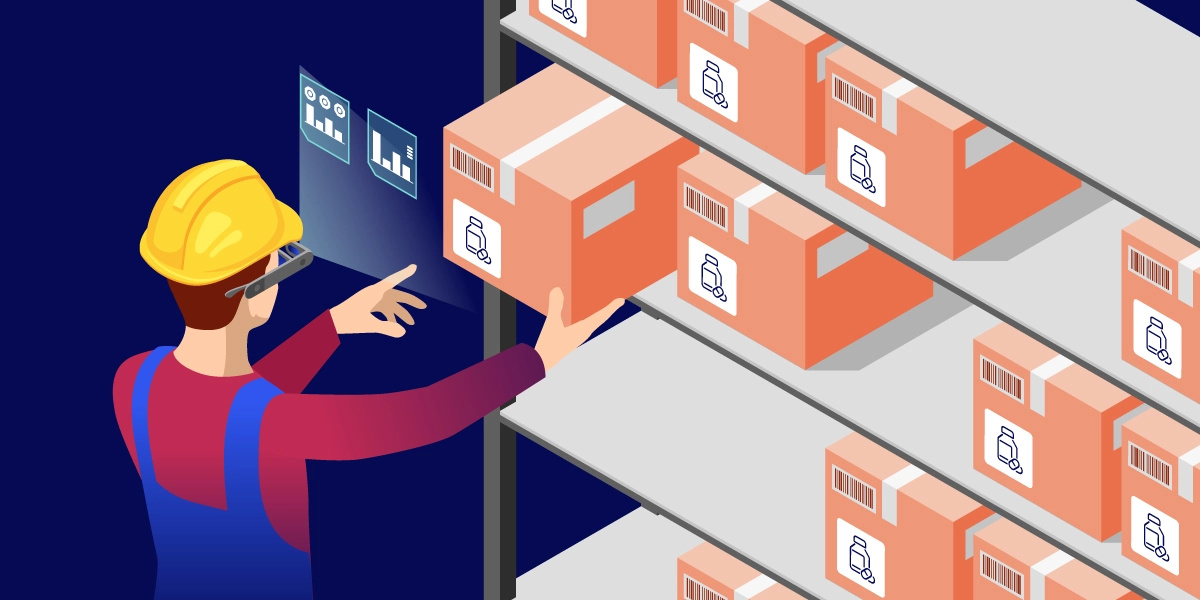
Vision picking is a sophisticated warehousing solution. It uses augmented reality (AR) to guide operators through their tasks with real-time visual cues. The system leverages AR smart glasses to display instructions, enabling a hands-free, fully guided workflow. Operators can validate actions through voice commands or ring scanners, making a vision picking system a superior alternative to traditional, manual picking methods.
According to Julian Doelfs, TeamViewer’s Director of Frontline Sales, GlobalFoundries’ move to vision picking was driven by several key objectives:
- Boosting productivity: By getting rid of paper-based lists and manual sorting, vision picking means operators can complete tasks more efficiently.
- Reducing errors: Real-time feedback and automatic validation reduce the chances of mistakes and deliver greater accuracy.
- Improving worker ergonomics: The hands-free nature of vision picking minimizes physical strain, improving comfort and safety for operators.
- Meeting sustainability goals: By going digital, GlobalFoundries saved 100,000 sheets of paper per year. This aligned well with its ESG (Environmental, Social, and Governance) goals.
These features of vision picking make it an attractive solution for companies looking to optimize warehouse operations.
How vision picking works
Traditional paper-based systems require constant manual input and validation. This can slow down operations and increase the risk of errors.
Vision picking, by contrast, solves these issues with smart glasses. These provide real-time, step-by-step instructions, directly in the operator’s field of vision. This allows for faster and more accurate picking.
As Julian put it during the webinar: