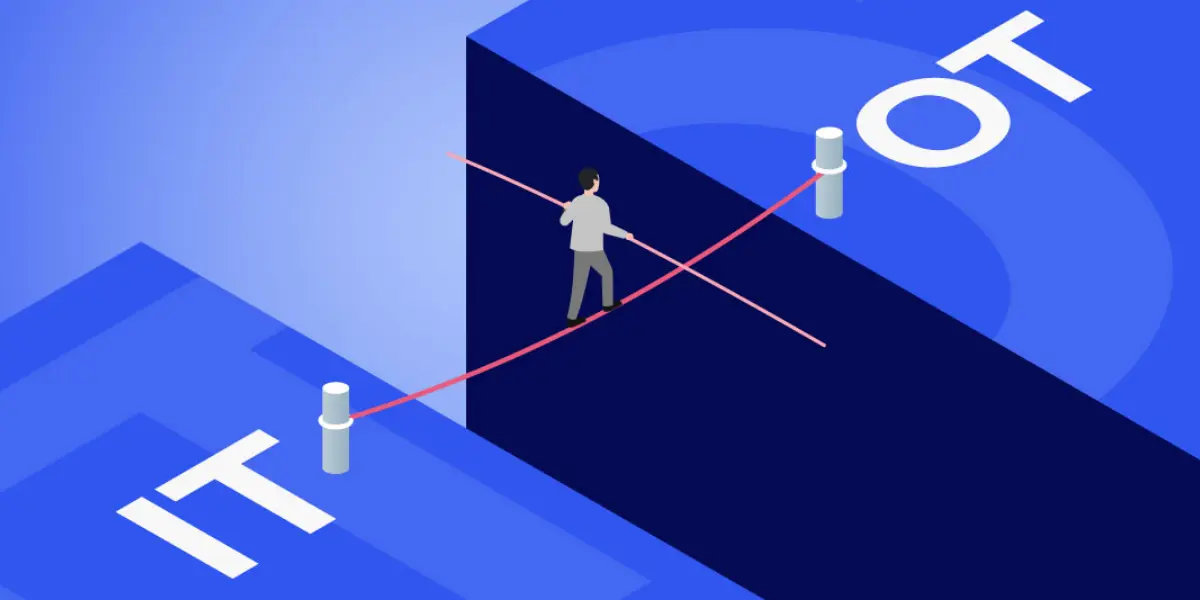
IT and OT: So close, yet so far
Connect and support peopleDigitally advanced businesses realize that connecting their information technology (IT) and operational technology (OT) assets can release significant value. But new research from TeamViewer suggests that functions remain too far apart.
Almost two-thirds (64%) say that the lack of a comprehensive overview of IT and OT assets and data impedes the effective management of their technology infrastructure. Among industrial manufacturing companies, this figure rises to 71%.
By leaving the gap unbridged, organizations risk falling behind in terms of growth, operational capacity, and the competitive edge so critical in fast-changing industries.

Making a connection
For those organizations that can seamlessly connect their IT (computers and other hardware used for information processing and management) and OT (the machinery used to execute physical processes), the potential benefits are numerous:
- Reduced cost: Convergence improves resource utilization, bringing down costs.
- Increased revenue: Combining IT and OT data helps organizations to generate richer, practically applicable insight, and strengthen performance.
- Improved operational performance: IT and OT convergence enables predictive maintenance, reducing downtime.
- Greater agility: Access to IT and OT data supports organizations in reacting more quickly to market changes, amending production cycles accordingly.

Where organizations fall short, and why
This year’s ISG Provider Lens Digital Engineering Services report singles out the integration of IT and OT trend as “enhancing efficiency, innovation and competitive differentiation.” With so much to be gained – McKinsey describes IT/OT convergence as “the key to unlocking digital at scale” – the race to secure connectivity is on.
Yet TeamViewer’s latest research, based on responses from 500 businesses across six markets, suggests many organizations can go further.
In practice, a range of challenges obstruct IT and OT convergence. Some are technical. OT sensors and devices, for example, may be incompatible with existing IT networks; 45% of businesses say that they have achieved a unified architecture (e.g., combining OT assets with IT resources) to only some or a minimal extent.
Some issues are cultural, with IT and OT teams often working from different perspectives, with divergent responsibilities and priorities. Nine in 10 businesses say OT and IT are in at least some state of isolation from one another. When it comes to joint training and skills development, nearly half (47%) say the connection is effective to only some or a minimal extent.
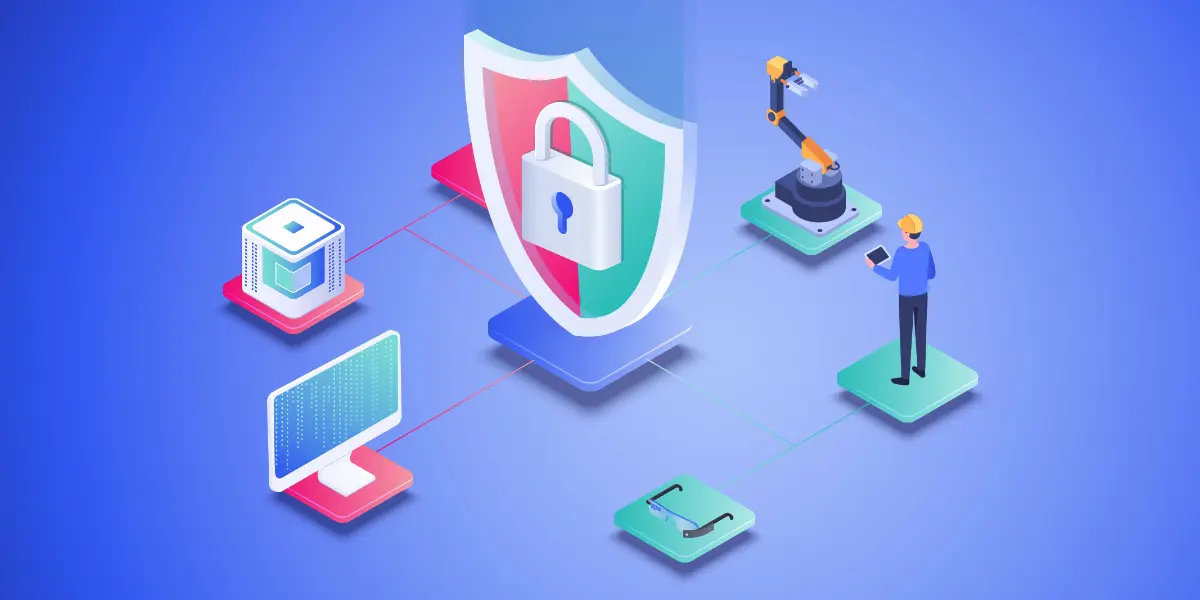
Also, organizations are concerned about the greater attack surface and consequent cybersecurity vulnerabilities that could result from stronger IT and OT connectivity. They might point to a string of recent attacks by cyber criminals on industrial targets, many of which have focused on OT, rather than IT assets.
How to fix the problem
Given such challenges, closing the gap will require organizations to act on many fronts at once.
Above all, argues Mei Dent, Chief Product and Technology Officer at TeamViewer, this is an issue that requires strong leadership. A senior figure, such as a chief digital officer, can bring IT and OT teams together for common purpose. “IT and OT are usually two different budget centers, with two different signing processes,” she points out. “For companies that have chief digital officers, it becomes a little easier because they understand the challenges of unification.”
With IT and OT empowered to work together more closely – while being held to account on their progress – collaboration will drive convergence. “We have regular communication channels, joint meetings, and workshops,” says Vivek Sharma, Global Head of Partner Management at Bosch Digital, of the German industrial conglomerate’s efforts to get IT and OT teams working together. “It should never be a game of us versus them.”