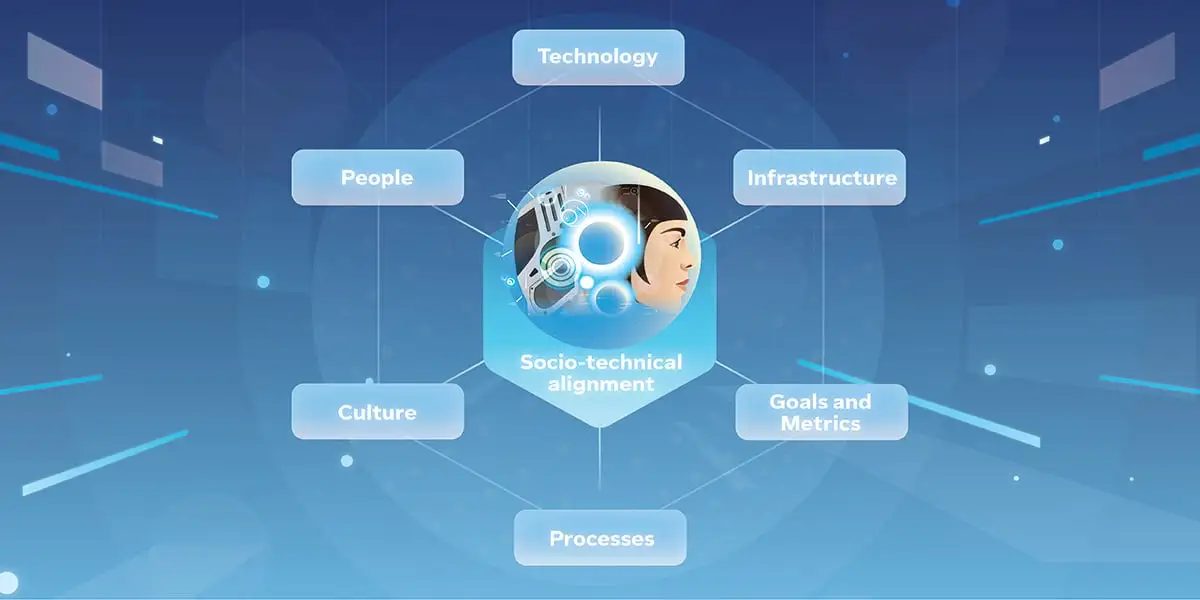
Together, these systems shape how work gets done. By examining how they interact, socio-technical systems theory provides a perspective that's especially relevant in today's digital workplace and essential for proactive digital employee experience (DEX).
You don't need to know the theory to recognize this perspective. We all know what happens when organizations introduce a new tool without adapting workflows, incentives, or expectations. The technology may work exactly as intended, but employees often work more slowly, experience greater frustration, or face unnecessary complexity.
Creating people-centric digital workplaces
In TeamViewer's The Psychology of DEX, Douglas Hynes, Senior Product Manager, Digital Employee Experience at TeamViewer, explores how digital environments shape human performance. In particular, he shows how the tools employees use every day influence their ability to focus, work confidently, and stay productive.
The paper reveals a consistent challenge. Organizations often optimize digital workplaces for efficiency, security, and control without fully considering the employee experience, creating persistent, low-level friction that builds over time.
Our research found that:
- Around 80% of employees experience digital friction daily.
- Even brief moments of system lag disrupt focus and workflow.
These disruptions fragment attention, reduce productivity, and make it harder for employees to do their best work. Over time, they also weaken engagement, increase turnover risk, and limit the return on technology investments.
Digital environments built around employee experience behave differently. When technology supports people rather than simply managing them, it helps sustain more consistent human performance over time.
Employees perform best when digital work feels:
- Coherent
- Predictable
- Supportive
These qualities help employees stay focused, work with confidence, and complete tasks more efficiently. Achieving them requires organizations to look beyond individual tools and consider how people, processes, and technology work together.
A socio-technical perspective helps explain why. When organizations optimize one part of the system without considering the whole, they often shift friction instead of eliminating it. The result is greater cognitive load, more workarounds, and increased frustration.
Traditional IT metrics, such as ticket volume, response times, and outage reports, capture technical failures but overlook the everyday friction employees quietly adapt to as they work.
Digital friction is a systems signal
From a socio-technical perspective, digital friction signals that the workplace has fallen out of alignment. Instead of reflecting isolated technology problems, recurring patterns of friction show where people, processes, and technology are no longer working effectively together.
Our digital friction report identified several indicators of this misalignment:
- 88% of employees experienced connectivity issues in the past year.
- 40% used personal devices or applications to work around IT problems.
- 57% don’t trust IT teams to resolve issues quickly or effectively.
When friction becomes routine, employees adapt. Many stop reporting issues because they don't expect a timely resolution, while others turn to personal devices, cloud apps, or unapproved software to keep work moving.
IT teams refer to this behavior as shadow IT: the use of hardware, software, or cloud services without IT's knowledge or approval. But while organizations often treat shadow IT as a security risk, it also signals unmet employee needs. Employees don't bypass IT to avoid the rules. They use alternative tools to stay productive when workplace technology gets in the way.