The recruitment gap and its impact on training
As the global shortfall in skilled staff continues, two thirds of healthcare leaders say it’s leading to burnout, stress, and low morale. Training is particularly affected by this; if a unit is understaffed, it becomes much more difficult to give new starters the level of support they need.
What practical strategies can help address this? Part of it involves finding additional ways to give employees contextual, easily-digestible information that helps them develop their skills and build confidence. AR can play an important role here.
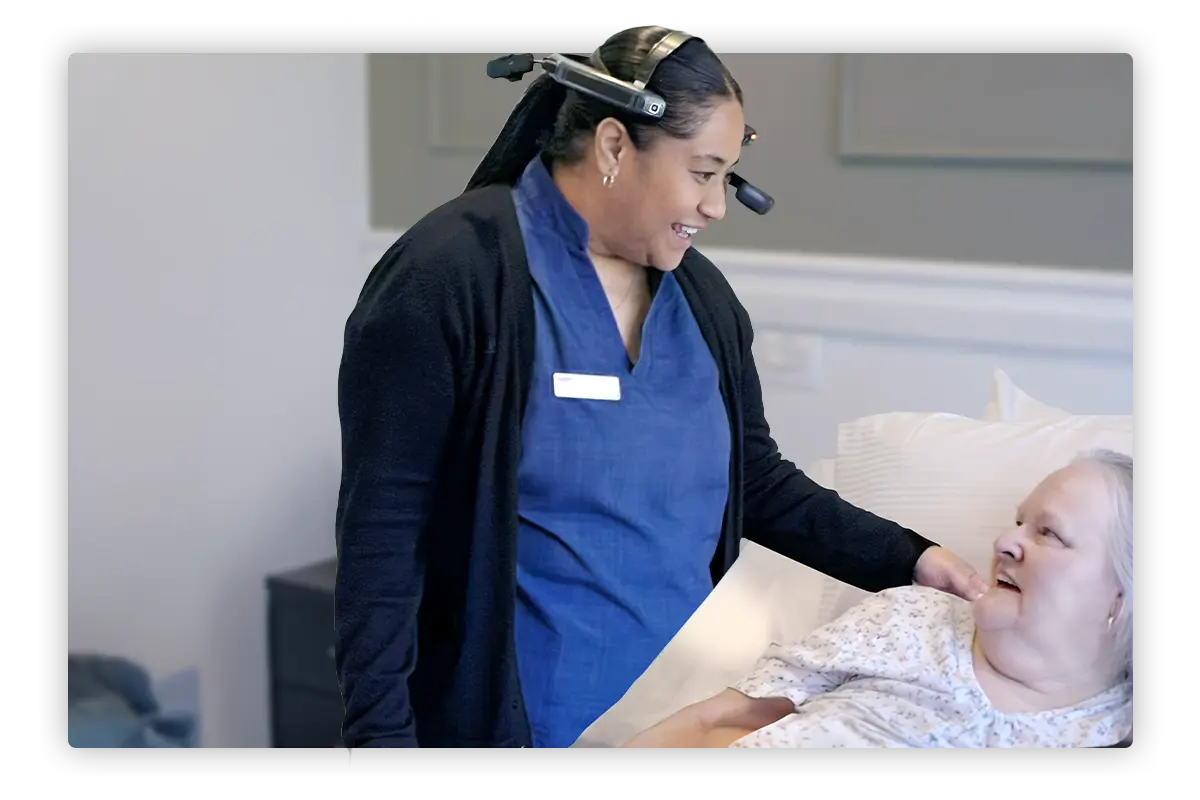
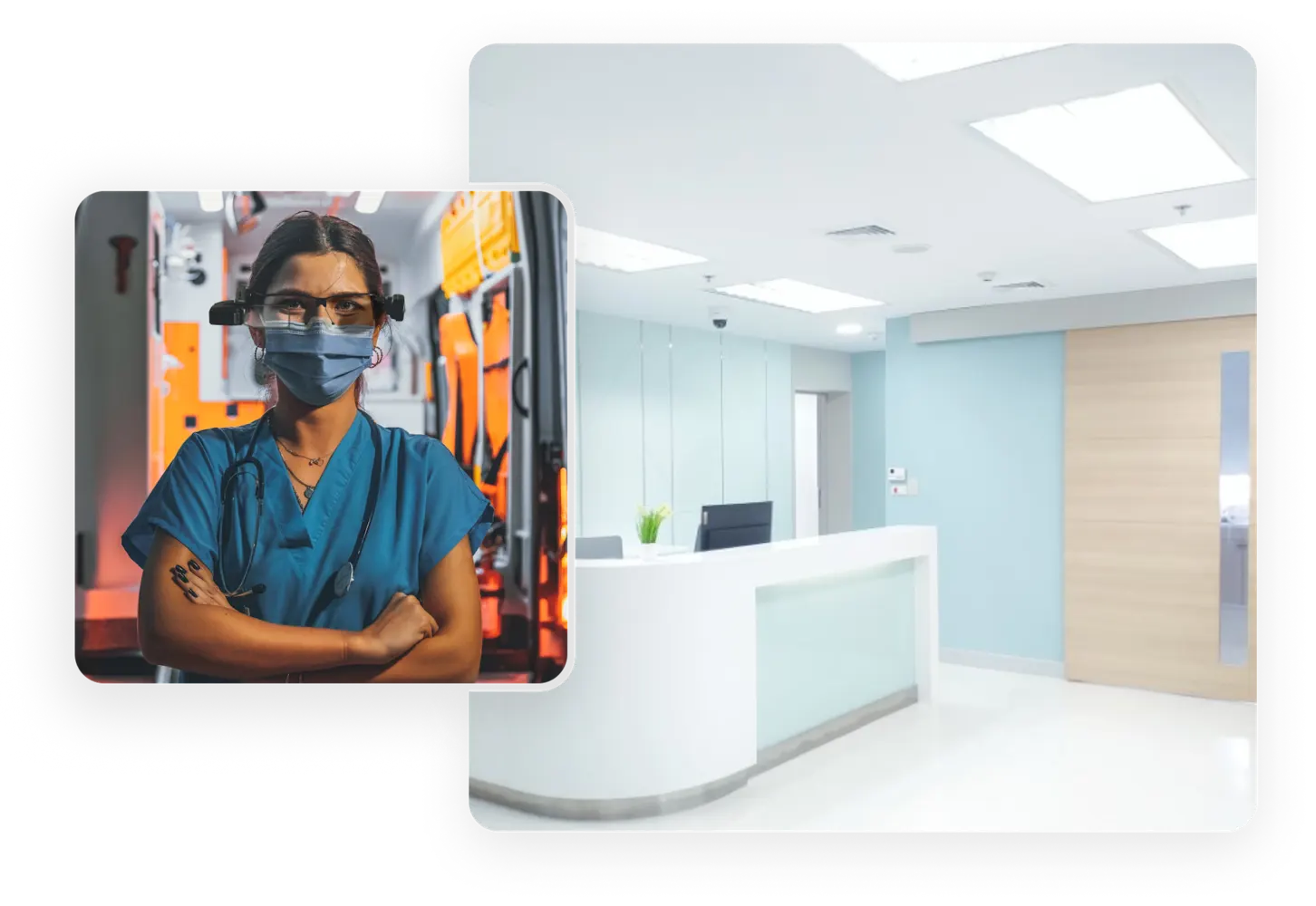
For instance, imagine it’s a busy shift and a new recruit is still learning to use a piece of diagnostic equipment. Through smart glasses, they can overlay their view of the machine with precise, step-by-step visual instructions.
Picture another trainee who needs guidance to complete a procedure, but their supervisor has been temporarily transferred to another clinic to cover a staffing shortfall. AR combined with live video streaming allows for two-way interaction. The supervisor can see exactly what the trainee sees, guide them through the procedure, and even draw and highlight on the screen to give precise direction.