Why More Tools Don’t Equal More Control
Organizations often assume that adding new tools will improve operational visibility and control. In practice, however, additional platforms can sometimes produce the opposite effect.
When data is spread across multiple systems, teams must spend more time interpreting information rather than acting on it. Instead of improving clarity, fragmented tool environments can create operational friction and increase the effort required to maintain situational awareness.
In this context, the challenge is not a lack of functionality but a lack of cohesion.
The Case for Platform Consolidation
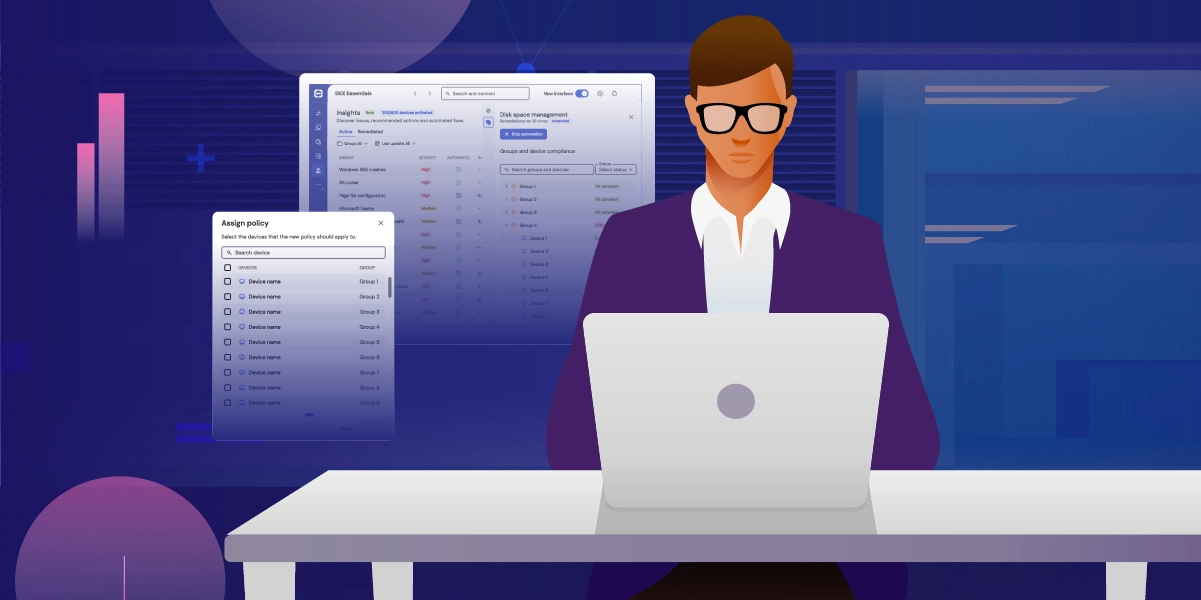
One way organizations are addressing workflow fragmentation is through platform consolidation. Rather than relying on a collection of isolated tools, unified platforms bring multiple operational capabilities into a single environment. This platform-based approach also aligns with DORA’s platform engineering guidance, which describes high-quality platforms as a way to abstract underlying complexity, reduce cognitive load, and provide more standardized, repeatable workflows for teams. It integrates capabilities such as monitoring, remote access, endpoint management, and automation within a more cohesive system.
This is where platforms such as TeamViewer One become particularly relevant. By combining remote connectivity, device management, and operational visibility within one environment, TeamViewer One helps reduce the need to move between disconnected tools and interfaces. For IT teams, that means less time spent managing fragmentation and more time focused on maintaining performance, resolving issues, and supporting users effectively.
In this sense, platform consolidation is not only a question of convenience. It is a way to restore workflow continuity, reduce operational friction, and create a clearer foundation for daily IT operations.
For additional perspective on how TeamViewer One can support efforts to reduce tool sprawl and improve operational efficiency, see this article on maximizing ROI from your IT budget.