Modern IT environments are more powerful than ever. Teams rely on advanced monitoring, automation, remote access, and endpoint management tools to maintain performance and resilience. But as these systems multiply, workflows often become fragmented, increasing the burden on the people responsible for keeping operations running.
The challenge is no longer simply having access to the right tools. It is whether those tools work together effectively, or whether a unified platform approach can reduce complexity while preserving visibility and control. This shift is reflected in platforms such as TeamViewer One, which bring operational capabilities such as remote access, monitoring, and endpoint management into a single environment.
IT environments have become more capable and more specialized, but that specialization often comes at the expense of workflow cohesion. In a typical hour, IT teams may switch between monitoring dashboards, remote access tools, endpoint management systems, security alerts, and ticketing platforms. While each tool delivers distinct value, the cumulative cost of moving between them is often overlooked. According to Auvik’s 2025 IT Trends Report, 50% of MSPs (Managed Service Providers) experience tool sprawl with 10+ network tools in use and “74% of survey respondents agreeing that the tools they need to monitor servers in their environments are contributing to tool-sprawl at their organizations”.
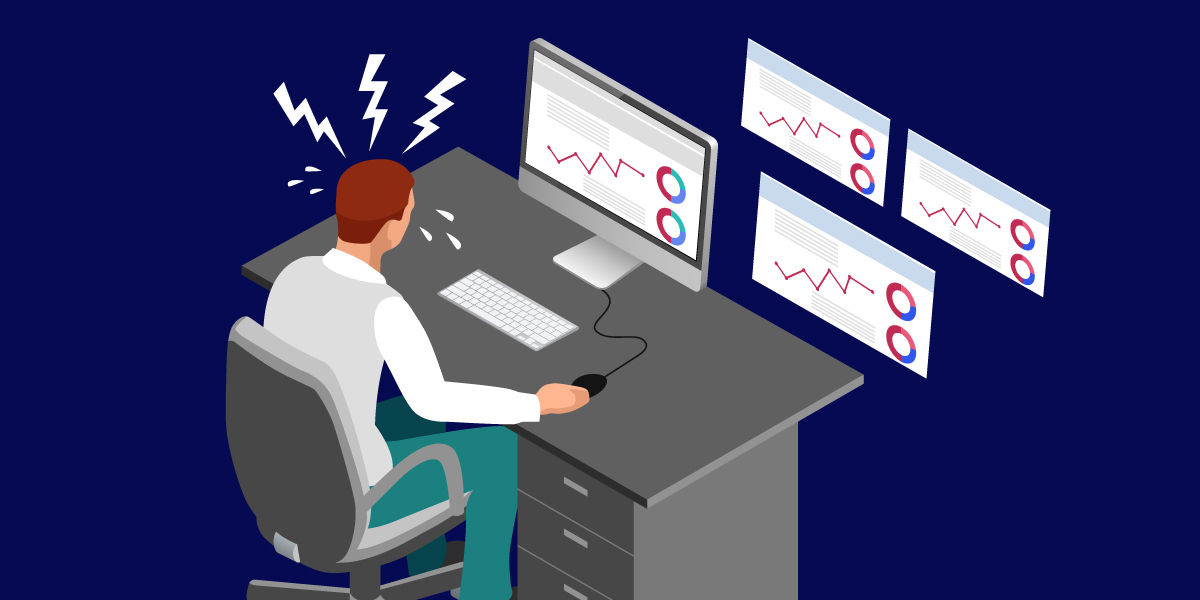
Fragmented workflows force teams to constantly reorient. As it discussed in Google Clouds’s article on platform engineering, overwhelming management of infrastructure may result in “cognitive overload, developer burnout, inconsistencies between teams, or cultural resistance”. In complex operational environments, efficiency is not measured only in uptime or feature depth. It is also reflected in how much effort is required to maintain control.
In this article:
- The Expansion of IT Tool Ecosystems
- Defining Workflow Fragmentation
- The Operational Consequences
- Why More Tools Don’t Equal More Control
- The Case for Platform Consolidation
- Conclusion
The Expansion of IT Tool Ecosystems
Over the past decade, organizations have increasingly adopted specialized SaaS tools to strengthen visibility, automation, and operational control. Monitoring platforms, remote support tools, endpoint management solutions, and security systems each address a specific operational need. Individually, these tools deliver meaningful improvements. Collectively, however, they can introduce new layers of complexity. Industry research indicates that many IT teams struggle not only with the cost of their toolsets, but also with the complexity and lack of integration between them, which can make everyday operations more difficult to manage.
As tool ecosystems expand, workflows often become fragmented across multiple interfaces and systems. While each platform may function effectively on its own, the lack of integration between them can make everyday operational tasks more demanding than expected.
Defining Workflow Fragmentation
Workflow fragmentation occurs when operational processes are distributed across multiple disconnected tools and environments. Instead of interacting with a cohesive system, teams must navigate between separate dashboards, reconcile alerts from different platforms, and re-establish context each time they move between tasks. Google Cloud’s article on platform engineering highlights how growing system complexity can increase cognitive load and create friction for teams.
This fragmentation disrupts workflow continuity. Even small interruptions in context can reduce clarity and slow response times, particularly in environments where decisions must be made quickly.
The Operational Consequences
When workflows are fragmented, operational performance can suffer in subtle but significant ways. Incident response times may increase as teams gather information from multiple sources. The risk of oversight grows when visibility is distributed across disconnected systems. Coordination between teams can become more difficult when operational data lives in different environments. Industry research from Auvik has linked fragmented tool environments to greater complexity and integration challenges, both of which can make fast operational response more difficult.
Over time, these inefficiencies accumulate. What appears to be a well-equipped IT environment can gradually become harder to navigate and manage effectively.
Why More Tools Don’t Equal More Control
Organizations often assume that adding new tools will improve operational visibility and control. In practice, however, additional platforms can sometimes produce the opposite effect.
When data is spread across multiple systems, teams must spend more time interpreting information rather than acting on it. Instead of improving clarity, fragmented tool environments can create operational friction and increase the effort required to maintain situational awareness.
In this context, the challenge is not a lack of functionality but a lack of cohesion.
The Case for Platform Consolidation
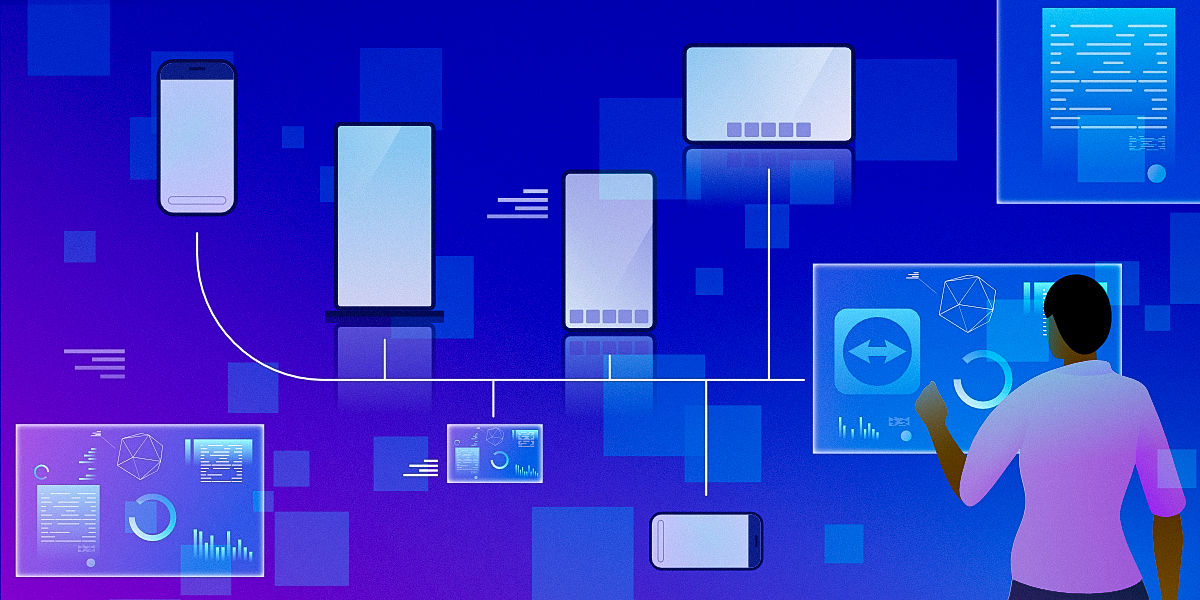
One way organizations are addressing workflow fragmentation is through platform consolidation. Rather than relying on a collection of isolated tools, unified platforms bring multiple operational capabilities into a single environment. This platform-based approach also aligns with DORA’s platform engineering guidance, which describes high-quality platforms as a way to abstract underlying complexity, reduce cognitive load, and provide more standardized, repeatable workflows for teams. It integrates capabilities such as monitoring, remote access, endpoint management, and automation within a more cohesive system.
This is where platforms such as TeamViewer One become particularly relevant. By combining remote connectivity, device management, and operational visibility within one environment, TeamViewer One helps reduce the need to move between disconnected tools and interfaces. For IT teams, that means less time spent managing fragmentation and more time focused on maintaining performance, resolving issues, and supporting users effectively.
In this sense, platform consolidation is not only a question of convenience. It is a way to restore workflow continuity, reduce operational friction, and create a clearer foundation for daily IT operations.
For additional perspective on how TeamViewer One can support efforts to reduce tool sprawl and improve operational efficiency, see this article on maximizing ROI from your IT budget.
Conclusion
As IT ecosystems continue to grow, fragmentation becomes an increasingly important operational challenge. While specialized tools deliver powerful capabilities, their combined impact can also introduce hidden complexity.
Sustainable operational performance depends not only on the tools organizations adopt, but on how well those tools work together. As DORA’s platform engineering guidance notes, a platform’s primary function is to “abstract away underlying complexity,” enabling teams to focus less on navigating systems and more on delivering value. In modern IT environments, improving workflow cohesion may be just as important as expanding technological capability.

Explore more insights
-
In this blog, we dive into four digital workplace trends for enterprise organizations to keep their eyes on. From AI to DEX equity, read on and get inspired.
-
Learn how agentic AI is transforming IT support by taking autonomous action within remote workflows while keeping humans in control.
-
Eliminate digital friction, automate fixes, and power hybrid workforce productivity with TeamViewer DEX.