The complete guide to Endpoint management

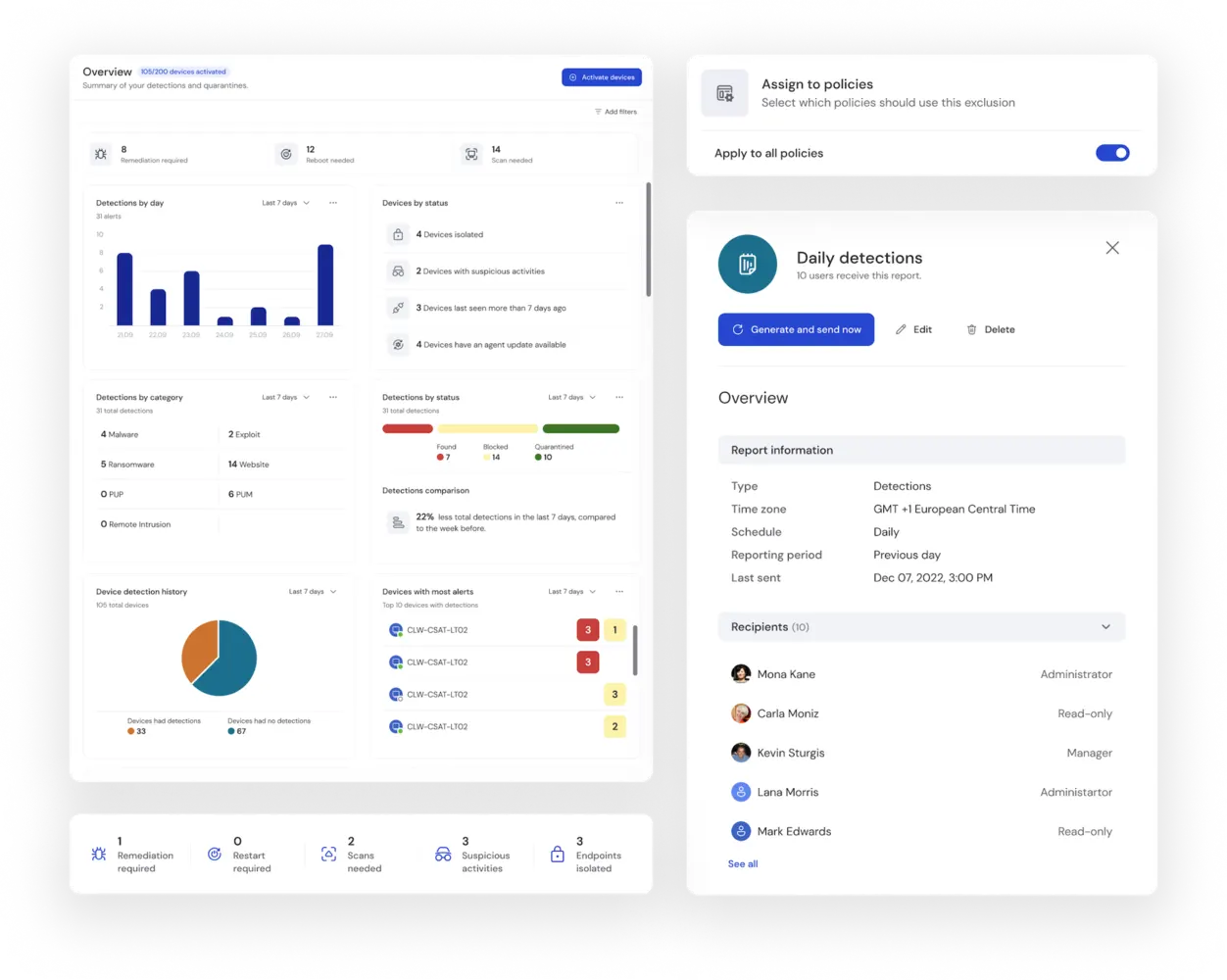
TeamViewer client screenshots with endpoint protection features

Endpoint management at a glance

Illustration: Managing least privilege across remote access and asset management

What is endpoint management?

Endpoint management is the centralized process of monitoring, securing, and administering all devices (endpoints) connected to a corporate network. These include laptops, smartphones, tablets, desktops, and servers.

It encompasses:

  • Provisioning and configuring devices
  • Applying and enforcing security policies
  • Monitoring device health and compliance
  • Managing updates, patches, and applications

Security focus: Protecting sensitive corporate data and minimizing threats like malware, phishing, and unauthorized access are at the core of modern endpoint management strategies.

Automation: Many tasks—including software updates, patch management, and security enforcement—are automated to minimize manual effort and reduce risk.

Centralized management: Organizations typically manage all endpoints via a centralized platform or management console.

Why endpoint management is crucial today 

The digital workplace is no longer confined to corporate offices. Remote work, hybrid environments, and bring your own device (BYOD) policies have expanded the attack surface exponentially.

Effective endpoint security management helps organizations:

  • Prevent data breaches and ransomware attacks
  • Ensure regulatory compliance (HIPAA, ISO)
  • Maintain device uptime and user productivity
  • Lower operational costs through efficient IT support

Without proper management, endpoints become vulnerable gateways for cybercriminals.

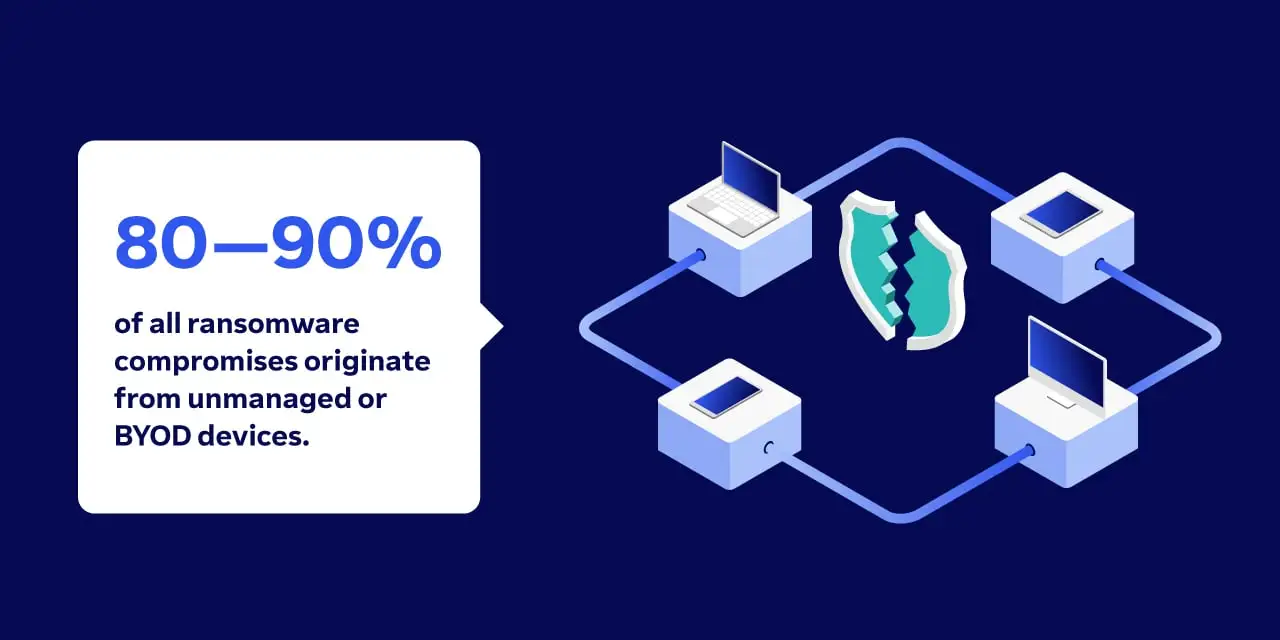
Illustration: 80–90 percent of all ransomware compromises originate from unmanaged or BYOD devices

What is managed endpoint security?

Managed endpoint security refers to outsourcing the protection and management of endpoints to a dedicated service provider.

Key benefits are:

  • 24/7 monitoring by cybersecurity experts,
  • faster incident detection and response,
  • reduction of internal IT workload, and
  • access to advanced threat intelligence and response capabilities.

Organizations lacking in-house cybersecurity expertise particularly benefit from managed services, ensuring endpoints remain protected without overwhelming internal resources.

How endpoint management supports compliance and productivity

ⓘ Reading Tip: Read our guide to Digital Employee Experience for improving user satisfaction and IT performance.

Growing device diversity
Evolving cybersecurity threats
Balancing user privacy with corporate security
Ensuring compliance

Future trends in endpoint management

As the endpoint landscape continues to evolve, several key trends are shaping the future of device management and security.

  • AI-driven management: Predictive analytics and machine learning will anticipate device failures and security breaches before they happen.
  • Zero trust architectures: Organizations will adopt “never trust, always verify” models, authenticating each device and user at every access attempt.
  • Cloud-native endpoint management: Future-ready endpoint management strategies will increasingly leverage cloud infrastructure for scalability, flexibility, and faster threat detection.
  • Unified endpoint management (UEM): Managing all endpoints from a single platform—regardless of OS or form factor—will become the norm.

conclusion

Securing the future of work

Ready to optimize your endpoint management strategy?