The industrial metaverse

Enriching reality with digital technology

The industrial metaverse can have a practical impact on many sectors. But what exactly is the industrial metaverse, and why is it important? Find out more here.

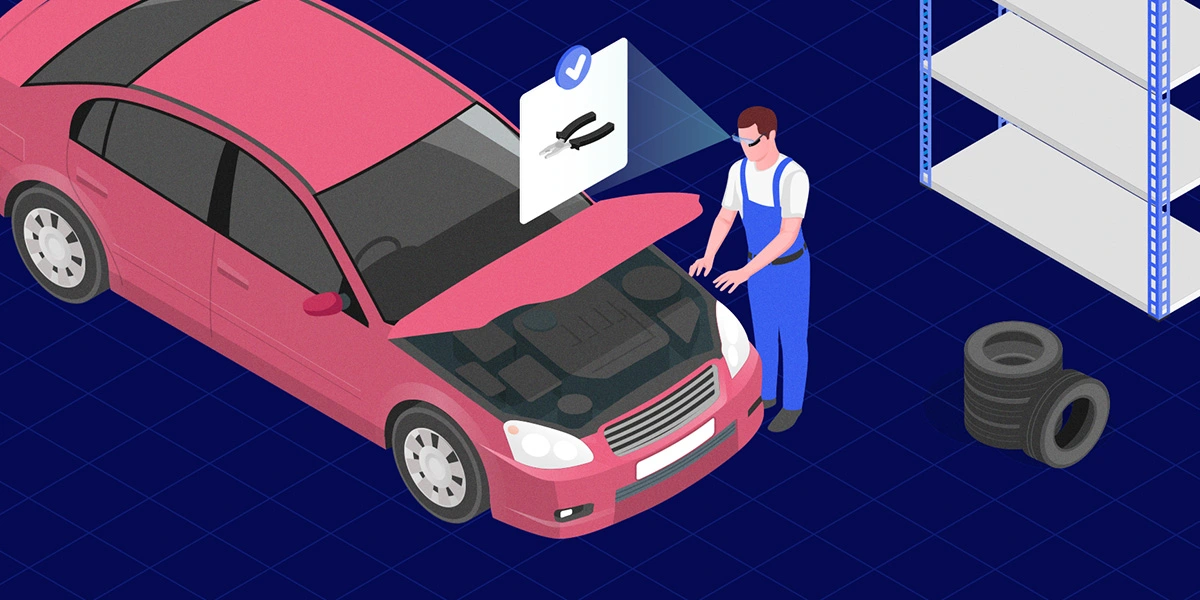
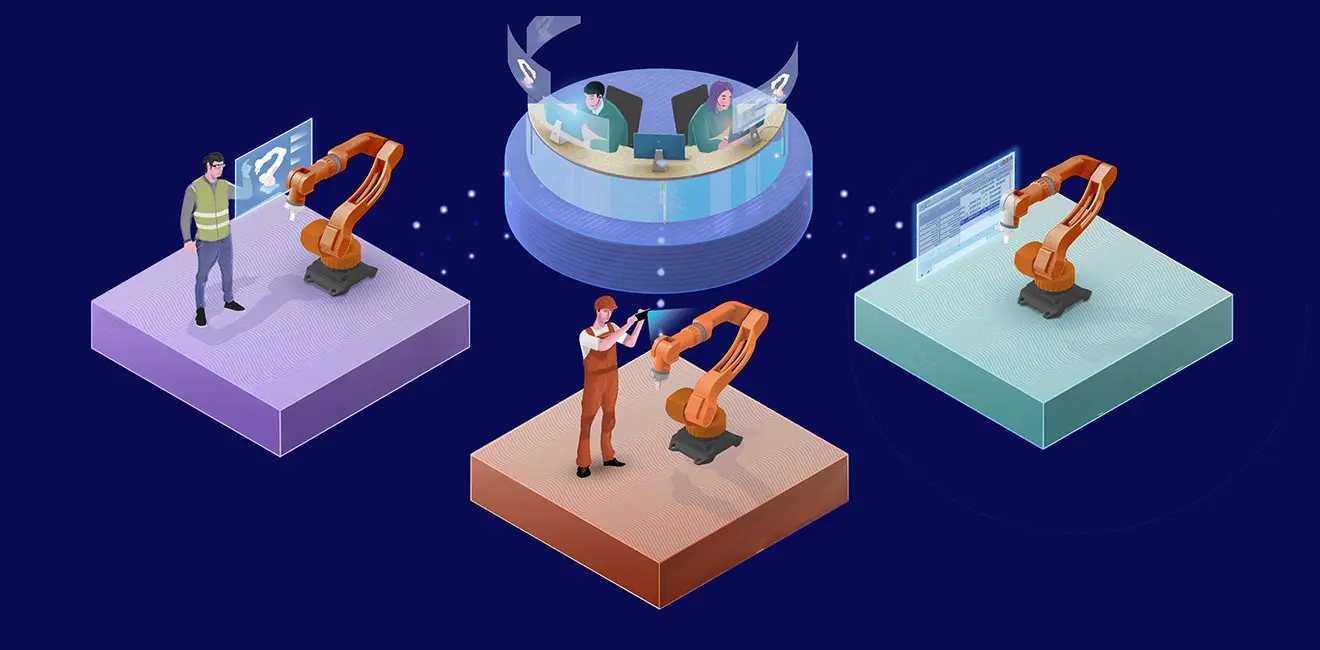
Illustration: after-sales support with TeamViewer Tensor, Frontline Inspect, and Frontline Assist

What is the industrial metaverse?

The term "metaverse" has gained significant attention in recent years, blending virtual reality (VR), augmented reality (AR), and other technologies to merge physical and virtual worlds into a new hybrid reality.

While the consumer metaverse focuses on immersive experiences like gaming, shopping, and socializing, the industrial metaverse emphasizes the holistic digitization of industry through spatial computing and AR.

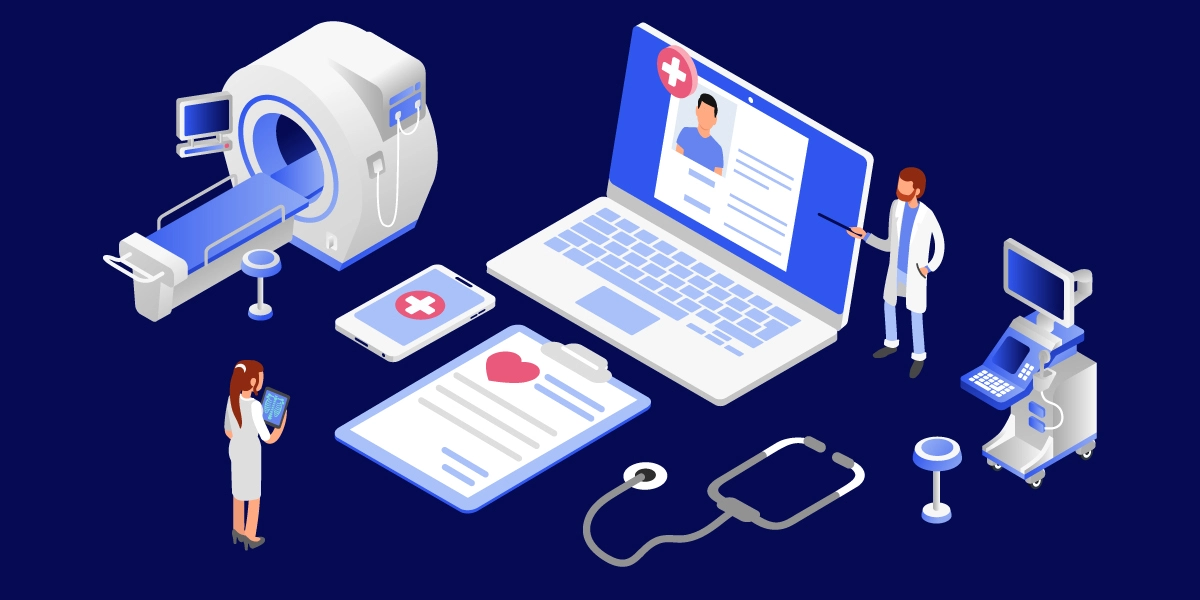
As TeamViewer CPTO Mei Dent explains, it's about enriching reality rather than replacing it. This approach has practical applications across various sectors, including manufacturing, energy, healthcare, and education, potentially transforming training, testing, and remote maintenance.
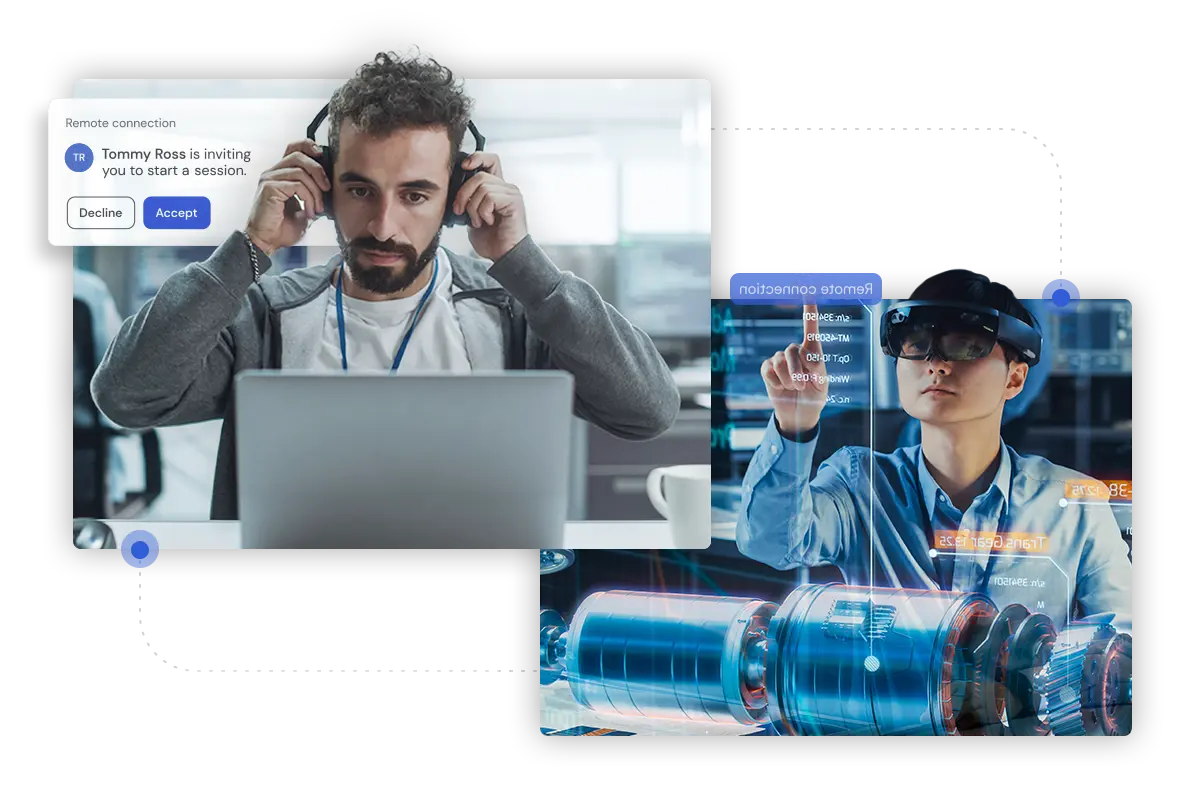
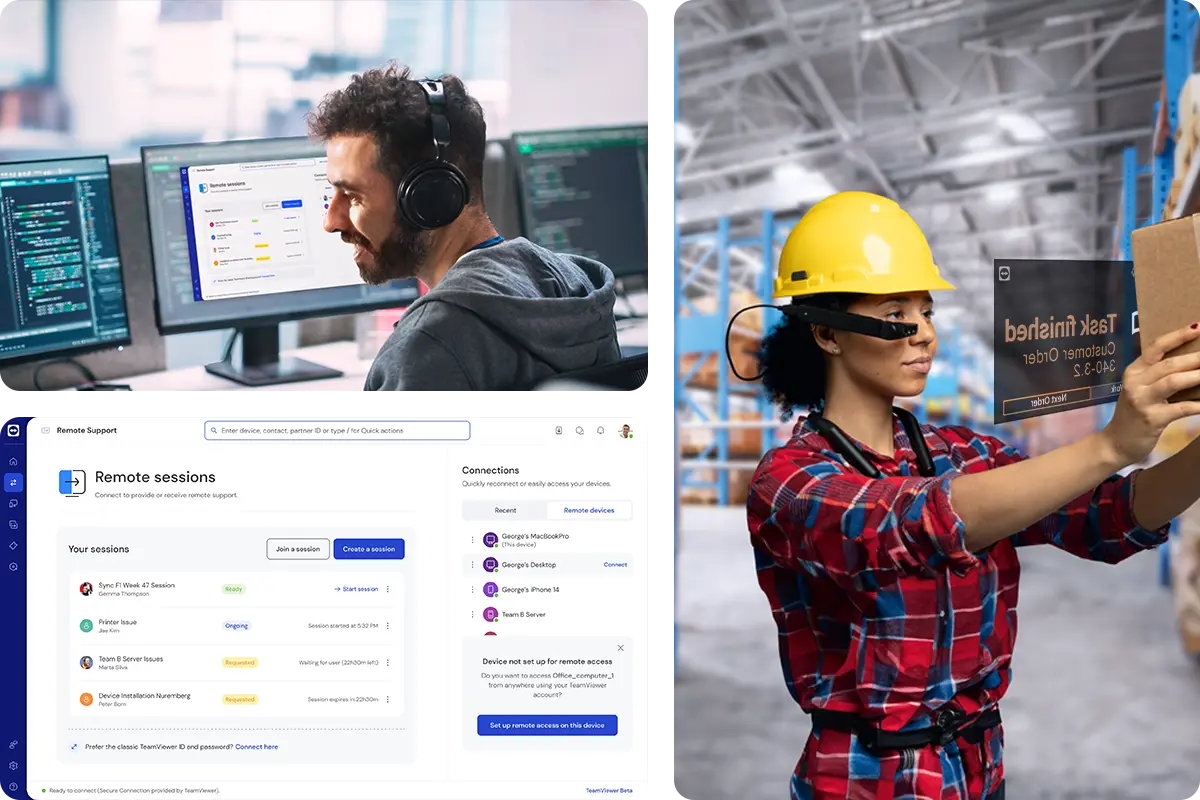
Support specialist establishing remote connection

Why is the industrial metaverse important?

There are two good reasons why the industrial metaverse is worthy of your attention. The first we’d summarize as operational relevance. This isn’t technology for its own sake. The tools and technologies that comprise the industrial metaverse can help you address some of your biggest current and emerging operational challenges.

The second reason is accessibility. The industrial metaverse is no longer ‘one to watch’, or ‘something for the future’. It’s here already. And right now, exploring the industrial metaverse raises the possibility of staying ahead of your competitors.

New ways of working

How is your working model changing? How would you like it to evolve in the future? For many businesses, there’s a desire to pool and rationalize resources, e.g. by consolidating functions such as maintenance or technical support into centralized units. Likewise, there may be a desire to grant more flexibility to frontline workers in where they can work from. The metaverse opens up new horizons in what’s feasible.

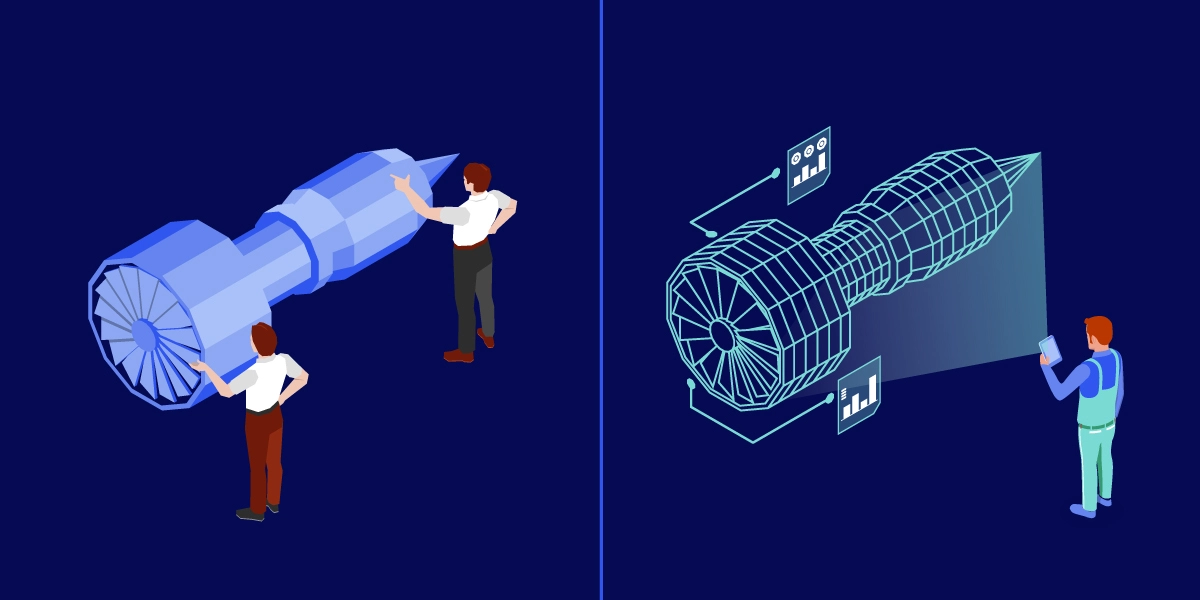
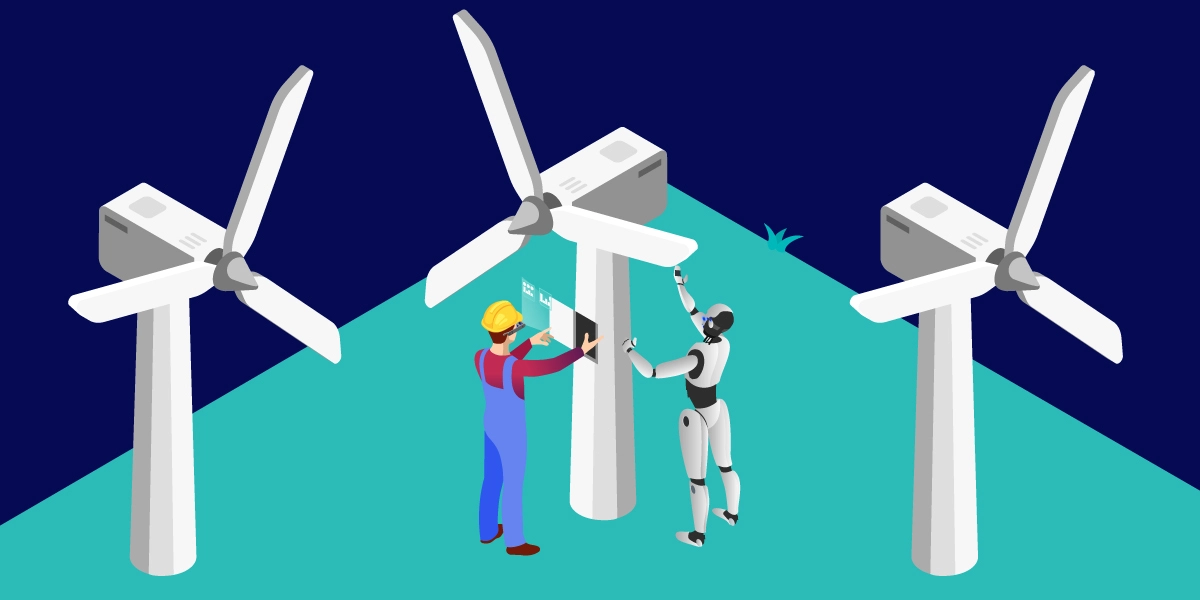
For instance, imagine a group of industrial designers in scattered locations interacting with a real-time virtual model instead of being in the same room as a physical prototype. Or rather than doing a site visit to assist a frontline worker with a technical problem, imagine a maintenance technician being able to overlay digital information onto the physical world, giving the worker exactly the information they need via smart glasses.

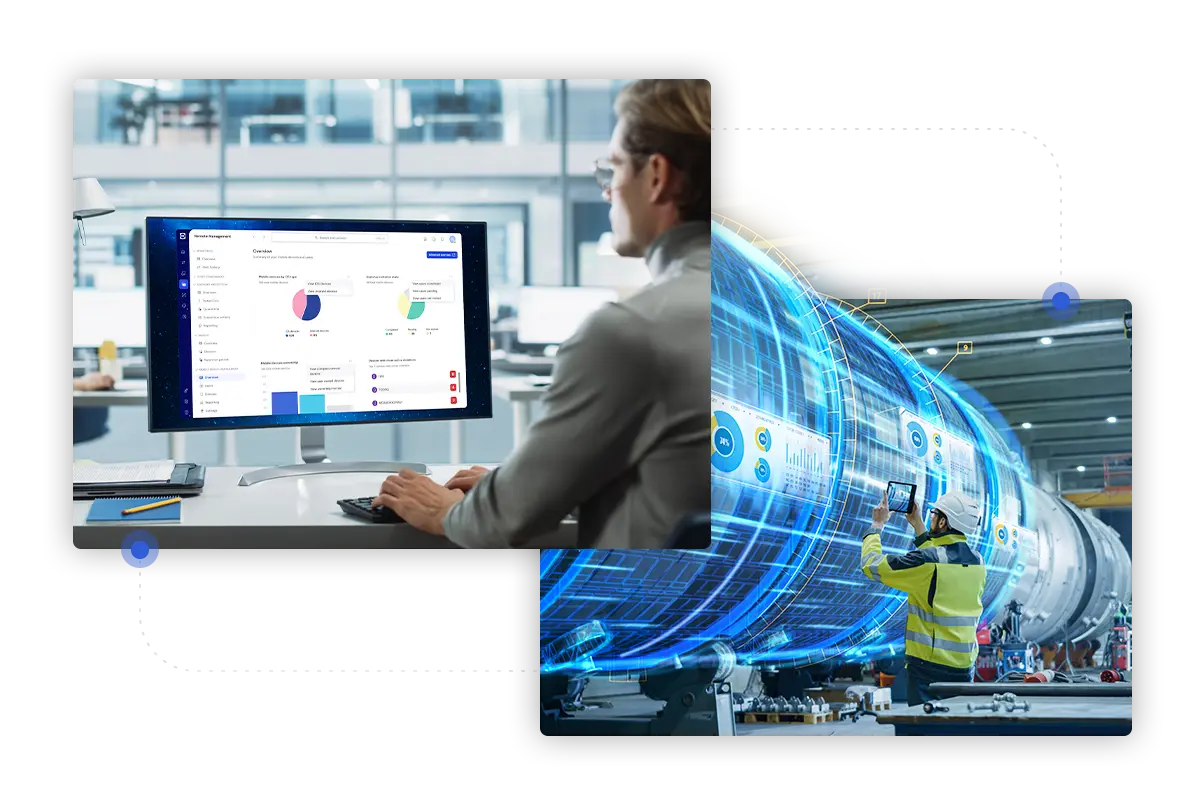
Man monitoring devices remotely

Driving productivity and quality standards

How can we better ensure that projects are delivered safely, efficiently, on time, and spec? The industrial metaverse can help drive improvements in all of these areas.

For example, the metaverse lets you create detailed visualizations of even your most complex systems and processes. This makes it easier to identify and address inefficiencies within those processes. On the safety front, AR and VR let you simulate hazardous scenarios, enabling you to practice and optimize safety protocols without exposure to real-world risks.

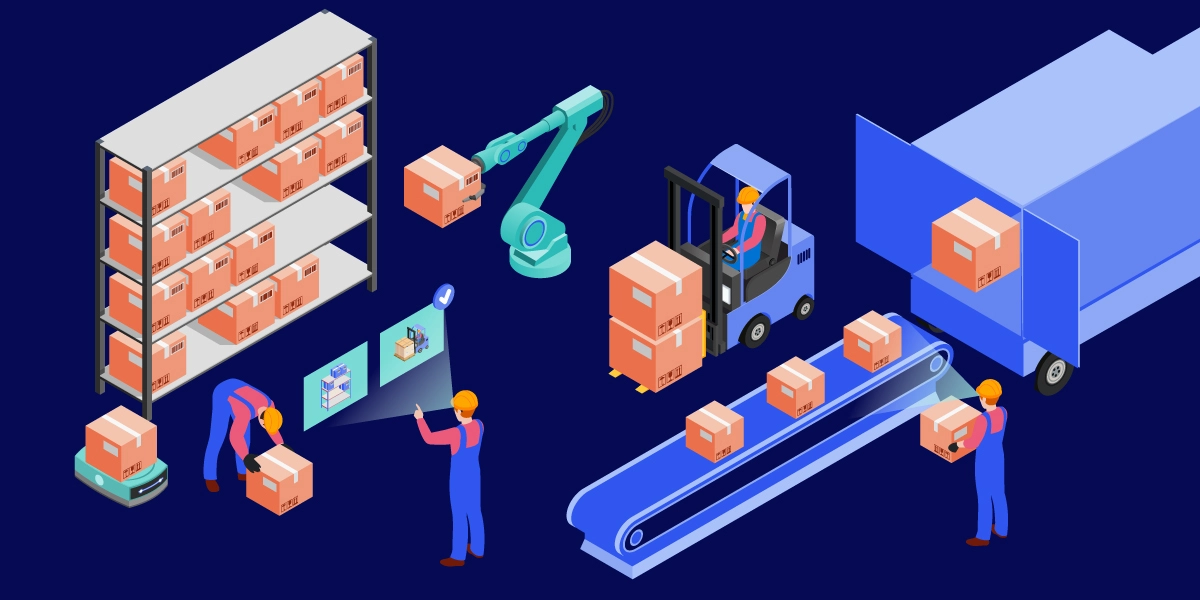
Onboard pick-by-vision employees remotely

The industrial metaverse is already here

It’s easy to see how things like virtual workspaces, 3D visualizations, and immersive training might benefit a business. But if they require you to take a chance on unfamiliar or experimental solutions, it’s natural that companies will be wary of implementing them.

The industrial metaverse is still growing, and it’s certainly an exciting space for innovation. However, we’ve gone way beyond having to ‘take a chance’ on unfamiliar solutions. The capabilities are here already, and TeamViewer is a case in point. Here, we’re talking about a secure, reliable connectivity solution that’s trusted worldwide and includes powerful AR and mixed reality (MR) capabilities. It’s precisely the type of platform you need to explore the metaverse's potential in a safe, controlled way.

How will the industrial metaverse improve operations?

Chart graph icon
Productivity

What exactly is holding your business back? One of the most important elements a digital twin delivers is visibility: i.e. a reliable and up-to-date view of a particular physical object — or a whole process or system. Armed with this, you are much better able to spot weak productivity points and address potential problems before they translate into business outages.

Impact asset downtime on cost icon
Cost savings

Think of all the time and costs your business spends on technical troubleshooting, checks, maintenance, and responding to routine employee problems. The industrial metaverse doesn’t make all of these problems disappear. However, the technologies associated with it can make it much quicker, easier, and cheaper to tackle them. As just one example, with access to a digital overlay combined with smart glasses, employees get the information they need to get the job done, at exactly the right time, significantly reducing the need for supervisor input.

Leaf icon
Sustainability

All businesses are under intense pressure to improve their sustainability. The industrial metaverse directly addresses this priority. Creating a digital counterpart of physical assets makes it much easier to identify instances of waste and areas where emissions may be reduced. Virtual solutions for maintenance, support, and training can also help reduce your environmental footprint.

What are the challenges of the industrial metaverse?

Will they work seamlessly and communicate with enterprise resource planning, product lifecycle management, IoT platforms, and other assets? As you consider new solutions, look for features such as integration with major enterprise software solutions and options for custom integrations.

One of the obvious side effects of this is a much larger data and security footprint. In implementation — and especially when choosing technology providers — make sure they have a strong reputation regarding cybersecurity and data protection.

For many companies, it’s a case of incremental adoption, e.g., starting with AR-guided tools in a particular part of the business and then extending roll-out, stage by stage. The solutions you adopt should be versatile enough to support this approach, enabling you to scale efficiently at whatever rate and to whatever extent you are comfortable with.

TeamViewer and the industrial metaverse

The changes promised by the industrial metaverse are well underway. Technological advances such as digital twins, AR, MR, and remote access software are already empowering employees and supercharging productivity across various sectors. Here at TeamViewer, we’re proud to be at the forefront of this exciting new approach. 

As just one example, let’s look at the Coca-Cola Hellenic Bottling Company (HBC), one of Coca-Cola’s largest bottlers. Armed with the TeamViewer Frontline Pick solution, workers are shown the picking items, locations, and quantities, right in their field of view, leaving hands free for the actual task. Meanwhile, backend integration enables status updates of all individual orders. The result? A picking accuracy rate of 99.99%, and a productivity increase of 10%. 

This is a prime example of the industrial metaverse at its best. Relevant information is delivered to the people who need it at exactly the right time — i.e., an enrichment of reality rather than a replacement for it. 

This approach is evident through TeamViewer Frontline, our enterprise productivity platform with fully integrated AR technologies. Delivering a digital overlay into workers' fields of view streamlines even the most complex processes in any industry. To see what’s possible for your business, look at our case studies.