Improve order picking with augmented reality solutions for warehouse management
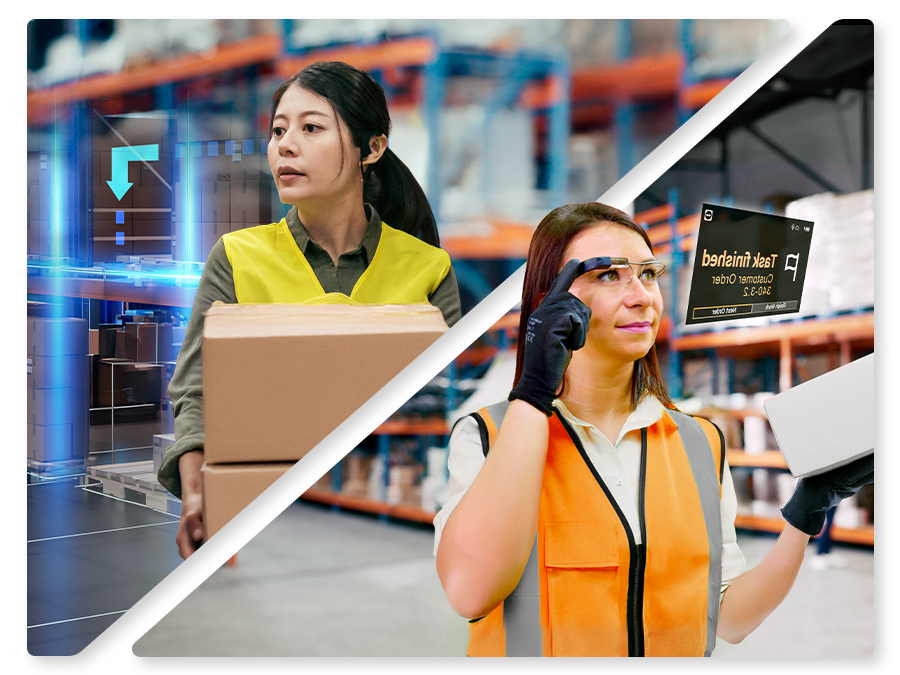
Order picking is the process of locating and collecting items in a warehouse to fulfill customer orders. It is one of the most critical warehouse management processes, directly impacting the speed, accuracy, and cost of order fulfillment.
The right picking method depends on your company's size, order volume, and priorities. Combined with the right technology, it can reduce errors and mispicks, improve accuracy, and increase productivity. Options range from inventory management software and mobile scanners to pick-by-light systems and augmented reality. TeamViewer can help optimize order picking from end to end.
When deciding on the right warehouse picking strategy for your organization, you need to consider:

With pick-by-paper, order details such as item type, quantity, and storage location are provided on a printed pick list. Warehouse workers retrieve the items and confirm picks by checking them off on the list.
Pick-by-paper is easy to implement, requires little training, and is cost-effective due to its low upfront investment. It is also flexible, allowing workflows to adapt to changing requirements.
However, the process is prone to errors and can be time-consuming because workers cannot operate hands-free. It also lacks real-time connectivity to a WMS, inventory control system, or order tracking software.
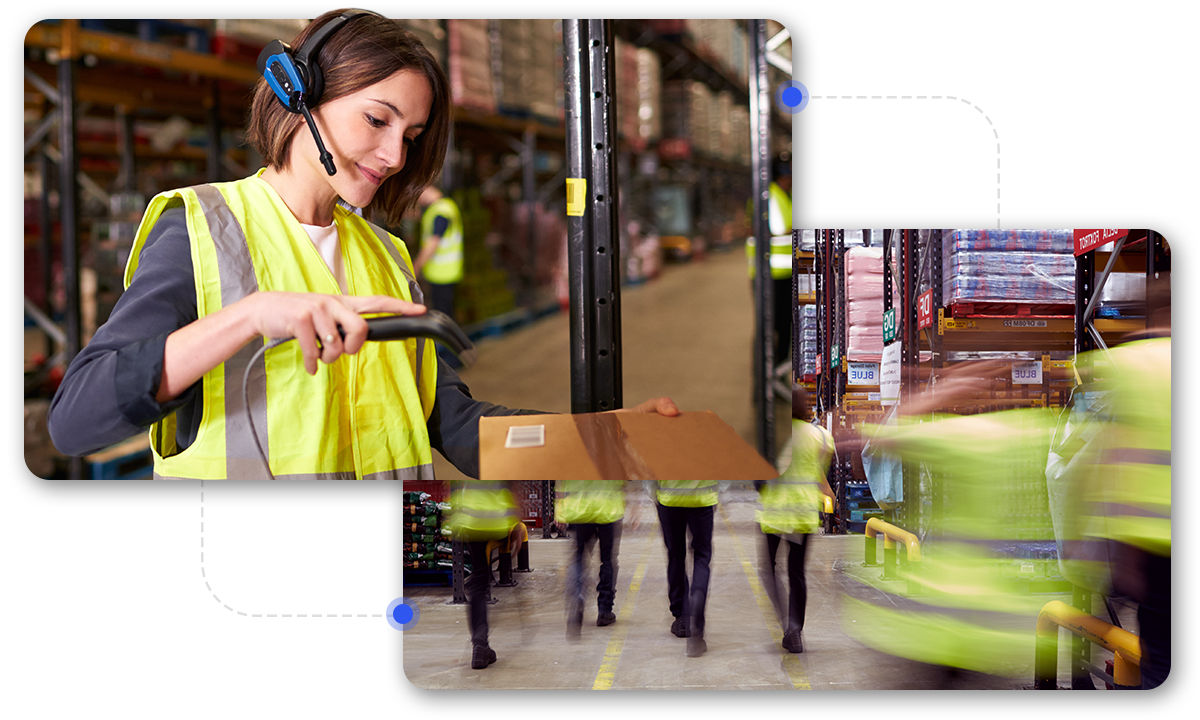
With pick-by-scan, the picking list is displayed on a mobile data entry (MDE) device. Workers confirm picks by scanning a barcode on the shelf or product, keeping every pick connected to live order data without paperwork.
This enables real-time communication with the warehouse management system (WMS) and eliminates analog pick lists. The WMS manages warehouse operations, tracking inventory from arrival to dispatch. Because inventory is updated immediately after each scan, the risk of errors is reduced and processes become faster.
However, workers still need to hold a scanner, leaving at most one hand free. The user interface of pick-by-scan solutions can be confusing, which may increase training time and lead to mistakes and delays.

Pick-by-light removes the need for pick lists by using small LEDs on shelves to indicate which items to pick. Digital displays show the required quantity, and workers confirm picks by pressing a button on the shelf.
The system is paperless, keeps workers' hands free, and enables faster picking with an easy-to-learn workflow. While accuracy improves, flexibility is limited and implementation costs are high.
Pick-by-light often requires changes to warehouse infrastructure and setup, making workflow adjustments more difficult. Because light signals are not linked to specific orders, pick-by-light is relatively inflexible.

With pick-by-voice, warehouse workers receive spoken instructions through a headset connected to the WMS. The system provides location and quantity details, and workers confirm picks verbally.
Because both hands and eyes remain free, picking is faster and less physically demanding. Instructions can be delivered in the worker’s preferred language, making onboarding easier and supporting multilingual teams. Each confirmation updates the WMS in real time.
However, a noisy warehouse floor can affect speech recognition, and workers must remember information after hearing it. This increases mental load and makes voice less suitable for complex orders that require images or additional context.

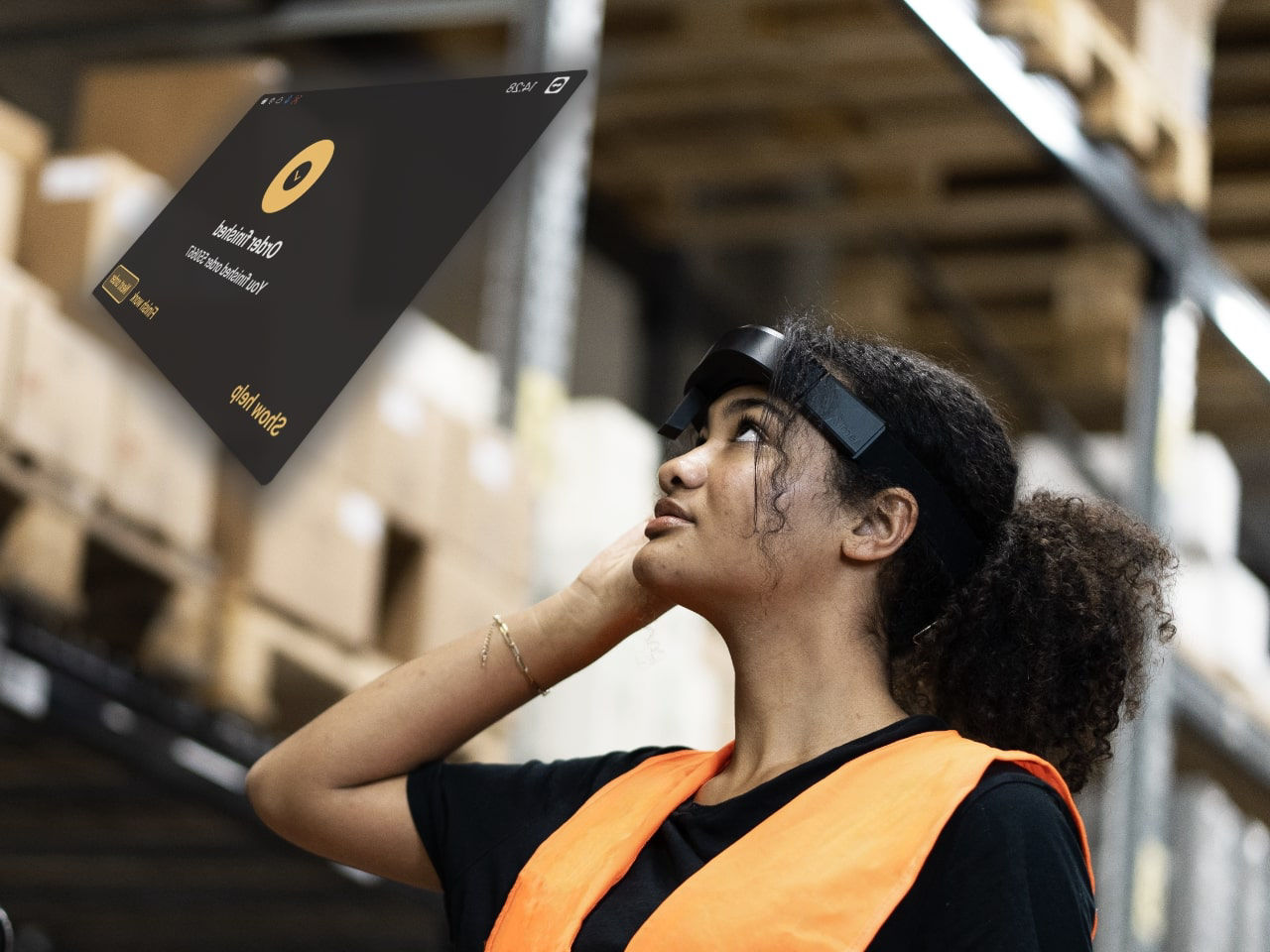
Pick-by-vision replaces lists and displays with a visual overlay in the worker's field of view. AR smart glasses show the next location, item, and quantity, while picks are confirmed with a scan.
The method combines the benefits of other picking systems. Both hands remain free, the WMS connection stays live, and workers can view item images and order details. Search time, error rates, and training effort are reduced because the instructions are self-explanatory. Since the solution runs over Wi-Fi, no changes to shelving or warehouse infrastructure are required.
However, it does require introducing wearable devices and a short adjustment period for teams accustomed to paper-based or handheld scanning processes.
A warehouse management system (WMS) tracks every order, but the actual picking happens out on the warehouse floor.
TeamViewer Frontline connects the two. Warehouse managers get a live view of what is happening, and workers get clear, hands-free guidance straight through their AR glasses.
AR glasses connect directly to your WMS, displaying live stock levels, bin locations, and pick lists without manual lookups or handheld computer systems.
Workers see step-by-step visual instructions through augmented reality glasses, improving picking productivity and accuracy by up to 30%.
TeamViewer Frontline integrates with leading warehouse management platforms such as SAP EWM, Oracle WMS, Manhattan, and Blue Yonder through standard APIs, with no disruption to existing workflows.
Internet of Things (IoT) sensors and connected devices feed real-time data back to the WMS, so warehouse managers can monitor throughput, identify bottlenecks, and optimize order fulfillment in real time.
Hands-free AR solutions reduce physical strain and improve safety on the warehouse floor, while automated logging ensures full traceability for every pick.
Start with a single picking zone and scale across your entire logistics operation. The WMS integration adapts to your infrastructure, whether you run a single warehouse or a global network.
Robots, conveyors, sorters, and other devices reduce human errors and increase speed and accuracy.
Connecting your picking system with inventory management, order management, or warehouse management improves visibility, coordination, and communication.
Algorithms, software, or artificial intelligence minimize travel time and distance, improving productivity and efficiency.
This can be done using wearable devices, voice recognition, barcode scanners or RFID tags. Benefits include real-time information, guidance, and feedback.
IoT sensors and connected devices enable real-time inventory tracking and predictive maintenance across the warehouse.
AR creates immersive training for warehouse workers, overlaying step-by-step instructions and 3D visuals onto real equipment or layouts, so new hires rehearse picking scenarios before working live orders.

Industrial augmented reality solutions are the next step in warehouse order picking.
AR systems such as TeamViewer's pick-by-vision solution Frontline Pick overlay digital information onto what workers see in front of them.
Through AR-enabled smart glasses or headsets, workers receive visual or audio guidance, instructions, and support.
The smart glasses or head-mounted display (HMD) shows workers:
The worker confirms each pick with a scan, using either an integrated camera or a separate scanner connected via Bluetooth. Optional accessories include an ergonomic ring, glove scanners, or wearable RFID technology.
Pick-by-vision technology with AR reduces training and onboarding time for warehouse workers. Step-by-step instructions are easy to follow and deliver the right information exactly where it is needed, which speeds up the learning process so warehouse workers start adding value almost immediately. It also dramatically increases picking productivity by reducing search time and eliminating paper-based workflows.
The picking process throughout the warehouse is also faster, as people tend to take in information more quickly with visual cues. Instructions and messages appear on the display the moment they are needed, and workers benefit from hands-free operation and ergonomic wearables.
AR systems are flexible, Wi-Fi-based solutions, so there is usually no need to change the warehouse infrastructure. Standard interfaces let vision picking systems integrate with most warehouse management systems. The result is that AR solutions empower warehouse managers to monitor picking performance in real time, while warehouse workers receive hands-free visual guidance.
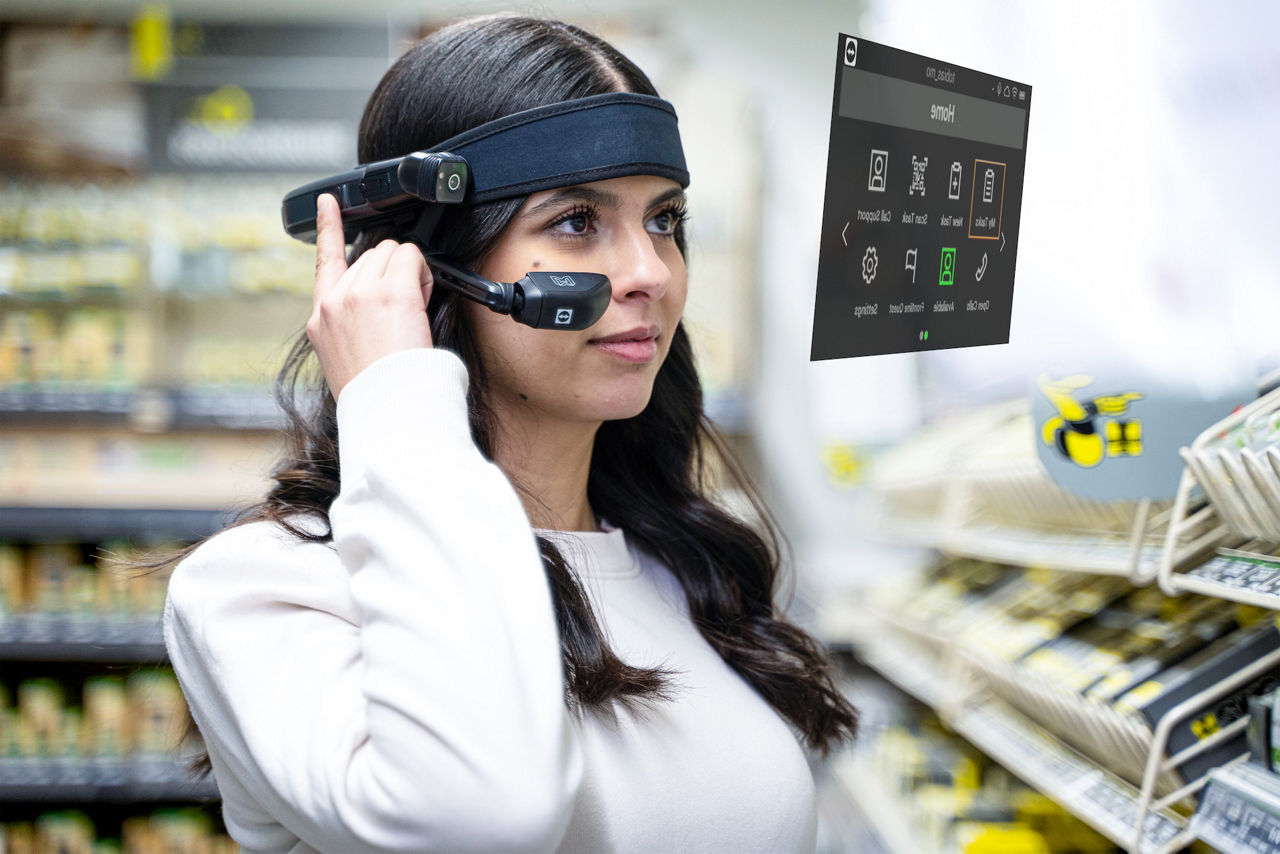
TeamViewer Frontline is a leading, cloud-based AR solutions platform for enterprise productivity.
It brings industrial AR technology to the entire value chain. With augmented reality, it empowers workers across digitized logistics, manufacturing, inspection, maintenance, and troubleshooting.
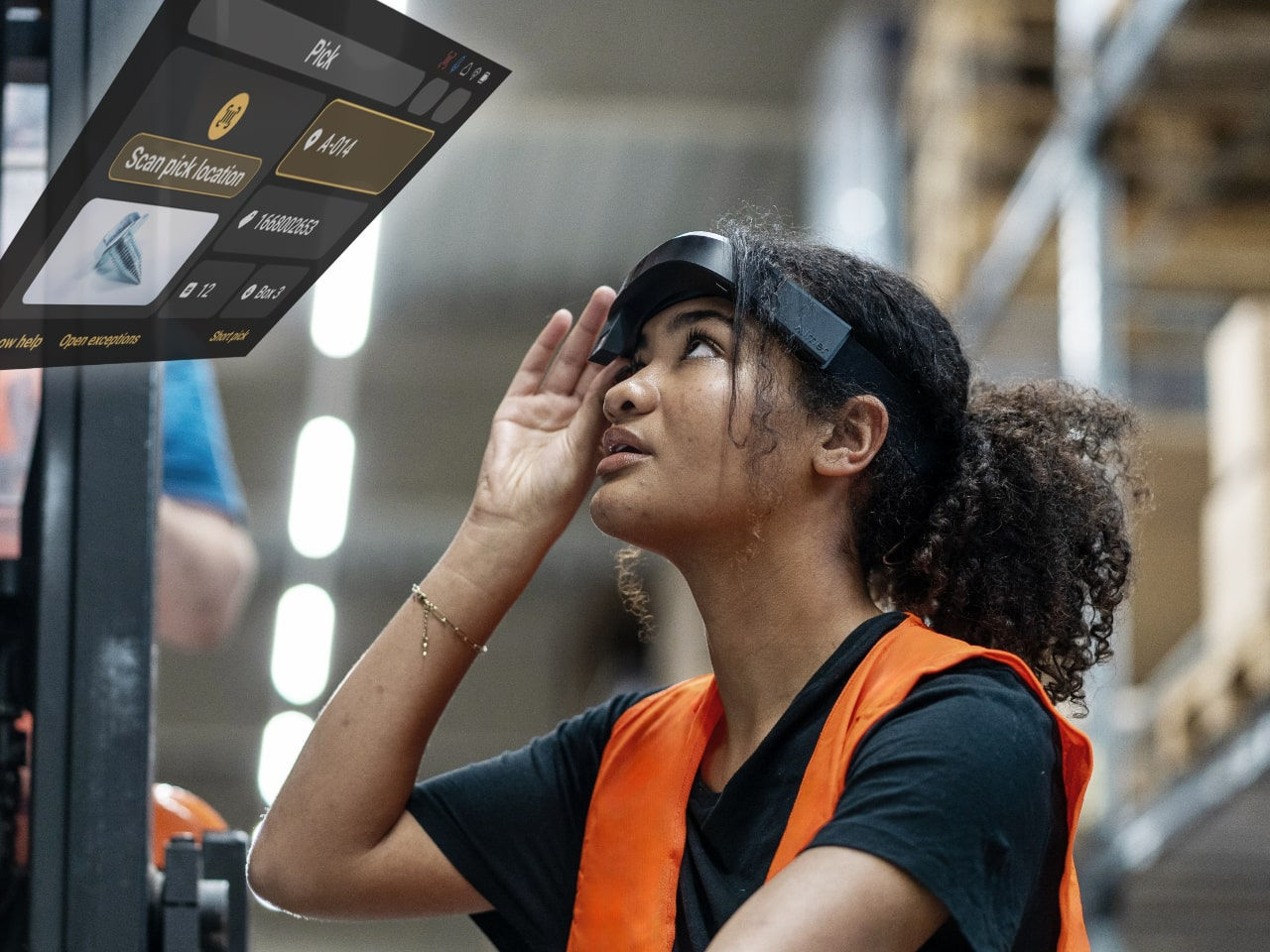
Frontline Pick is a vision picking system and part of the TeamViewer Frontline platform.
It uses smart glasses to guide and assist warehouse workers as they fulfill orders, and it also supports other wearable and mobile devices. Frontline Pick integrates seamlessly with existing warehouse management systems, so it fits into your operation without disruption.
The result is fewer errors and lower costs, faster order fulfillment, and higher customer satisfaction.
Reduce errors and costs and increase customer satisfaction
Common order picking methods include single, batch, cluster, wave, and zone order picking. Single picking handles one order at a time, while batch picking, cluster picking, and wave picking group multiple orders. Zone picking assigns each picker to a defined warehouse area.
The best option depends on order volume, budget, and conditions. Pick-by-paper is cheap but error-prone. Pick-by-scan is accurate but ties up one hand. Pick-by-light is fast but costly to install. Pick-by-voice is hands-free but struggles with complex orders. Pick-by-vision is flexible but requires new devices.
Augmented reality (AR) shows order pickers visual, hands-free guidance through smart glasses, including the optimal picking route and item details. This increases picking productivity and accuracy, reduces training time, and lets workers keep both hands free during picking operations.
Warehouse order picking software connects your warehouse management system (WMS) to the floor, so picks follow live inventory levels. TeamViewer Frontline Pick adds AR guidance on top, turning order picking software into real-time visual instructions for every order picker.
Yes. Frontline Pick integrates with leading warehouse management systems such as SAP EWM, Oracle WMS, Manhattan, and Blue Yonder through standard interfaces. It is a Wi-Fi-based solution, so there is usually no need to change your existing warehouse infrastructure.
Choose your order picking system based on order volume, item types, the number of order pickers, warehouse layout, and the technology and budget you can invest in. Many warehouses combine methods, such as zone and batch picking, to fit their warehouse operations.
Efficient order picking improves operational efficiency and order accuracy, which means fewer errors, lower costs, and faster order fulfillment. Complete, timely deliveries keep customers happy and help your company maintain a competitive advantage in its warehouse operations.
Efficient warehouse operations rely on minimizing errors and wasted time. Keep fast-moving items easily accessible, track performance metrics to identify areas to improve, and choose picking methods that fit your fulfillment process. Done well, this streamlines operations and supports timely and accurate deliveries.