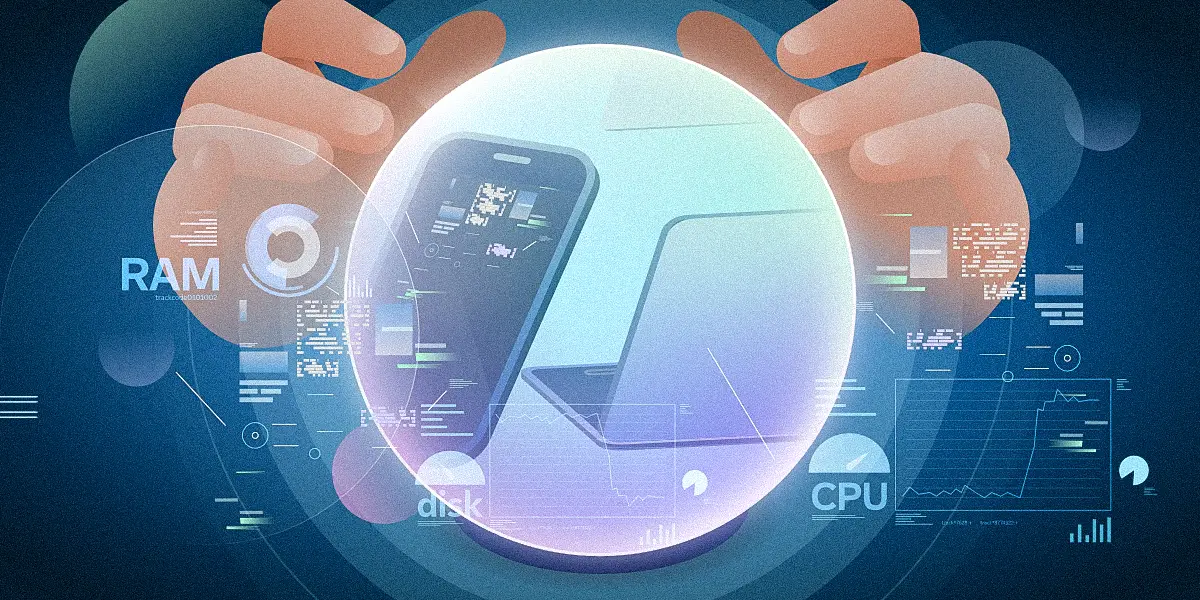
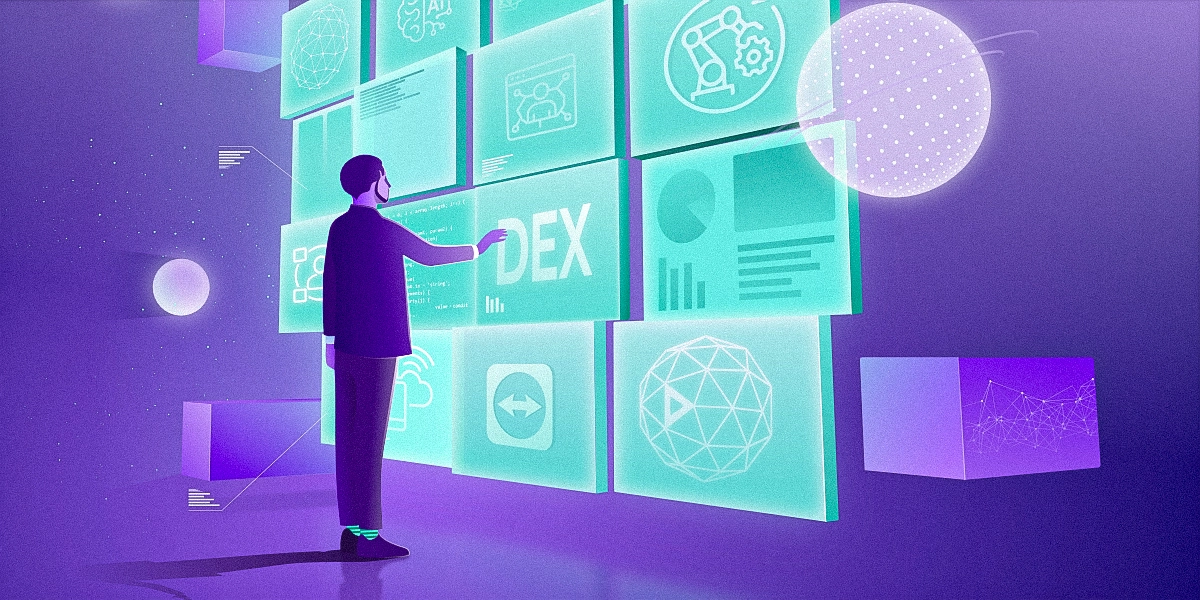
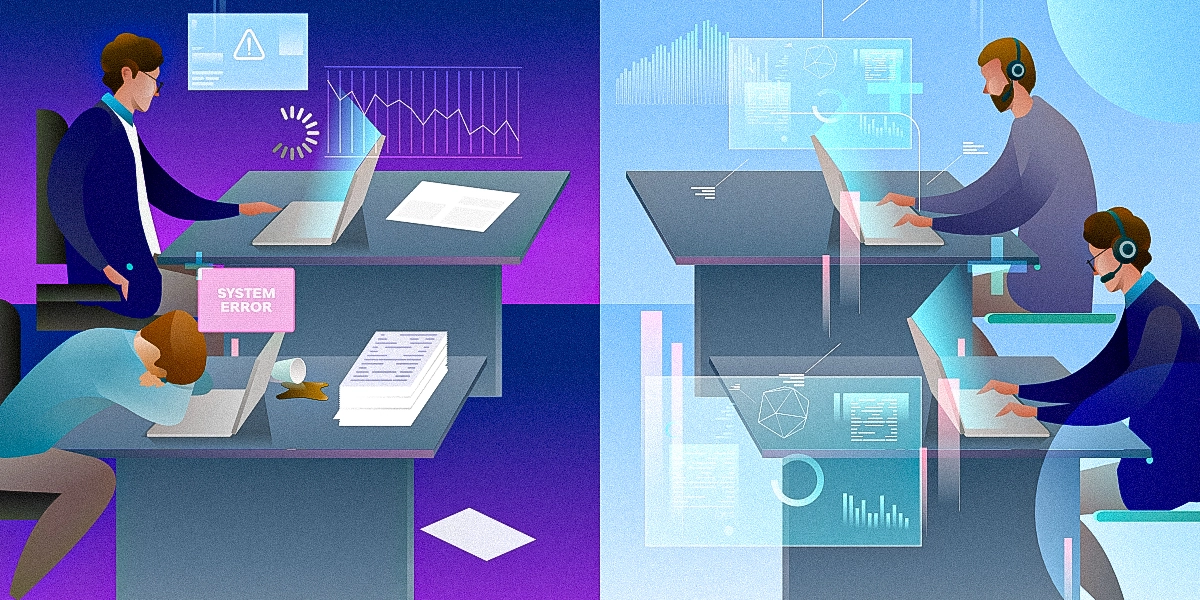
With automation and intelligent insights, IT teams can spot problems early and fix them before they affect employees. This makes endpoint management a key part of a digital employee experience (DEX) operating model.
As environments become more complex, using many separate tools makes work more challenging and breaks the user experience. A digital workplace platform brings endpoint management, automation, remote access, and experience insights together.
EM, UEM, MDM, EMM: What's the difference?
Before we dive deeper into endpoint management, let’s define the different related concepts.
EM (endpoint management) is the overarching term for managing all endpoints within an organization’s network. This includes desktop PCs, laptops, servers, smartphones, and IoT devices.
UEM (unified endpoint management) takes EM a step further. It aims to provide a single platform for managing all endpoint types. This streamlines the endpoint management process.
MDM (mobile device management) is a subset of EM that focuses on mobile device management. This includes smartphones and tablets, to ensure they meet security and compliance requirements.
EMM (enterprise mobility management) goes beyond MDM. It involves managing mobile devices, applications, and data. This enables employees to use corporate mobile devices securely and efficiently.
While UEM helps manage different device types from one platform, it doesn’t cover everything. It often falls short in performance, digital employee experience, and the effort required to fix problems at scale.
In reality, today’s endpoint management needs to go beyond UEM. It needs to include proactive monitoring, automated remediation, and DEX.
How does endpoint management in the age of DEX work?
Endpoint management relies on time-tested foundations. Modern approaches include additional intelligent and proactive layers.