18 Mar 2025

IT/OT convergence in manufacturing: Benefits, challenges, and best practices

Learn how IT/OT convergence helps manufacturers reduce downtime, improve visibility, and enable secure remote operations across industrial environments.

Manage systems and machines, Connect and support people

Manufacturers face constant pressure to reduce downtime, cut costs, and stay competitive. But when IT and OT systems operate in separate silos, these goals become harder to achieve.

For OT engineers, the priority is keeping production running. For IT teams, it is securing the systems that production depends on. Although these goals complement each other, the teams have historically relied on different tools and processes. This can lead to fragmented infrastructure, operational disruptions, and security gaps.

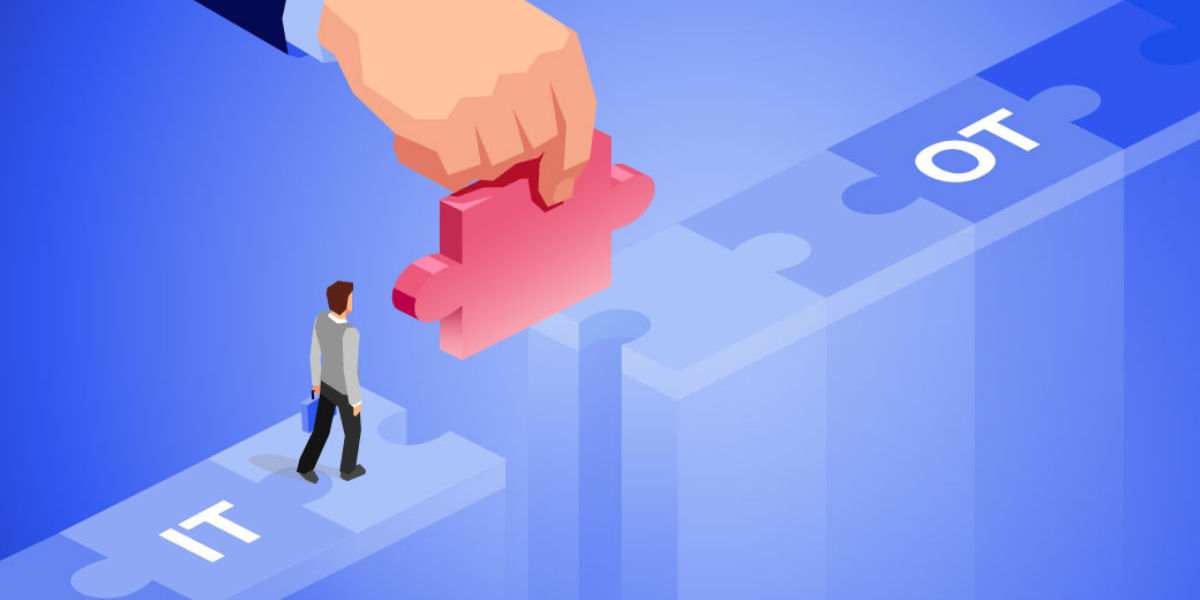
IT/OT convergence addresses this divide. However, successful convergence requires solutions that support both IT security requirements and OT workflows. This guide explains what IT/OT convergence means, its benefits and challenges, and how manufacturers can approach it effectively.

Key Takeaways

  • IT/OT convergence connects information systems with operational technology to create a unified, data-driven manufacturing environment.
  • Disconnected systems cost manufacturers billions every year through unplanned downtime, poor decisions, and reactive maintenance.
  • Key benefits include real-time visibility, remote monitoring, automation, and a stronger cybersecurity posture.
  • The main challenges include legacy-system integration, cybersecurity risk, third-party access, cross-team alignment, and ROI justification.
  • TeamViewer Tensor is an enterprise remote connectivity platform that gives IT and OT teams secure, auditable access to industrial systems without disrupting production.

What is IT and OT convergence?

IT/OT convergence is the integration of Information Technology (IT) and Operational Technology (OT) into a single connected environment that shares data and supports smarter decisions across the entire manufacturing operation.

IT covers the information technology systems used to store, process, and analyze data. This includes enterprise applications, cloud platforms, corporate networks, data storage, and data management.

OT covers the operational technology systems that control physical industrial operations:

  • Sensors: measure physical variables like temperature, pressure, and vibration in real time
  • Programmable logic controllers (PLCs): industrial computers that automate and control machinery and production processes
  • SCADA systems: supervisory software that monitors and controls industrial equipment across an entire facility or site
  • Distributed control systems (DCS): manage complex, continuous processes by distributing control across multiple connected controllers
  • Human-machine interfaces (HMIs): the screens and dashboards that let operators interact with and monitor industrial equipment
  • Manufacturing execution systems (MES): software that tracks, manages, and optimizes production from raw material to finished product

The cost of divided systems

For decades, IT and OT operated separately. Before the rise of IIoT, the cloud connectivity and advanced analytics, this approach was often sufficient.

Today, siloed systems create costly blind spots. Here is what IT and OT staying siloed can cost manufacturers:.

  • Cybersecurity exposure: The average data breach now costs $4.88 million. Separate IT and OT networks often create security gaps that attackers can exploit.
  • Poor decision-making: According to IDC Market Research, organizations lose 20-30% of annual revenue to inefficiencies caused by siloed or outdated data.
  • Reactive maintenance: Manufacturers experience an average of 800 hours of unplanned downtime per year. contributing to an estimated $50 billion inductry-wide losses per year.
  • Missed automation opportunities: Disconnected systems limit the use of analytics, automation, and AI that can improve efficiency, productivity, and quality.

Why IT and OT convergence matters now

IT/OT convergence is not just about connecting systems. It is about giving the right people the right data at the right time, in an industry that can no longer afford to operate any other way.

Manufacturing is under pressure

The global manufacturing sector is a complex and shifting landscape shaped by economic uncertainty, geopolitical tensions, and rapid technological change. While overall output grew modestly—rising 0.6% in 2024—this figure masks deeper regional and sectoral disparities. Excluding China, the sector actually contracted by 0.9%. European manufacturers in particular faced energy shortages, inflation, and the ongoing disruption of geopolitical instability. Add escalating trade tensions and rising tariffs, and business confidence across multiple regions is eroding fast.

Digital transformation is reshaping manufacturing

Technology is changing what it means to stay competitive in manufacturing. Investment in AI, sustainability, and digital infrastructure is no longer a future priority. It is happening now:

  • 48% of manufacturers are actively considering investment in AI and machine learning

  • 68% of manufacturing executives are implementing extensive, corporate-wide sustainability strategies

  • Workforce complexity is growing, with manufacturers increasingly dependent on IT and software skills that the available talent pool has not kept pace with

Digital transformation in manufacturing is the mechanism through which companies reduce waste, improve resilience, and stay competitive.

From silos to connected operations

When IT and OT share data seamlessly, teams gain the visibility they need to identify issues faster, troubleshoot more effectively, and make informed decisions across the organization.

A direct response to the skills gap

Some estimates put the number of unfilled manufacturing roles globally at 10 million. IT/OT convergence helps close that gap by making industrial environments more connected, more visible, and easier to manage remotely, with fewer people on-site.
 

Key benefits: Why manufacturers need IT and OT convergence now

Secure remote operations without compromising control

As industrial environments become more connected, manufacturers need to provide employees, vendors, and service partners with access to critical systems without increasing risk. Regulations such as NIS2 and the Cyber Resilience Act are raising expectations around access governance, auditability, and resilience. IT/OT convergence creates a common security foundation across both environments, enabling secure remote operations, granular access controls, and visibility into who can access which systems and when. The result is stronger protection for critical assets without disrupting production.

Real-time visibility enables smarter decisions

Converged IT and OT systems give operations leaders real-time visibility into factory-floor performance. Machine data, production rates, and process anomalies surface immediately, allowing teams to address issues before they become costly disruptions.

Remote monitoring speeds up issue resolution

Instead of waiting for an on-site technician, connected manufacturers can resolve many issues remotely. The Bühler Group used TeamViewer Tensor to diagnose and resolve problems in remote plant locations with limited connectivity, reducing site visits, shortening response times, and supporting its ISO 27001 certification efforts.

Automation in manufacturing drives efficiency and quality

IT/OT convergence provides the real-time data foundation needed for automation and AI in manufacturing. Automated systems streamline repetitive processes, reduce bottlenecks, improve quality, and increase efficiency.

TeamViewer's own research from 2024, based on 1,400 IT decision-makers across industries, shows AI adoption is accelerating across manufacturing:

  • 78% of decision-makers use AI at least weekly
  • 77% believe AI is critical for improving efficiency
  • AI already saves employees an estimated 10 hours per month

The most common use cases include customer support automation, data analysis, process automation, and supply chain optimization. AI depends on clean, connected, real-time data. Without IT/OT integration, AI tools lack the information they need to deliver value.

The biggest IT/OT convergence challenges and how to overcome them

Legacy systems create integration hurdles

Many manufacturers still rely on OT equipment that was never designed to connect to modern IT networks. Industrial gateways, edge computing, and cloud platforms help bridge this gap by connecting legacy systems to modern infrastructure. Secure remote access solutions such as TeamViewer Tensor allow IT teams to support OT environments without disrupting production.

Many organizations still rely on VPNs or homegrown access solutions, but these often lack the scalability, security, and auditability required in today's industrial environments. Purpose-built remote connectivity has become the new standards.

Cybersecurity risks increase as IT and OT environments converge

Connecting IT and OT expands the attack surface, particularly when legacy OT systems lack modern security controls. In manufacturing, a breach can do more than expose data. It can halt production, damage equipment, and create safety risks.

Effective IT/OT cybersecurity requires:

  • Network segmentation to isolate OT environments
  • Zero trust architecture to verify every user and device
  • Identity and access management (IAM) to enforce least-privilege access
  • Compliance frameworks such as IEC 62443 and NIST

Vendor and contractor access is difficult to secure

External vendors often require remote access for support and maintenance. Traditional VPNs frequently provide broader access than necessary, increasing security risks.

Modern remote connectivity solutions restrict access to specific devices and provide visibility, audit trails, and role-based permissions. This helps organizations maintain security without disrupting operations.

IT and OT teams need to work together

OT teams prioritize keeping production running, while IT focuses on security. Successful IT/OT convergence requires solutions that support both goals.

This means:

  • Giving engineers control over equipment access
  • Embedding security without disrupting daily operations
  • Treating OT teams as partners in the integration process

When both teams align around shared goals, collaboration replaces friction and security becomes easier to adopt.

Justifying the ROI

IT/OT integration requires upfront investment, but a  Boston Consulting Group study found that companies implementing IT/OT integration typically achieve an average ROI of 20-30% within three years, driven by reduced downtime, improved resource utilization, and greater operational efficiency. Standardized access controls can also strengthen regulatory compliance.


IT/OT convergence architecture explained
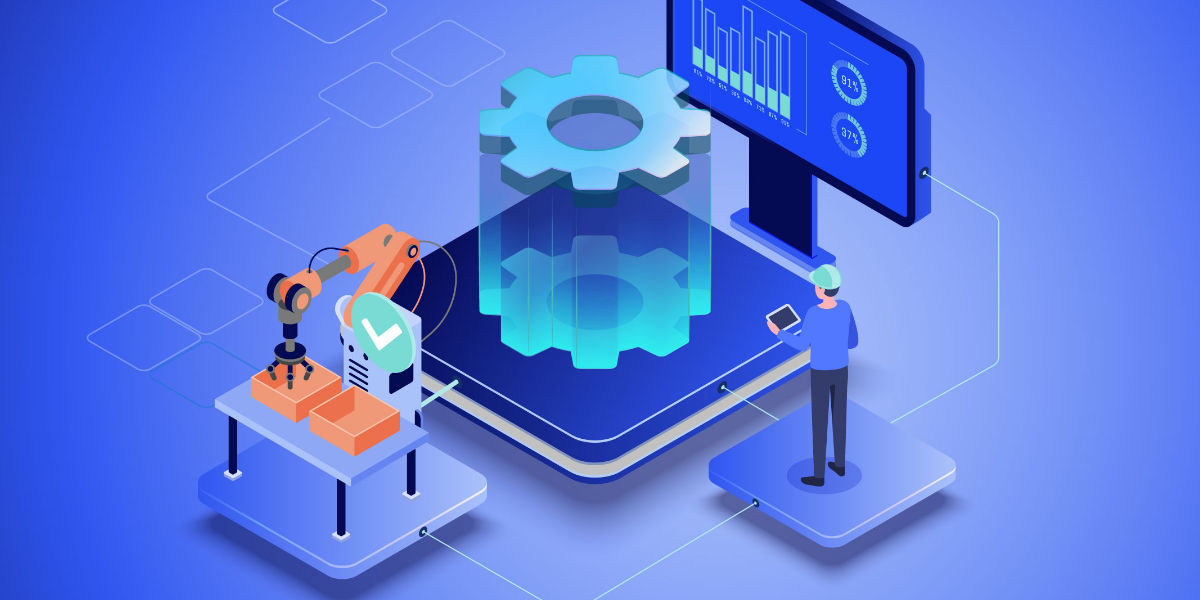
A converged IT/OT environment is built on three connected layers:

  1. Edge computing at the factory floor
  2. Cloud platforms for centralized visibility
  3. Secure remote access for people and systems to interact safely across both environments

Each layer plays a distinct role, and all three need to work together for IT/OT convergence to deliver real operational value.

Edge computing connects machines and operational data

Edge computing processes data directly at or near the source, on the factory floor itself. Instead of sending raw OT data all the way to a central cloud, edge devices filter, analyze, and act on it locally. This is especially important for OT environments where low latency is critical and where network connectivity may be inconsistent.

Cloud connectivity enables centralized visibility

Once relevant data is processed at the edge, cloud platforms like Microsoft Azure IoT or AWS IoT Hub bring it together centrally. This gives IT teams, operations directors, and senior management a unified view across all production assets and sites.

Secure remote access connects people, systems, and factories

The third pillar is secure remote access. IT and OT teams need to access industrial systems, PLCs, HMIs, and network endpoints without disrupting production. This is where purpose-built remote connectivity platforms like TeamViewer play a critical role. They provide secure, auditable, and role-based access to connected environments across your entire manufacturing footprint, without requiring on-site presence.


Why remote connectivity is essential for IT/OT convergence

Remote operations is the practical category that makes IT/OT integration work in the real world. It covers everything from secure remote access and device management to diagnostics, troubleshooting, and AR remote assistance. Without it, even a well-architected convergence strategy depends on people being physically present, which is neither scalable nor sustainable.

Remote support reduces downtime and improves response times

Remote connectivity lets IT and OT teams diagnose and resolve issues without traveling to the source. The difference between a 15-minute remote fix and a half-day service call is measurable in both cost and production output.

Remote diagnostics and troubleshooting improve operational visibility

With remote access to PLCs, HMIs, and industrial controllers, technicians can read diagnostic logs, adjust configurations, and test fixes without touching the physical environment. This reduces risk and accelerates resolution.

Industrial remote access enables secure connectivity across manufacturing environments

Purpose-built industrial remote access tools handle the security constraints of OT environments. They support unattended access to OT devices, headless systems, embedded platforms, and physically inaccessible endpoints, without opening unnecessary network exposure.

Centralized device management improves scalability and control

Managing hundreds or thousands of endpoints across multiple sites requires centralized visibility. Remote connectivity platforms with built-in endpoint management let small IT teams scale support across an entire manufacturing ecosystem. This directly addresses the skills gap challenge.

AR remote assistance helps capture and share knowledge

Augmented reality tools like Assist AR let remote experts guide on-site workers step by step through maintenance and repair procedures. This makes skilled expertise available anywhere in the world, reducing the operational impact of unfilled technical roles. At the same time knowledge from the support session is captured and shared across the team for easier resolution of repetitive issues.

How TeamViewer Tensor secures connected industrial environments

As IT and OT environments become more connected, robust access controls are essential. TeamViewer Tensor is an  enterprise remote connectivity platform that provides secure, auditable access to industrial systems.

It supports IT governance requirements while allowing OT teams to maintain control over their equipment and workflows. Its security capabilities include:

  • Conditional Access policies
  • Single sign-on (SSO) and multi-factor authentication (MFA)
  • Session recording and audit logs
  • Granular, role-based access control
  • Agentless Access to specific shop-floor endpoints without installing software directly on the endpoint
  • Security practices aligned with frameworks such as IEC 62443 and the NIST Cybersecurity Framework

OT teams retain operational control, while IT teams gain centralized visibility and governance.

Real-world examples: IT and OT integration in action

Cimbali Group: Product maintenance and uptime

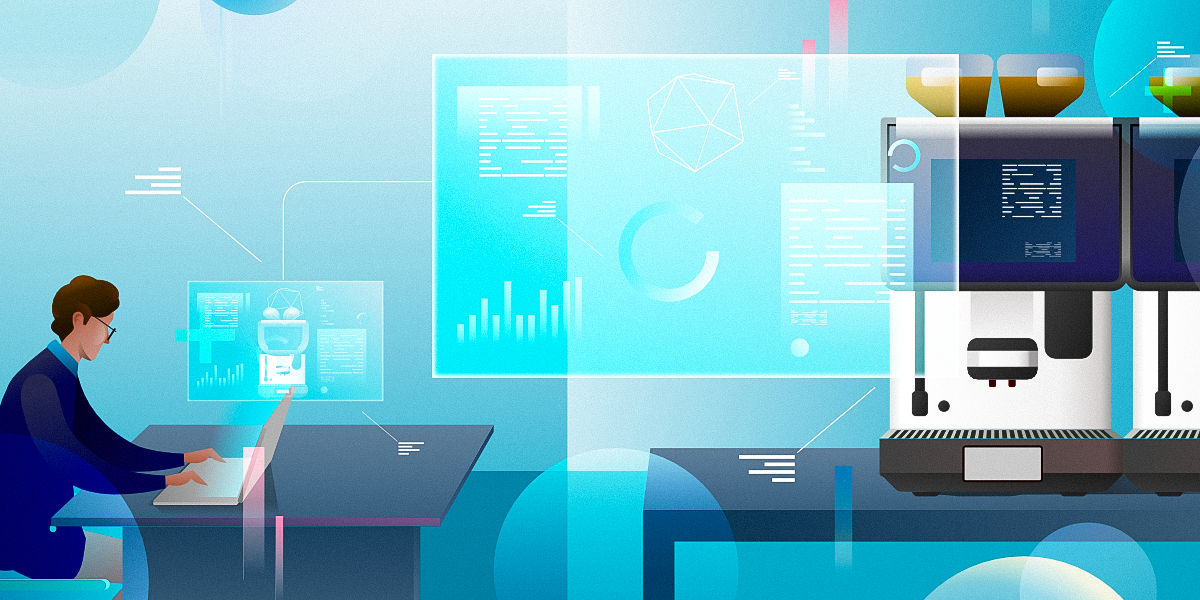
Cimbali Group, the world's largest manufacturer of professional coffee machines, previously relied on technicians travelling to customer sites before diagnosing machine problems.

By integrating TeamViewer into its connected coffee machines, technicians can remotely access machine interfaces, diagnose faults, and adjust software settings. The company reports a 20% increase in technician efficiency, lower service costs, and improved machine uptime.

Discover how Cimbali Group improved its service operations.

framas: Making remote connectivity the backbone of factory operations

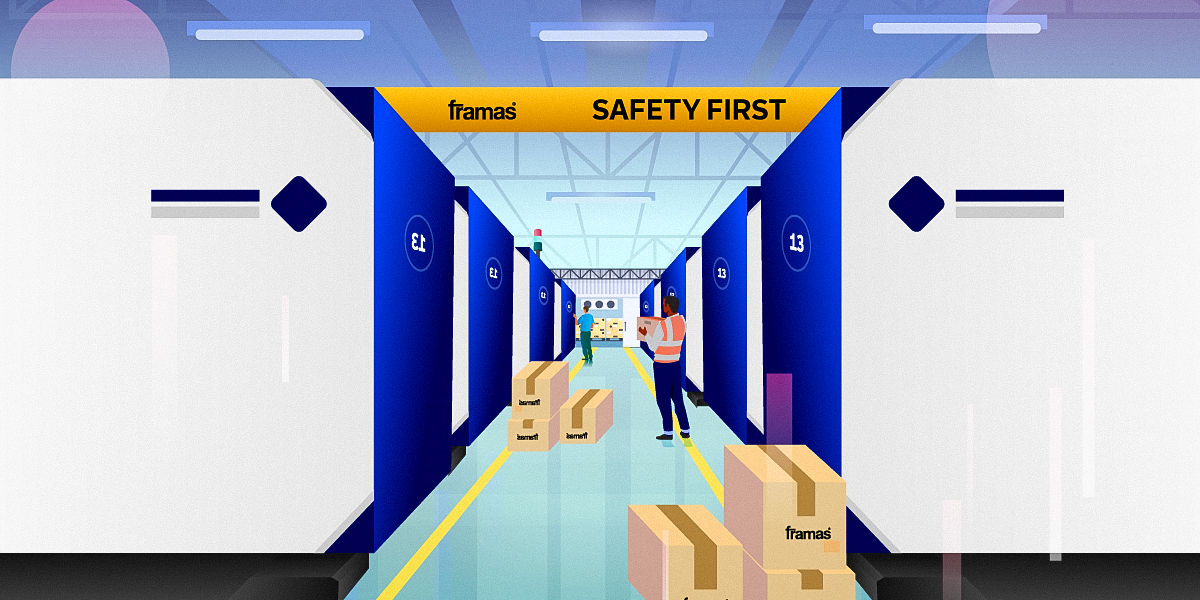
framas, a leading footwear components supplier with roughly 3,300 employees across 13 global sites, needed to support manufacturing equipment and employee devices across its global locations. Using TeamViewer Tensor, its teams can remotely diagnose connections between machines and the ERP system and support terminals across multiple sites. This has helped reduce downtime and travel while providing encryption, single sign-on, and connection traceability as part of a broader cybersecurity program.

See how framas supports a global manufacturing footprint with TeamViewer Tensor.

How to implement IT/OT convergence successfully

A successful IT/OT integration starts with a clear strategy and realistic expectations. Here are the key steps:

  1. Audit your current environment. Map all OT assets, identify legacy systems, and understand where IT and OT interact today and where they do not.
  2. Define your security boundaries. Network segmentation between IT and OT is non-negotiable. Apply zero trust principles from the start, not as an afterthought.
  3. Choose the right integration protocols. OPC UA and MQTT are industrial standards that enable communication between legacy OT and modern IT systems without forcing a rip-and-replace approach.
  4. Start with remote access. Secure remote connectivity is the fastest path to value from IT/OT integration. It reduces on-site visits and gives IT visibility into OT environments almost immediately.
  5. Align IT and OT teams early. Involve both teams from the beginning. Shared goals and cross-functional training reduce friction and accelerate adoption.
  6. Measure and improve. Set clear KPIs around uptime, response times, and maintenance costs. Use real data to refine your approach over time.

IT/OT convergence

A path to smarter, more resilient manufacturing

IT/OT convergence can help manufacturers improve visibility, resolve issues faster, and create the data foundation for automation and AI.

The transition still requires manufacturers to address legacy systems, cybersecurity risks, and organizational silos. Any solution must also protect production continuity and preserve OT control.

Ready to see what secure remote connectivity looks like in your environment?

TeamViewer Tensor is an enterprise remote connectivity platform that gives IT and OT teams secure, auditable access to the systems they need, without disrupting production or overriding the operational control that engineers depend on.

Frequently asked questions (FAQ)

Start with network segmentation to isolate OT systems from corporate IT. Apply zero trust principles, enforce strict identity and access management, and use secure remote access tools with full audit logging. Align with frameworks like IEC 62443 and the NIST Cybersecurity Framework throughout the process.

Converged systems let a smaller team of experts remotely monitor and support equipment across multiple sites. Instead of requiring on-site specialists at every location, manufacturers can centralize expertise and deploy it remotely. AR-based tools, like Assist AR,  extend this further by guiding workers on-site through complex tasks in real time.

According to Boston Consulting Group, companies that implement IT/OT integration typically achieve ROI of 20 to 30% within three years. Savings come primarily from reduced unplanned downtime, better resource utilization, and improved operational efficiency across production sites.

The most common hurdles are legacy OT systems that use proprietary protocols, expanded cybersecurity risks from increased connectivity, friction between IT and OT teams, and the need to justify upfront investment to leadership. Each challenge is addressable with the right strategy, tools, and cross-functional alignment.

Secure remote access lets IT and OT teams manage and troubleshoot industrial systems without physical site visits. It reduces response times, lowers travel costs, and gives engineers access to PLCs, HMIs, and controllers anywhere in the world, while maintaining strict access controls, audit trails, and session traceability.

Industrial IoT sensors generate the real-time data that IT/OT convergence relies on. Edge computing processes that data locally at the source, reducing latency and bandwidth demands. Together, they create a data pipeline that flows from the factory floor to cloud analytics platforms, giving teams operational visibility across the entire production environment.

AI relies on the real-time data that connected IT/OT environments generate. As manufacturers increasingly explore AI-driven use cases, connected data infrastructure provides the foundation for capabilities such as process optimization, quality control, and supply chain planning. Without reliable data flows across IT and OT systems, organizations may find it difficult to unlock the full potential of AI in manufacturing.

Digital transformation in manufacturing is the process of integrating digital technologies into industrial operations to improve manufacturing efficiency, reduce waste, and enable smarter decision-making. IT/OT convergence is one of the most impactful examples of digital transformation in industrial manufacturing in practice. It connects the data generated on the factory floor with the business systems to enable automation, predictive maintenance, and real-time visibility.