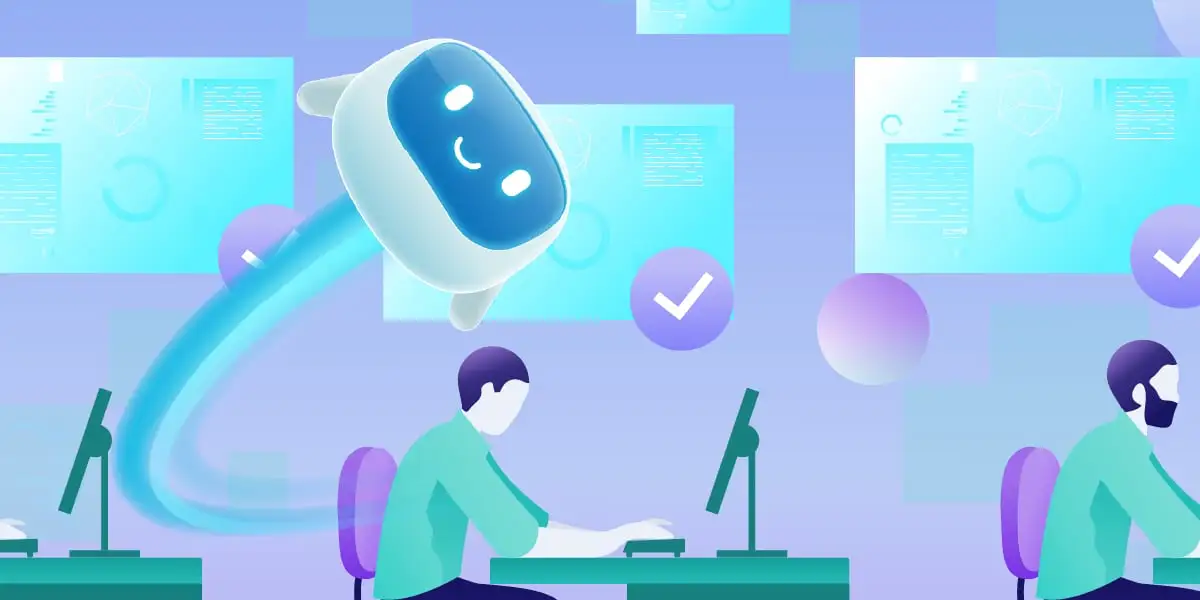
Over time, teams adopt new IT, security, and workplace tools to solve immediate problems. One department adds a monitoring platform. Another introduces a collaboration app. A third brings in a separate security solution. Individually, each tool makes sense. Together, they create a patchwork of disconnected systems, overlapping capabilities, and fragmented workflows.
This is tool sprawl, and it might just be the thing holding back your digital workplace maturity.
In this article, we’ll explore how tool sprawl happens, why it slows down digital workplace maturity, and what organizations can do to move toward a more unified approach.
Tool sprawl explained
Tool sprawl occurs when organizations accumulate disconnected IT and security tools across the business. Instead of simplifying work, this often duplicates functionality, fragments data, and forces constant context switching as employees move between systems to complete even routine tasks.
And the impact goes beyond mere inconvenience.
When IT teams must navigate between multiple tools to resolve a single issue, workflows slow down and visibility becomes fragmented. Security gaps emerge, mean time to resolution (MTTR) increases, operational costs rise, and productivity suffers. Instead of enabling progress, the technology landscape becomes a source of complexity.
As one IT leader recently told TeamViewer researchers: “It seems like fixing one thing breaks another, and it can be a constant dance to try and get things working together.”
How tool sprawl holds companies back
As our new resource, Shift left: The IT leader’s digital workplace maturity playbook explains, IT typically follows a three-stage digital maturity progression:
- Reactive IT support: you respond when things break.
- Proactive IT support: spot and fix issues before they become problems.
- Predictive IT support: use advanced IT to optimize peak performance.
Tool sprawl slows progression at every stage by limiting visibility, increasing manual work, and preventing teams from scaling automation effectively.
The further along this progression your company is, the stronger your employee experience, productivity, and IT return on investment (ROI) become. But reaching digital maturity isn’t just about adding more tools. In fact, for many organizations, the opposite is true.