Nobody gets into IT to solve the same issue five times in five slightly different ways. But that’s exactly what happens in many support environments. You fix a problem, get the user back to work, and then close the ticket. As a result, the fix stays trapped in that one session, or worse, in your head.
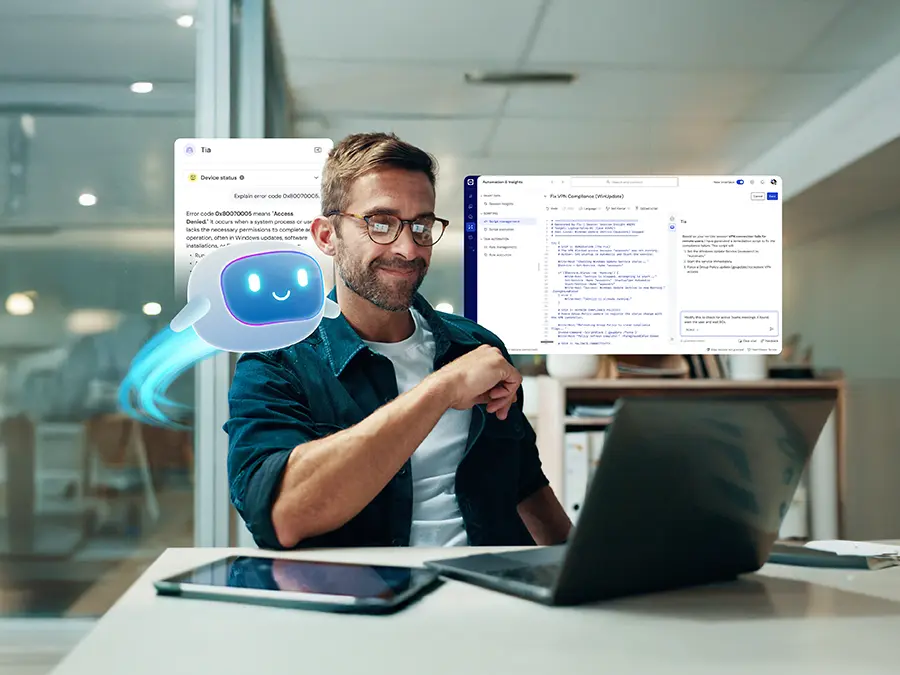
That’s where Tia AI-assisted scripting comes in. Building on the broader TeamViewer AI workflow, it starts when Tia provides real time troubleshooting recommendations to resolve issues faster during live support. Session Insights captures what happened, and then Tia turns proven remediation steps into reusable script drafts you can review, refine, test, and manually deploy. In other words, instead of just fixing the issue, you get to keep the fix.
Here, we’ll look at why repeated manual remediation keeps draining IT time, how Tia AI-assisted scripting works in practice, and why this matters for support teams juggling consistency and control.
In this article:
Why repeated fixes keep draining IT time
The main reason IT teams struggle is because useful knowledge doesn’t always stick. Let’s say a recurring issue gets resolved during a remote support session. The steps make sense in the moment. But later, when the same problem shows up on another device—or across a whole group of devices—someone has to rebuild that fix from scratch. That takes time, technical effort, and a fair bit of patience.
This gets worse as environments grow more complex. Teams support more endpoints, more users, more locations, and more ticket volume, often with a limited number of expert staff. All the while, support quality needs to stay consistent. And that’s difficult when proven fixes live in chat threads, ticket notes, or in the memory of one particular technician (who may have since left for another company...).
The result is an all-too-familiar mix of repeated troubleshooting, inconsistent execution, slower standardization, and too much manual work around issues the team has already solved before. Instead of faster troubleshooting, IT teams need a better way to keep what worked and reuse it safely.
And that’s also why scripting matters. Traditional scripting workflows often sit far away from the actual support session. Someone still has to document the fix, translate it into a script, validate it, and decide where to use it. If that path is too slow or too manual, standardization never really happens, and the team stays solving the same problems over and over again—forever.
How Tia AI-assisted scripting works