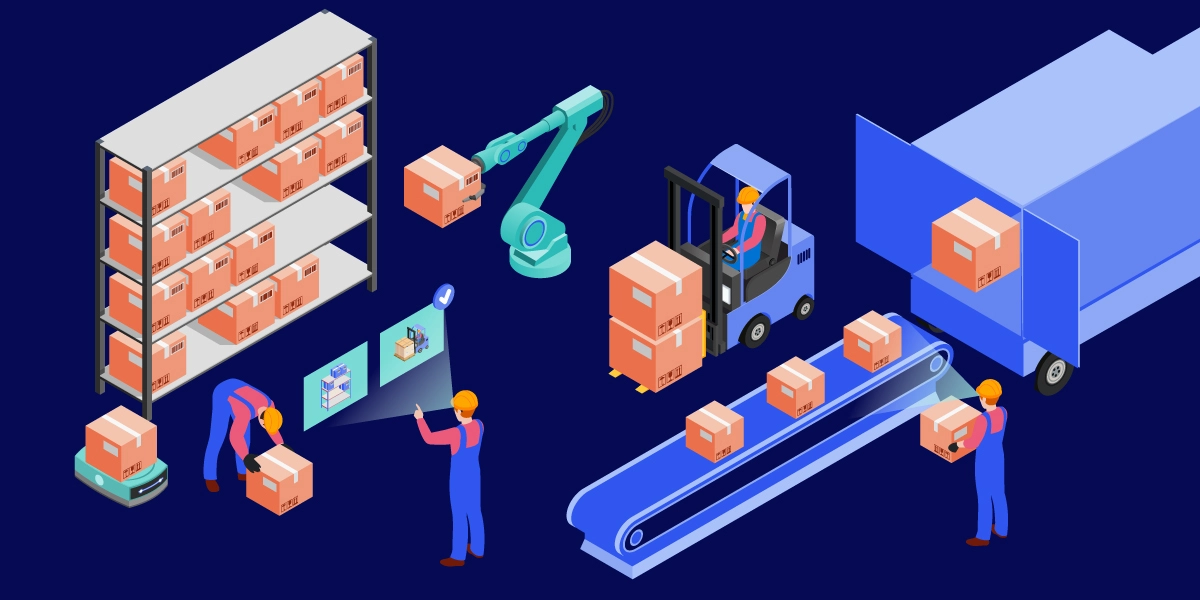
There are many different approaches to warehousing. You might have heard of concepts like lean warehousing, flexible lease warehousing, or grade A warehousing.
Here’s what they entail:
- Lean warehousing: An approach that focuses on cutting out waste and making storage and distribution processes as efficient as possible.
- Flexible-lease warehousing: Rented warehouse space with short-term or adjustable rental options, so you can adapt your storage space as needed.
- Grade A warehousing: High-quality, modern warehousing facilities that deliver high efficiency and a low cost of ownership.
The difference between warehousing and storage
Are warehousing and storage the same? Not quite. Storage means keeping goods in a designated space for future use, while warehousing takes things a step further.
Warehouses are storage facilities where products are managed, tracked, and prepared for distribution. Systematic processes like inventory management and order fulfillment play a fundamental role in warehousing but not in storage.
With digital technology, warehousing has become more accessible and cost-effective for businesses. Hence, more companies are moving from classic storage concepts to digitally enhanced warehousing systems that help them improve the speed, accuracy, and transparency of their supply chains.
The key elements of warehousing
If you work in a company that sells physical products, warehousing most likely plays a central role in your operations. Here are some of the main elements it includes:
Warehouse management
Warehouse management lays the strategic foundation of your warehouse operations. It involves planning and implementing processes, monitoring and training your staff, and creating an inventory. Good warehouse management means continuously looking for ways to improve your warehouse processes.
Warehouse operations
Your warehouse operations are all processes carried out within your warehouse. This includes replenishing stores, keeping inventory, picking orders, and shipping them to customers. The more efficient your warehouse operations, the lower your costs and the faster your shipments.
Warehouse management systems
A warehouse management system (WMS) is software that helps you manage your warehouse and improve warehouse operations. WMS tools range from classic ones that simplify desk work—like tracking inventory, orders, and shipments—to augmented reality (AR) solutions that enhance manual tasks.
For example, AR-enhanced vision picking solutions run on smart glasses, allowing warehouse workers to see order details and item locations within their line of sight. This helps them pick orders faster and reduce the number of errors.
Read more: Smart logistics: Boost your warehouse IQ with AR | TeamViewer