Augmented reality service uses AR to guide technicians remotely with visual instructions like arrows, text, and 3D markers displayed within the context of the real-world environment.
These companies already trust in TeamViewer
What is augmented reality in field service?
Whether you're dealing with industrial machinery, medical equipment, or complex IT setups, augmented reality field service support bridges the gap between knowledge and execution.
How augmented reality field service works
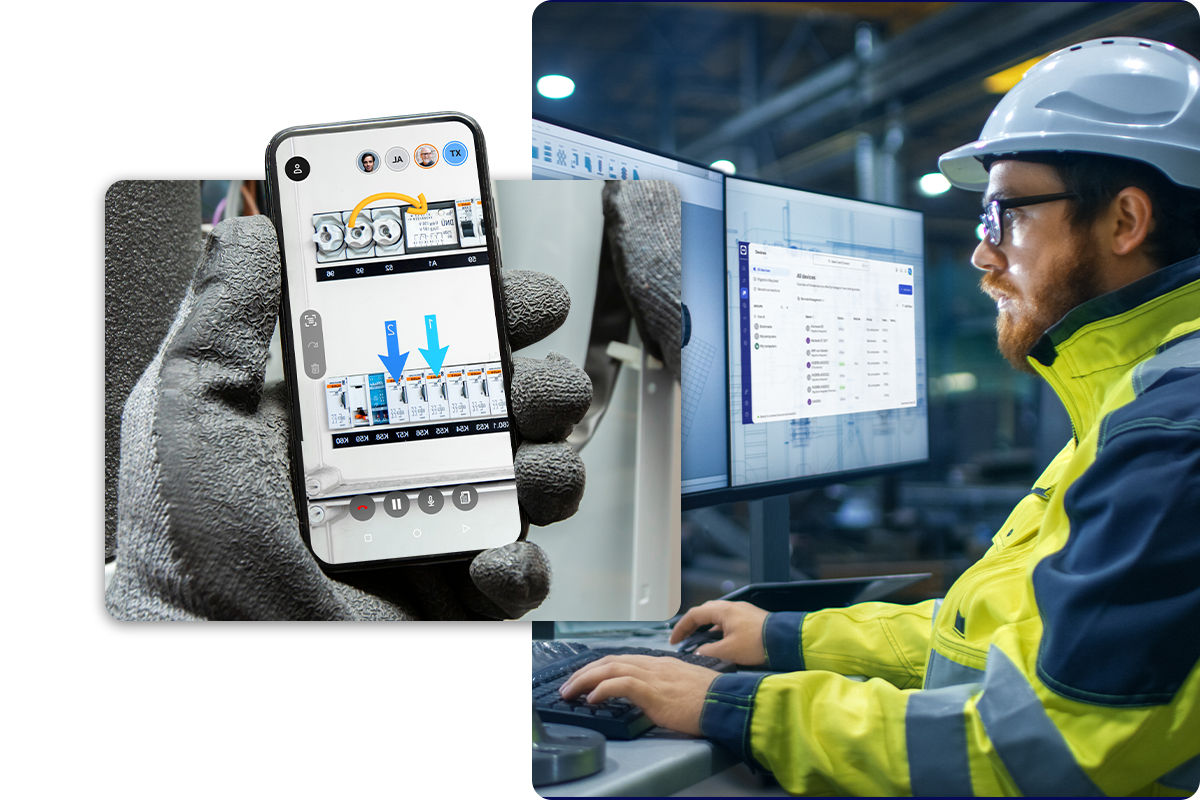
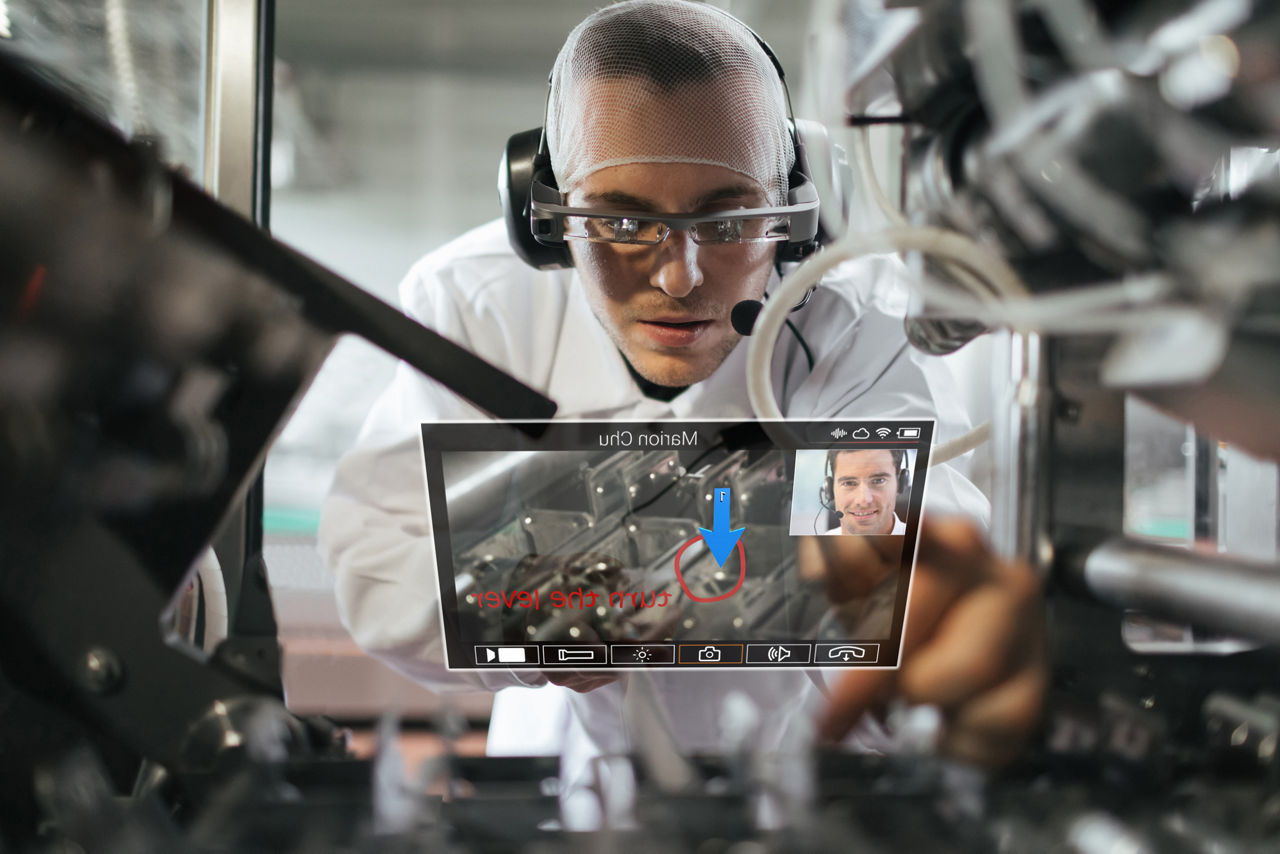
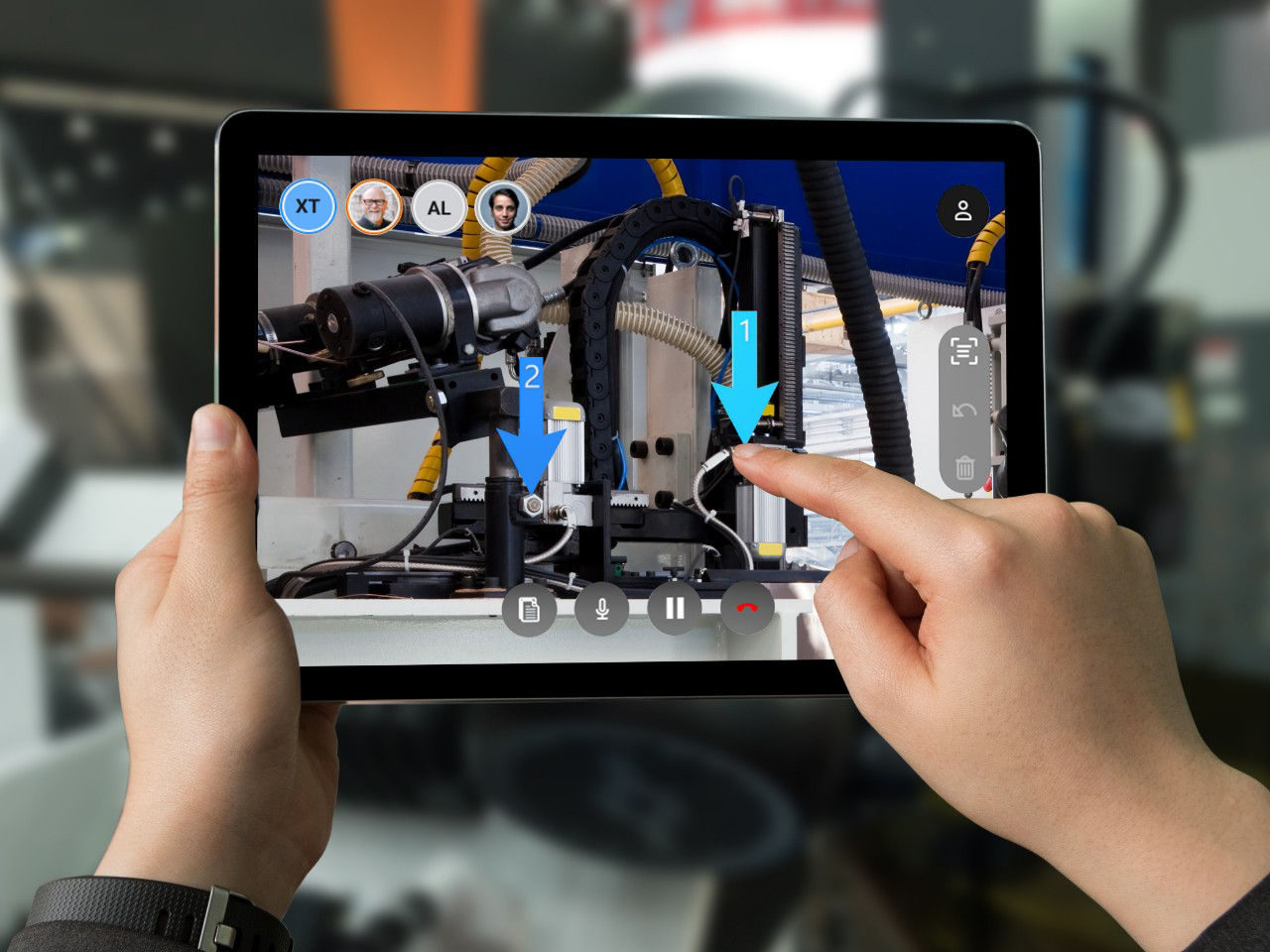
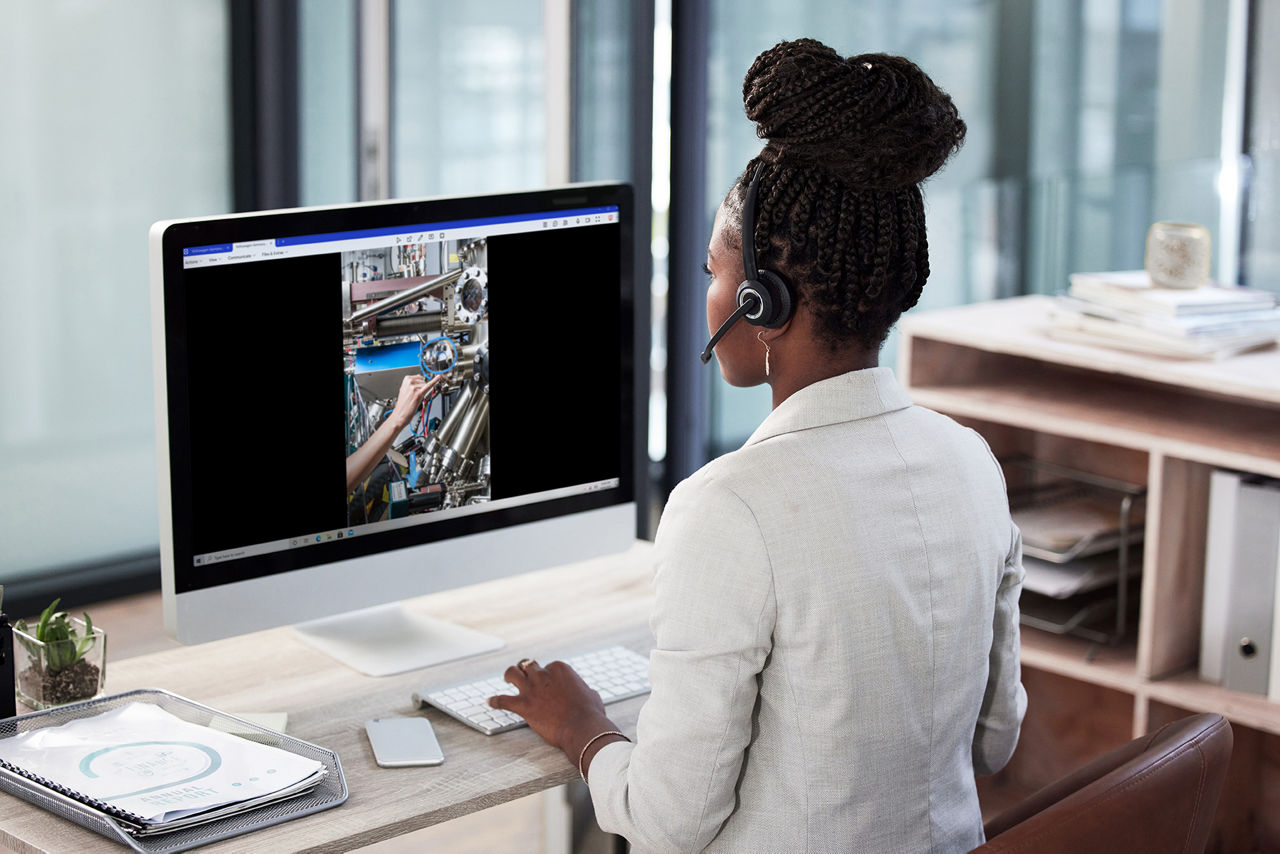
Forget complex manuals or endless phone calls. With augmented reality in field service, technicians can share a live video feed from their mobile device. Remote experts give step-by-step instructions by placing visual annotations like arrows, markers, and text directly into the technician’s field of view.
This ensures faster troubleshooting, reduces errors, and enables even junior technicians to perform tasks like seasoned experts.
Key features of TeamViewer AR field service
- Remote guidance
- Flexibility
- Enterprise-grade encryption
- Seamless integration
- Scalability
Guide technicians remotely using real context
Deliver faster, smarter support with full context.
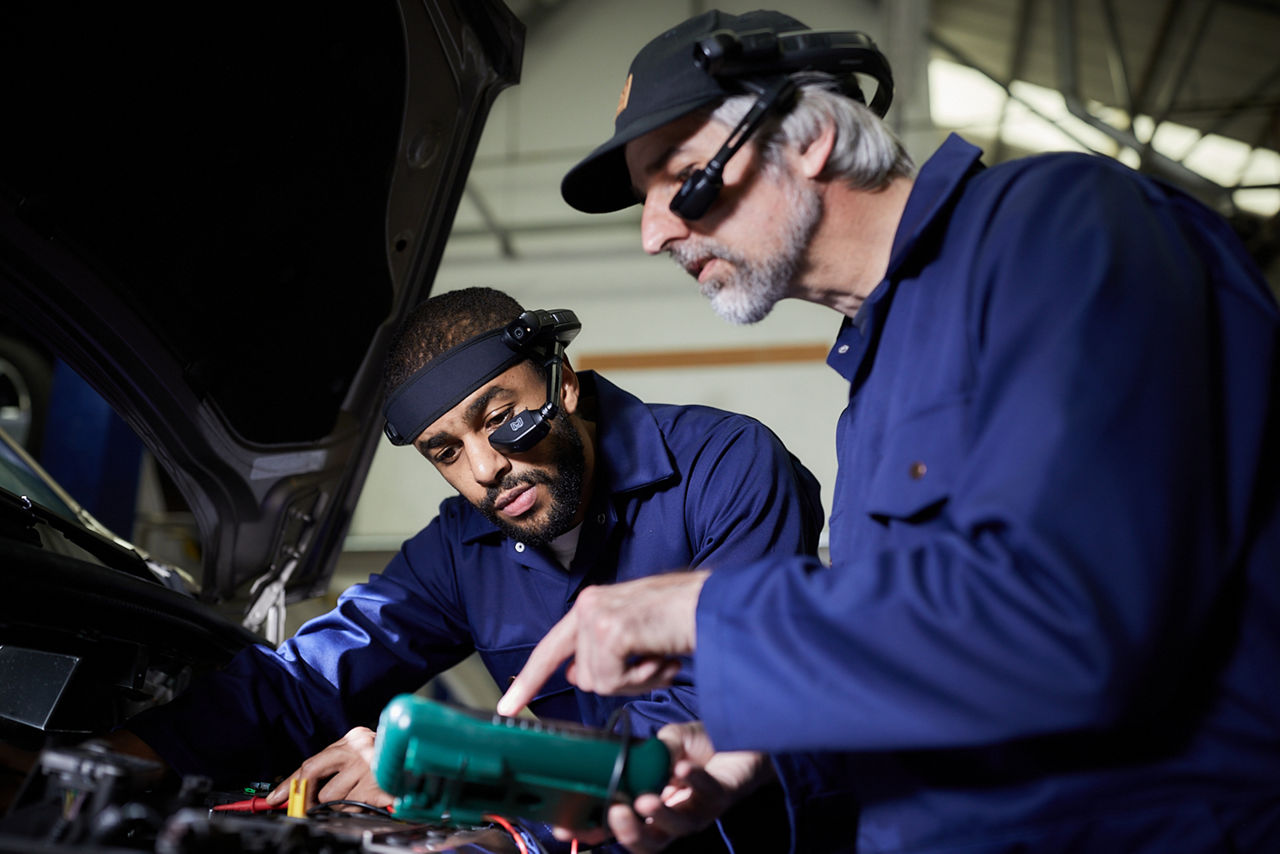
- Add live AR annotations to real-world objects.
- Highlight parts, steps, or errors in real time.
- Solve problems faster and avoid misunderstandings.
- Reduce downtime and improve first-time-fix rates.
Work hands-free on any device, anywhere
Empower field teams with flexibility and freedom.

- Use your preferred hardware, from smartphones and tablets to smart glasses.
- Keep your hands free for complex tasks.
- Deliver consistent service, anytime, anywhere.
Secure every session with enterprise-grade encryption
Protect your data, assets, and customer information.

- Connect securely with end-to-end encryption.
- Ensure compliance with enterprise security standards.
- Prevent data leaks and unauthorized access.
- Build customer trust with secure remote support.
Integrate seamlessly into existing systems
Keep your familiar workflows; just make them smarter.

- Connect with field service management (FSM).
- Integrate with enterprise resource planning (ERP).
- Sync with customer relationship management (CRM).
- Improve operational efficiency and service quality.
Capture expertise and scale it globally
Turn expert knowledge into a powerful asset.
- Record step-by-step workflows with AR guidance.
- Train new employees faster and more effectively.
- Close skill gaps across your workforce.
- Ensure consistent service quality anywhere.
Want to dive deeper?
Read how augmented reality solves real field service challenges.
Proven business impact
Transforming field service operations with AR: Proven results from global leaders
- Coca-Cola HBC
- Mitsubishi Electric
- Nadro
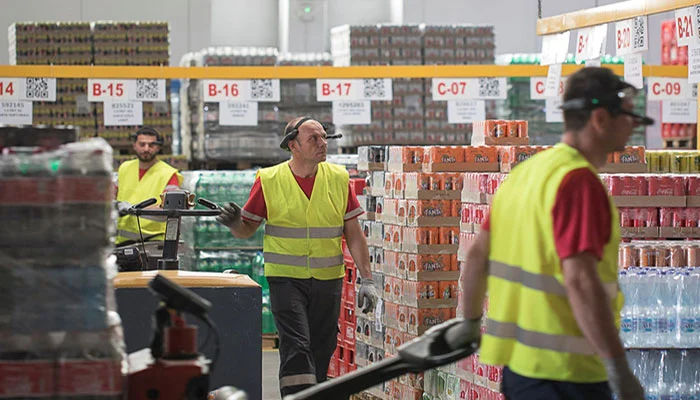
Coca-Cola HBC reduces picking errors and reaches 99.99% accuracy
- Frontline helps them tackle labor shortages by boosting productivity by up to 10%
- In four years, Coca-Cola HBC expanded Frontline to 35 warehouses in 17 countries and more than 1,000 pickers
With AR, Mitsubishi Electric enhances the support experience and improves repair processes
- Efficient communication across sites
- Strong opportunities for cutting-edge remote technical support
- Reduction of downtime of business-critical factory equipment
- Stronger interactions between technical support and on-the-ground engineering
TeamViewer and SAP transform pharmaceutical distribution for Nadro with augmented reality
- 30% improved picking time
- Time for onboarding and training reduced by 93%
- Rolled out to 14 warehouse locations
Ready to transform your field service with AR?
Empower your technicians, reduce downtime, and solve issues faster with augmented reality field service powered by TeamViewer Frontline.

PAC Innovation Radar: TeamViewer Frontline is rated the #1 connected worker (AR) platform in the 2024 PAC Innovation Radar
“TeamViewer’s portfolio perfectly addresses the most relevant use cases of today.”
FAQs: Augmented reality field service
An AR service combines live video feed with digital overlays to support on-site tasks like maintenance, troubleshooting, and repairs.
The four types augmented reality are:
- Marker-based AR: Uses visual markers like QR codes to trigger AR content.
- Markerless AR (location-based): Relies on GPS, sensors, or device orientation to display AR based on location.
- Projection-based AR: Projects digital images or light onto physical surfaces, creating interactive displays.
- Superimposition-based AR: Replaces or enhances parts of the real world with digital overlays, like highlighting components or adding instructions.
An AR field is any real-world location where technicians use augmented reality to get visual support and complete tasks more efficiently.