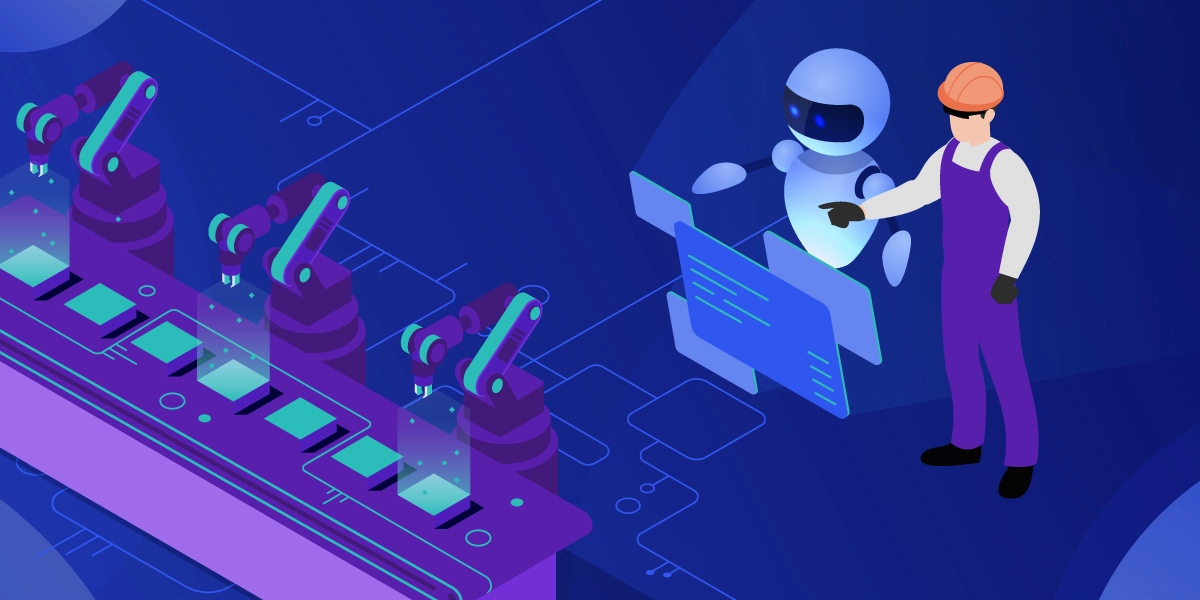
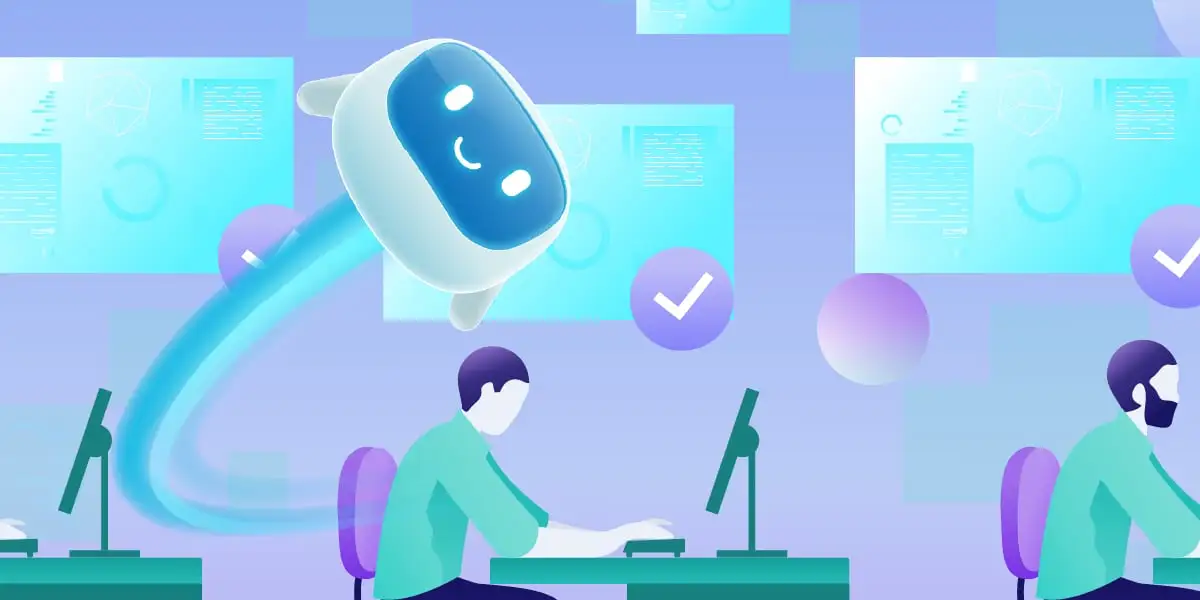
Artificial intelligence (AI) has also improved efficiency and productivity in the industrial sector, where companies are using it to increase efficiency and productivity, reduce costs and errors, and drive innovation across their operations.
How does it do this? Primarily through automating certain, more menial tasks, which frees workers up for more meaningful work. At the same time, AI can monitor and analyze large sets of data. From this, it can generate valuable new insights to continuously improve processes.
That’s not to say that AI doesn’t bring any challenges—it does, among them legal, compliance, and security issues, as well as the issue of data dependence—but its capacity to connect and bridge gaps in knowledge remains huge.
Read more: The power of AI: How IT leaders are harnessing AI for business growth
Driving connection with the Industrial Internet of Things (IIoT)
At its simplest, the IIoT describes an interconnected network of industrial devices and systems. With the help of sensors, software, and other technologies, it helps companies to collect, exchange, and analyze data to continuously improve industrial processes.
This enriched way of seeing can bring transformative benefits to your company, among them increased operational efficiency, productivity, and quality control.
Not to mention the benefit of remote monitoring and management, which helps to boost security and reduce costly downtime.
The future: More connected than ever before
These strategies are now playing a role in a much more connected model of industry, which, through the role of some of the above strategies, is slowly but surely replacing the traditional, monolithic model.
At TeamViewer, our mission is to create a world a works better, and the way to do this is to use technology to create bridges between the digital and material worlds.
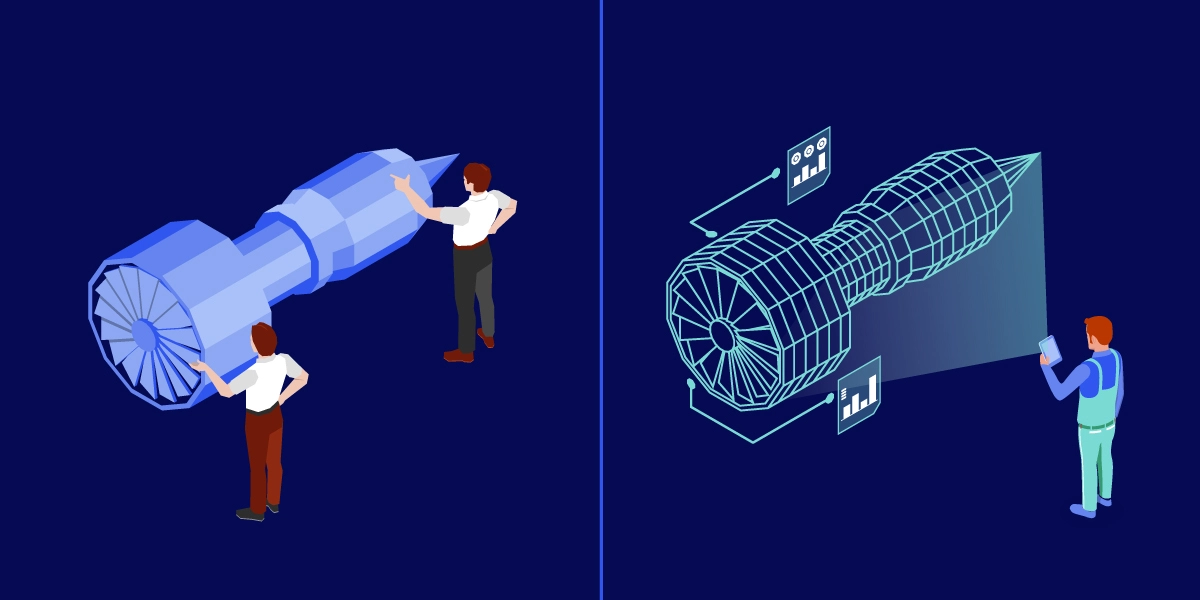
We do this, primarily, through a process of visualization. By digitalizing processes, we can create a set of visual clues to be used in the real world. These clues can then be plugged into different sets of data, with the possibility of increased visibility and productivity across an entire network.
And this isn’t some far-off dream. It’s already happening right now, for example in Hyundai Group’s state-of-the-art Innovation Center in Singapore. Opened in 2023, this is a fully functional smart factory, connecting humans, robots and logistics.
Among other things, the center makes use of digital twin technology, automated material handling systems, AR, and spatial computing with TeamViewer Frontline. Thanks to this incredibly connected production model, customers can visit, order a car, and drive it away in just three hours.
Summary
Digitalization is not just a buzzword; it’s a new way of seeing reshaping industry. Technologies like IIoT, AR, digital twins, spatial computing, and AI are revolutionizing operations, driving efficiency, and enhancing productivity worldwide.
As we can see from examples like Coca-Cola HBC and Hyundai, the shift to digital operations is already well underway, breaking down traditional boundaries between digital and real worlds.
To stay competitive and reap these benefits, embracing digital transformation is crucial. And at TeamViewer, we can help you on your way into this new era of connectivity and efficiency—whatever industry you happen to be in.