Imagine you’re putting together a piece of flat pack furniture. Should be simple, right? Open the box, follow the instructions, and everything fits into place. But what happens when the box is full of similar—but slightly varying—parts? Different screws, different joints, overlapping pieces that all seem to do the same thing. Suddenly, a straightforward job becomes frustrating, slow, and far more complicated than it needs to be.
That is exactly what happens in many digital workplaces today.

Over time, teams adopt new IT, security, and workplace tools to solve immediate problems. One department adds a monitoring platform. Another introduces a collaboration app. A third brings in a separate security solution. Individually, each tool makes sense. Together, they create a patchwork of disconnected systems, overlapping capabilities, and fragmented workflows.
This is tool sprawl, and it might just be the thing holding back your digital workplace maturity.
In this article, we’ll explore how tool sprawl happens, why it slows down digital workplace maturity, and what organizations can do to move toward a more unified approach.
Tool sprawl explained
Tool sprawl occurs when organizations accumulate disconnected IT and security tools across the business. Instead of simplifying work, this often duplicates functionality, fragments data, and forces constant context switching as employees move between systems to complete even routine tasks.
And the impact goes beyond mere inconvenience.
When IT teams must navigate between multiple tools to resolve a single issue, workflows slow down and visibility becomes fragmented. Security gaps emerge, mean time to resolution (MTTR) increases, operational costs rise, and productivity suffers. Instead of enabling progress, the technology landscape becomes a source of complexity.
As one IT leader recently told TeamViewer researchers: “It seems like fixing one thing breaks another, and it can be a constant dance to try and get things working together.”
How tool sprawl holds companies back
As our new resource, Shift left: The IT leader’s digital workplace maturity playbook explains, IT typically follows a three-stage digital maturity progression:
- Reactive IT support: you respond when things break.
- Proactive IT support: spot and fix issues before they become problems.
- Predictive IT support: use advanced IT to optimize peak performance.
Tool sprawl slows progression at every stage by limiting visibility, increasing manual work, and preventing teams from scaling automation effectively.
The further along this progression your company is, the stronger your employee experience, productivity, and IT return on investment (ROI) become. But reaching digital maturity isn’t just about adding more tools. In fact, for many organizations, the opposite is true.
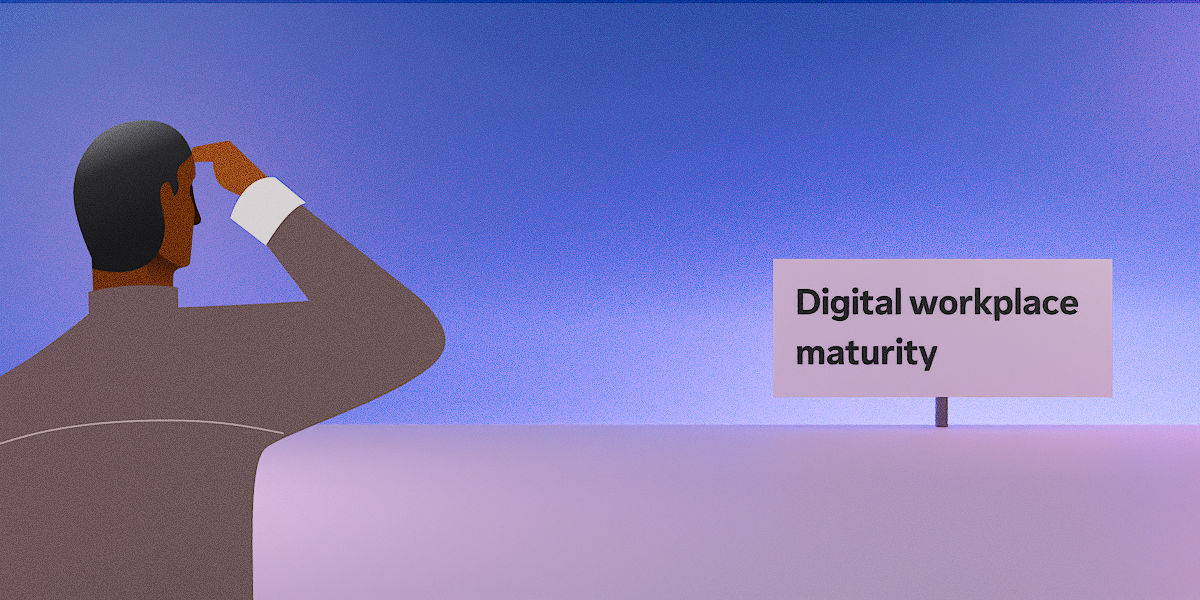
Tool sprawl slows progress toward digital workplace maturity. Many organizations are investing heavily in digital transformation, automation, and employee experience initiatives. But disconnected systems make it difficult to create seamless, proactive, and data-driven environments: IT teams have to constantly switch between systems, build manual workarounds, and create ad-hoc processes to keep operations moving. Instead of enabling efficiency, the technology stack itself becomes an operational burden.
The problem becomes bigger when different tools are owned by different teams. Resolving a single support issue can involve multiple handoffs between IT, security, operations, and support teams, each working in separate systems with limited visibility into the bigger picture.
One IT manager explains that “people and departments are too focused on their own goals instead of the common good.” The result is slower service delivery, more operational friction, and poorer experiences for both employees and IT teams.
“I find the number of dependencies involved frustrating,” says a tech support engineer. “Progress often relies on multiple systems, teams, or approvals, which can slow delivery even when the solution itself is clear.”
These challenges are not inevitable, and there is a clear way forward.
Escaping the ‘tool-sprawl zone’
The solution to moving away from tool sprawl lies in consolidation and developing a digital workplace maturity strategy that supports future growth, automation goals, security requirements, and employee experience.
The first step is understanding what your organization actually needs. That means identifying the tools, capabilities, and workflows required to support employees effectively and achieve your business goals. For many organizations, this starts with auditing existing systems, uncovering overlapping functionality, and evaluating where operational gaps exist today.
Once you understand which capabilities matter most, the next step is consolidation. Instead of relying on disconnected point solutions, organizations can unify critical IT support capabilities within a single platform.

A unified digital workplace platform helps organizations replace fragmented tool stacks with connected workflows, shared insights, and centralized management. The result is simpler operations, faster support, stronger security, and better digital experiences.
The right unified digital workplace platform delivers:
- Real-time visibility into endpoint health, application performance, security, and digital employee experience
- Contextual diagnostics and intelligent insights that help IT teams identify root causes faster and resolve issues proactively
- Secure remote connectivity that enables seamless support across devices, users, and locations
- AI-powered support and remediation that detects patterns, recommends fixes, and automates repetitive tasks
- Built-in automation for patching, configuration management, and recurring remediation workflows
- Unified endpoint management that helps IT reduce downtime, strengthen compliance, and simplify operations at scale
- Seamless integrations with existing IT ecosystems and workflows to reduce silos without disrupting operations
When these capabilities work together in a single platform, IT teams spend less time switching between systems and more time improving outcomes for the business.
The business benefits of a unified digital workplace
Reducing tool sprawl isn’t just about simplifying IT operations. It is about creating a foundation for a more mature, connected, and proactive digital workplace.
When organizations consolidate fragmented tools into a unified platform, they unlock the visibility, automation, and intelligence needed to move beyond reactive support and toward more proactive and experience-led IT.
With a unified digital workplace platform, your business benefits from:
- Real-time visibility across devices, applications, performance, security, and user experience
- Faster issue resolution through connected workflows, contextual diagnostics, and centralized management
- Stronger cross-team collaboration by eliminating data silos and disconnected systems
- AI-powered insights that help IT teams identify trends, prioritize issues, and act proactively
- Intelligent automation that reduces repetitive manual work and helps prevent disruptions before they impact employees
- More time for strategic initiatives by reducing the operational burden on IT teams
The business impact goes beyond the IT department. When systems run more smoothly and support becomes more proactive, employees experience less disruption and downtime. Productivity improves. Decision making becomes faster and more informed. Operations become easier to scale and adapt. And, most importantly, IT teams can shift focus away from maintaining fragmented environments and toward driving innovation across the business.

A mature digital workplace is not defined by the number of tools an organization owns. It’s defined by how effectively those tools work together to deliver secure, seamless, and productive experiences for employees.
Build a more mature digital workplace
Tool sprawl isn't just an IT challenge. It’s a business challenge.
As organizations continue investing in digital transformation, employee experience, and AI-driven operations, fragmented systems will only create more friction, complexity, and inefficiency—all of which will hinder your journey to digital workplace maturity.
Organizations that move forward fastest are those that simplify their technology environments, unify workflows, and give IT teams the visibility and automation they need to work proactively. And a unified digital workplace platform enables this by reducing complexity and connecting previously disconnected systems. It helps IT move beyond reactive support toward a more mature, scalable, and experience-led approach.
With TeamViewer ONE, organizations can consolidate critical IT operations into a single platform that combines real-time visibility, remote connectivity, automation, and digital employee experience insights. The result is faster support, reduced operational complexity, and better experiences for both IT teams and employees.

Ready to reduce tool sprawl?
Learn more about overcoming tool sprawl and advancing digital workplace maturity in the Shift left: The IT leader’s digital workplace maturity playbook. Discover how a unified digital workplace platform can help you work smarter, scale faster, and reduce digital friction.
Explore more insights
-
Empower your frontline with secure, scalable digital tools. Discover how proactive IT and DEX drive productivity, safety, and business impact.
-
Our Senior Events and Program Manager and former Olympian, Louise Jukes, introduces SheSportTech, our new program designed to get more women into sport technology.
-
In 2024, businesses will face compliance challenges because of cybersecurity threats, tightening regulations, and the impact of artificial intelligence.