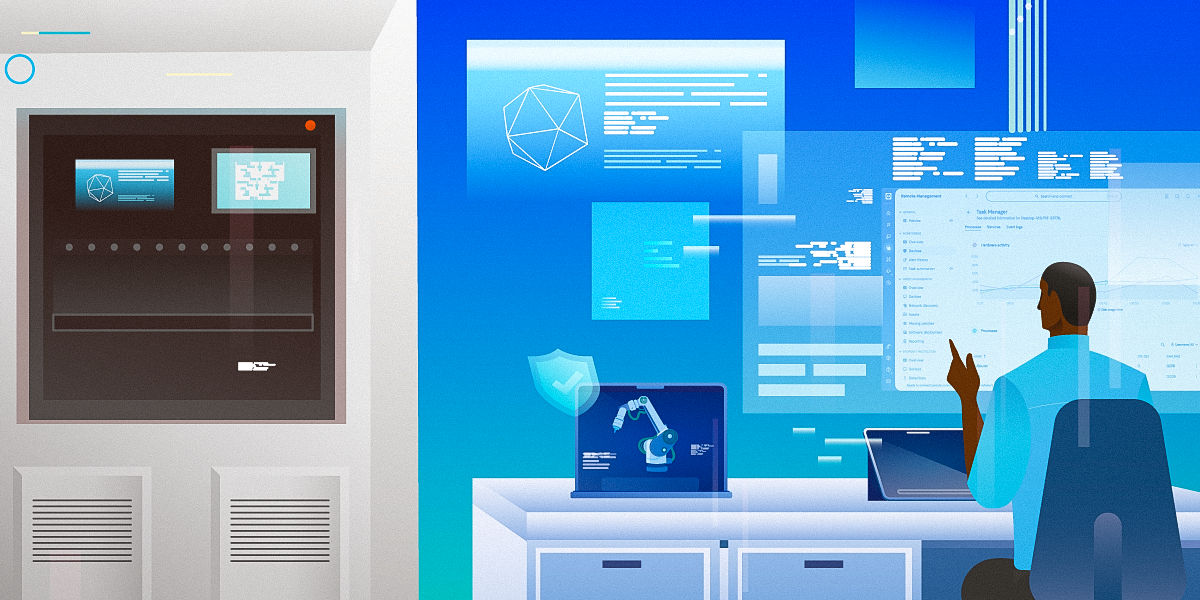
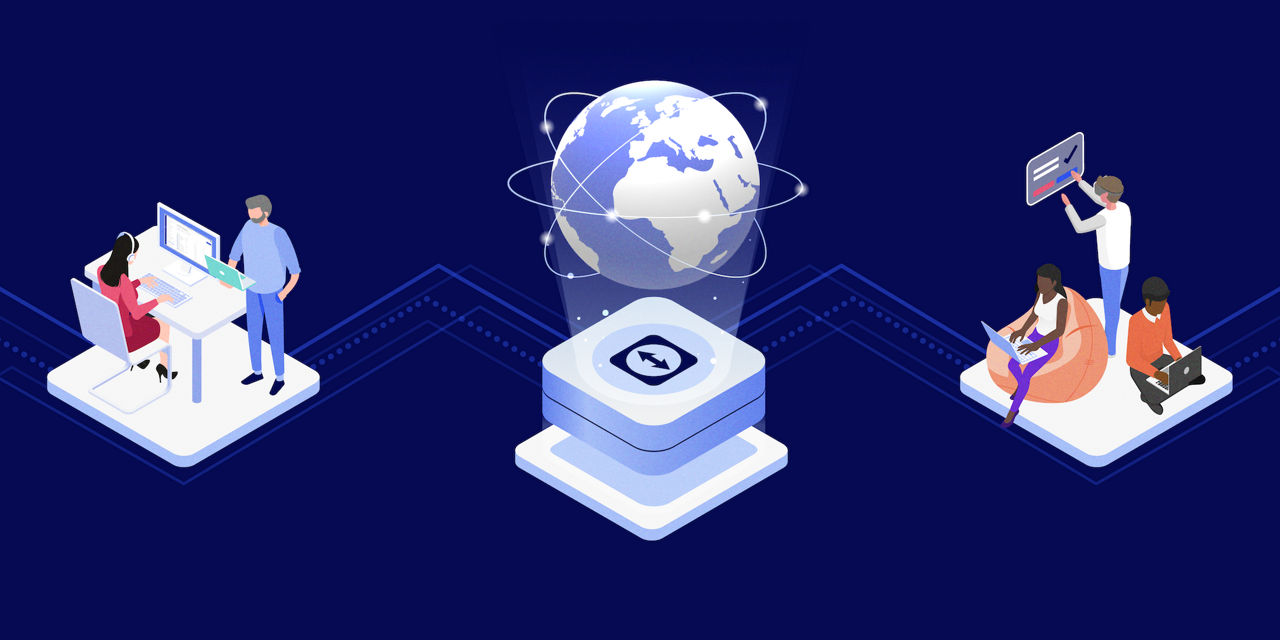
Digital transformation used to be a boardroom buzzword. Today, it’s a business necessity. Right now, digital technologies are being embedded directly into factory floors, logistics hubs, and other mission-critical, frontline environments.
This evolution is playing out across sectors. Field technicians on industrial sites are diagnosing machinery remotely with help from connected devices and data feeds. Hospital teams are collaborating across geographies on complex patient care via telehealth technologies, and warehouse staff are relying on connected ecosystems to streamline inventory and fulfillment far faster than manual processes would allow.
Across all these scenarios, IT fundamentals—like remote access, unified login systems, and interoperability across platforms—are being handled behind the scenes and consolidated into streamlined, user-friendly solutions.
The way employees experience digital tools—known as the digital employee experience (DEX)—is increasingly critical to business success. In fact, Deloitte finds that companies investing in frontline-focused digital tools see a 22% boost in worker productivity, a doubling in customer satisfaction, and as much as a 25% increase in profitability.
As digital tools become everyday fixtures in operational contexts, companies face both opportunities and hurdles—and the stakes are only rising as emerging technologies like AI become more sophisticated. The organizations best positioned for a digital-first future are crafting thoughtful strategies to ensure digital systems align with the realities of daily work—and placing people at the heart of the whole process.
Read more: Digital Employee Experience (DEX): What is it, why it matters, and what are its benefits
IT meets OT in an AI world

Despite promising returns, many companies still face a last-mile challenge in delivering usable, effective tools to the frontline. The Deloitte study notes that less than one-quarter (just 23%) of frontline workers believe they have access to the technology they need to maximize productivity. There are several possible reasons for this disconnect, including the fact that operational digital transformation faces unique challenges compared to office-based digitization efforts.
For one, many companies are using legacy systems that don't communicate easily across dispersed or edge environments. For example, the office IT department might use completely different software than what's running the factory floor; a hospital's patient records might be entirely separate from the systems monitoring medical equipment. When systems don’t connect, IT teams waste time on guesswork and workarounds.
There's also often a clash between tech's typical "ship first, debug later" philosophy and the careful, safety-first approach that operational environments demand. A spreadsheet glitch might be annoying. But in a power plant, it can be catastrophic.
Companies need to strike a careful balance. Because as AI becomes more common in high-stakes environments, innovation must move forward—without compromising safety. To succeed, companies have to bridge the gap between smarter systems and safe, scalable execution.
Humans at the heart of transformation efforts

With the buzz over AI and automation reaching fever pitch, it’s easy to overlook the single most impactful factor that makes transformation stick: the human element. Because the convergence of IT and OT goes hand in hand with the rise of digital employee experience.
DEX encompasses everything from logging into systems and accessing applications to navigating networks and completing tasks across devices and locations. At its core, DEX is about ensuring technology empowers employees to work efficiently and without disruption—no matter where or how they work.
Companies investing in DEX see fewer help desk tickets, less downtime, and stronger employee satisfaction and retention. Frictionless digital workplaces, supported by real-time monitoring and automation capabilities, help organizations attend to IT issues before users experience disruptions or productivity levels dip.
There are real-world examples of seamless DEX in action: Swiss energy and infrastructure provider BKW, for instance, recently built a system that lets their IT team remotely assist employees experiencing technical difficulties across more than 140 subsidiaries. For employees, this means no more waiting for an in-person technician when their device freezes or software hiccups; IT can swoop in remotely and solve problems in minutes instead of hours.
Read more: BKW relies on TeamViewer Tensor for the transformation of Corporate IT
Smart systems and smarter safeguards

Of course, as operational systems become more interconnected, security vulnerabilities multiply in turn. Consider this hypothetical: In a busy manufacturing plant, a piece of machinery suddenly breaks down. Instead of waiting hours for a technician to arrive on site, the user simply uses their smartphone to scan a code on the machine that automatically opens an AR support session. Following guidance from a remote specialist, the operator fixes the equipment and has production back on track in mere minutes.
This snappy and streamlined approach to diagnostics is undeniably efficient, but it also opens the factory floor to multiple external touchpoints: live video feeds streaming to remote experts, cloud databases containing sensitive repair procedures, and direct access to the machine's diagnostic systems. Suddenly, a manufacturing plant that used to be an island is now part of an interconnected network.
Smart companies are getting practical about the challenges associated with this expanding threat surface. For instance, BKW has taken a structured approach to permissions: Subsidiary IT teams can only access their own company's devices, outside contractors get temporary access for specific tasks, and employees can reach certain high-powered workstations when they need them.
Bühler, a global industrial equipment manufacturer, also uses centrally managed access controls to govern who can connect to which platforms, as well as when and under what conditions. By enforcing consistent policies from its headquarters, the company ensures all remote support activities are fully monitored and aligned with strict cybersecurity protocols, including compliance with ISO 27001 standards. The system allows Bühler’s extensive global technician network to provide real-time assistance without compromising system integrity.
The power of practical innovation
How do you help a technician troubleshoot equipment when the expert is 500 miles away? How do you catch IT problems before they shut down a production line? How do you keep operations secure without burying workers in passwords and protocols?
These are the kinds of practical questions that companies like Bühler and BKW have focused on solving—and it's part of why they're succeeding where others struggle.
These companies aren’t chasing trends. They’re redefining what transformation looks like—practical, people-focused, and built to last. Instead of asking, "What's the latest digital trend we should adopt?" they're assessing, "What problems are our people actually trying to solve?"
The organizations pulling ahead to digitally transform frontline operations are the ones that have learned to make complex systems feel simple, intuitive, and secure. And this practical approach will only become more urgent as AI introduces new layers of complexity to operational work.

Ready to transform your frontline work?
Let’s chat about the possibilities of digital transformation using smart, secure, and people-first tools.
Explore more insights
-
Remote connectivity offers countless possibilities for manufacturers set on driving competitiveness.
-
Learn how digital signatures verify authenticity, protect data integrity, and prevent tampering using public key cryptography and cryptographic hash functions.
-
Our Chief Commercial Officer, Peter Turner, examines how remote technology is bridging generational gaps in the modern workforce.