Remote device monitoring
Both virtual and physical servers need to be monitored. This makes it possible to keep an eye on critical aspects and respond to warnings at an early stage. Remote access software makes server management much more effective.
Server management can vary from company to company. Therefore, the question ‚"What is server Management" cannot be answered generally. After all, managing servers can involve different aspects depending on the situation.
Modern IT often relies on servers located in remote data centers. Hybrid environments with on-site servers and access via the cloud are also common. Keeping your servers up and running requires thoughtful server management. It contributes to optimal operation and high security. That’s why server management basics encompass much more than just setting up server landscapes: They relate to the management of your hardware and software as well as the implementation of security measures and the creation of backups. Managing Servers has the following goals:
The basics of server management are very comprehensive and their overall effect is to ensure that the IT landscape functions properly.
This includes humidity, cooling, and any other elements that may have an impact on function. Only authorized personnel should perform server management in this particular area.
This makes it an important element that a server manager must always keep an eye on. This includes, for example, how heavily it is loaded or whether there is an overload. In the latter case, slowed operations or even complete system crashes can occur.
Therefore, it is necessary to keep an eye on the operating temperature. In general, servers produce a lot of heat, which requires adequate cooling. The reason for this is that a CPU that is too hot can fail. However, it is not necessary for an engineer or technician to continuously monitor the temperature. Instead, it can be viewed and regulated using Remote Management.
Therefore, regular backups should prevent data loss. A robust back-up solution will also help you resist ransomware attacks. It’s important that your back-up options take into account both physical and virtual servers.
Besides that, server management maintains security through a secured network. Depending on the organization, security policies can vary widely, requiring a high degree of flexibility in the server management software.
It is necessary for permanent data storage and can also be used for caching. In particular, performance problems that caching can cause need to be monitored using server tools. Of course, it is also important to check the general state regularly to avoid data loss or costly downtime.
Only if it works, the system as such can remain executable. Therefore, managing servers always includes monitoring the hardware structure.
It is a temporary memory that is necessary for caching and fast operations. RAM is directly related to system performance.
Therefore, constant monitoring as well as scheduled maintenance is crucial for success here as well. Identifying performance issues and troubleshooting can also be part of server management.
Enhance your TeamViewer experience, know more about your devices, and proactively keep your IT infrastructure healthy, stable and secure. Boost your IT efficiency and centrally manage, monitor, track, patch, and protect your computers, servers, devices, and software – all from a single platform.
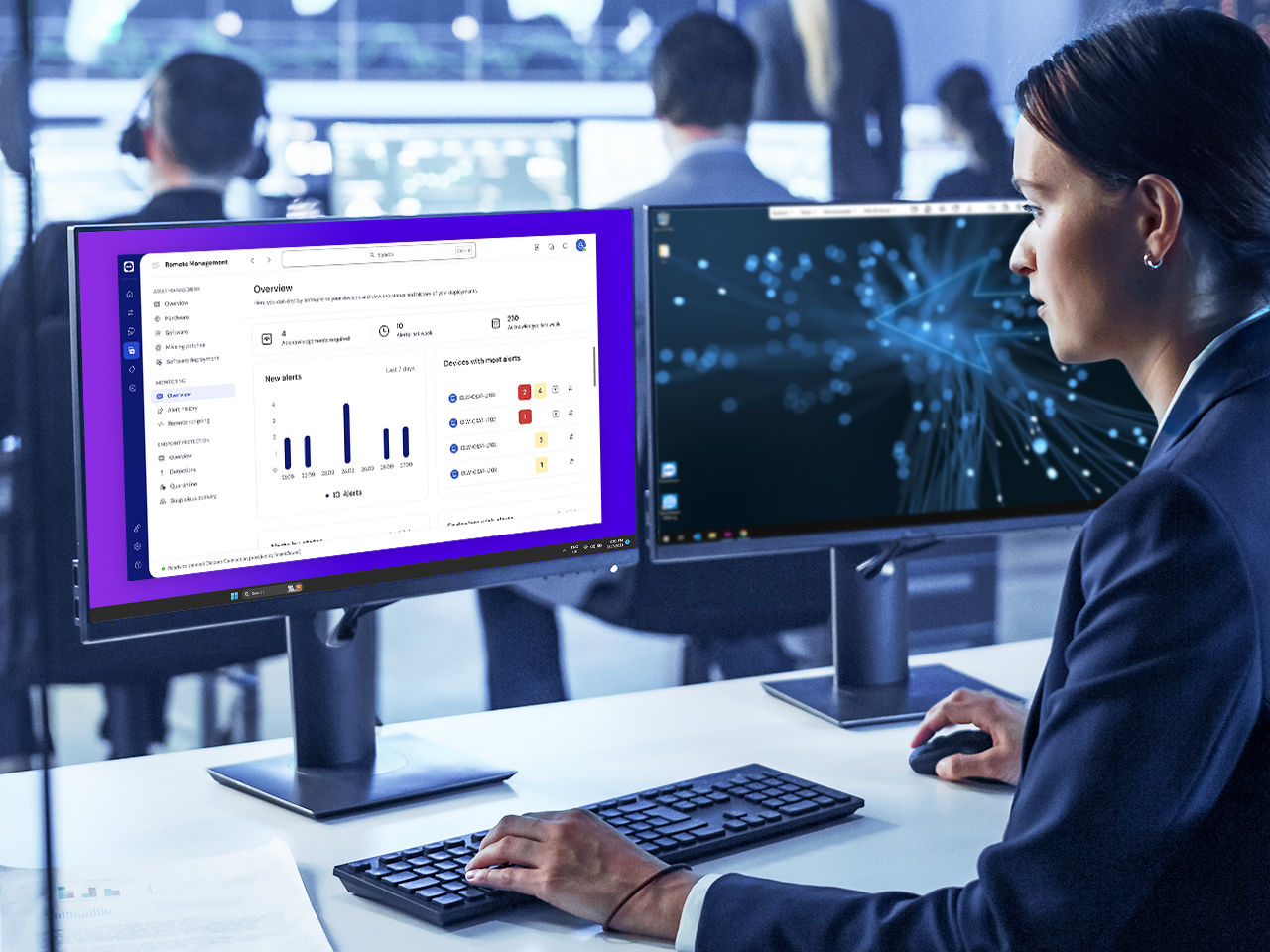
Server management and monitoring can be done either as internal or external server management.
When it comes to server management, there are several aspects you need to consider. It is a comprehensive task that ensures a healthy and stable IT infrastructure. Depending on the size of the company, the necessary control and monitoring can be very extensive, which requires the right server management software.
TeamViewer offers you just such a software solution for an effective remote administration and control of servers. Thanks to the integrated RMM software solution, it is possible to monitor business-critical aspects and ensure a high level of transparency.
The following functions form the basis for the basic server management services:
Both virtual and physical servers need to be monitored. This makes it possible to keep an eye on critical aspects and respond to warnings at an early stage. Remote access software makes server management much more effective.
The availability of network devices is important in every company. This includes routers, printers and other IT assets. Targeted server management allows problems in this area to be identified and resolved in a timely manner.
Vulnerabilities in installed software are not uncommon. However, with the right server tools, patches can be distributed quickly so that the system remains fully protected. In addition, it is possible to distribute applications across the network from a central location.
Protection against malware, harmful websites, suspicious activities or zero-day exploits is particularly important. This makes regular data backup and a high level of IT security imperative. Website monitoring also plays a central role in this. However, with the right server management software, it is possible to maintain security.