
Work in Progress: Building the digital workplace of 2030
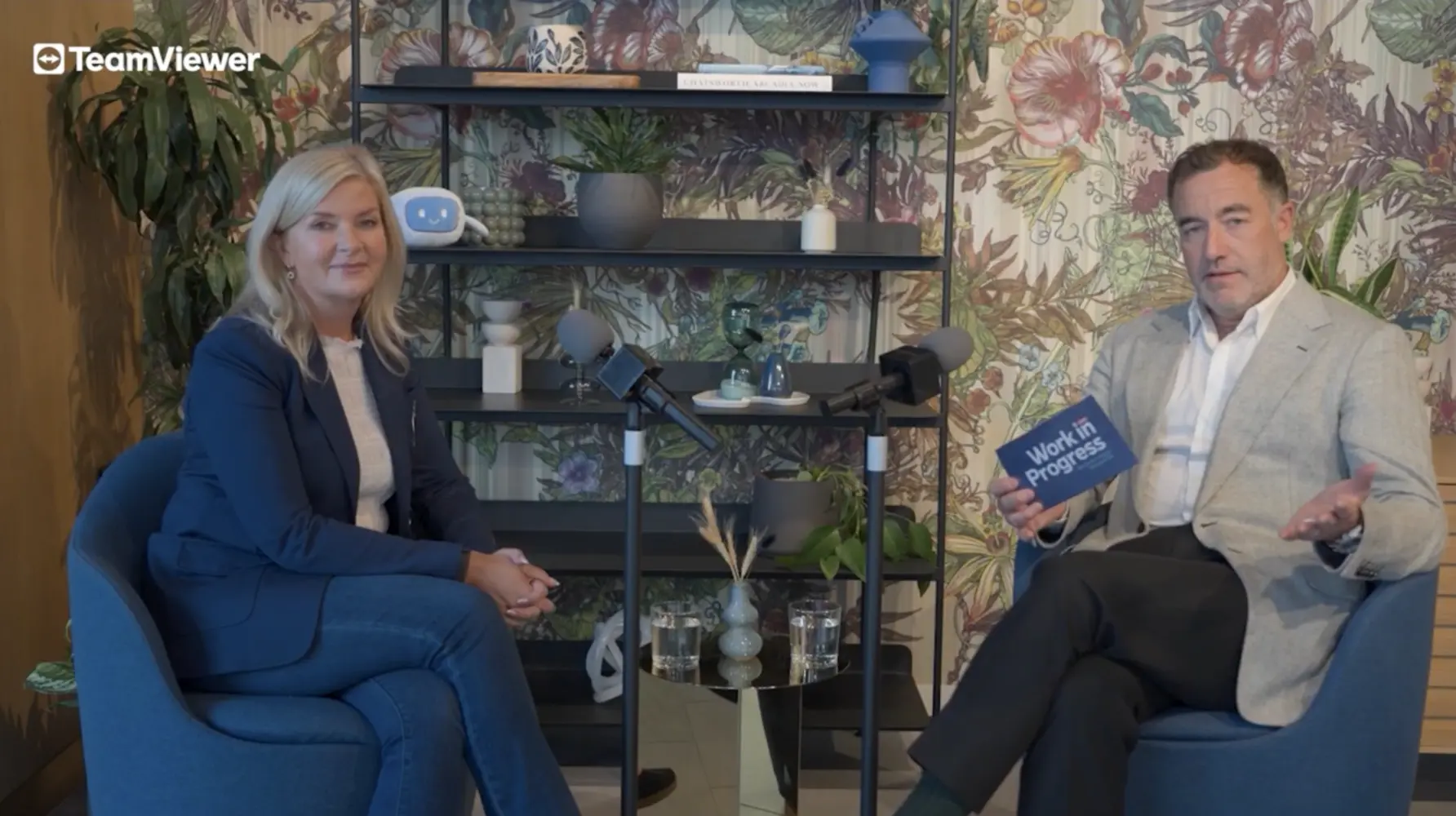
Artificial intelligence, Digital employee experienceAs AI and automation reshape the digital workplace, organizations face a growing challenge: how to embrace new technologies while building the digital maturity needed to support them at scale. In the latest episode of Work in Progress, TeamViewer Chief Revenue Officer Mark Banfield sat down with Patrycja Sobera, Senior Vice President and General Manager of Digital Workplace Solutions at Unisys, to discuss what businesses should be preparing for by 2030, the evolving role of digital employee experience (DEX), and the path toward autonomous IT.
Key takeaways from the conversation
- AI adoption is accelerating, but digital maturity has room to catch up. Citing Gartner research, Sobera noted that most organizations are at just 2.6 out of five in overall digital workplace maturity. While businesses race to adopt AI, many are still building the digital core, data governance and foundational capabilities needed to scale it effectively.
- AI fluency brings new opportunities and challenges. As employees become more comfortable with AI, they're increasingly developing their own tools and solutions. Sobera shared an example of a Unisys service desk analyst who independently developed a sentiment analysis tool. While this creates opportunities for innovation, it also reinforces the importance of security, governance and employee training.
- The true value of DEX goes beyond IT efficiency. Sobera highlighted a joint manufacturing customer where proactive remediation and automation helped eliminate approximately 50,000 hours of digital friction in one year, allowing R&D engineers to spend more time developing new products. One-click automations also helped reduce certain service desk fixes from 12–15 minutes to around five. As Banfield emphasized, the real impact of DEX is ultimately on business performance.
- A mature digital workplace is about more than technology. "I don't believe it's ever about technology," Sobera said, emphasizing the importance of people, culture, leadership and organizational change management. Successful transformation requires organizations to focus on outcomes, employee engagement and adoption rather than simply introducing new tools.
- Experience level agreements (XLAs) don't have to be complicated. Sobera challenged the perception that XLAs are difficult to implement. Organizations can start with simple experience indicators, such as those associated with employee onboarding, and use the resulting data to drive improvements. The goal is to "drive what matters, the experience, rather than just uptime."
- Autonomous IT is already delivering results. Unisys has used agentic AI to autonomously schedule more than two million field service appointments, with 70% requiring no human intervention. Looking ahead, Sobera highlighted the opportunity for solutions like TeamViewer ONE and Tia, the TeamViewer Intelligent Agent, to move beyond reactive support and proactive remediation toward autonomous endpoint resolution that prevents digital friction from occurring in the first place.
The conversation underscored that the journey toward autonomous IT is about more than adopting AI. Organizations must also strengthen their digital foundations and rethink how they measure and deliver employee experience to realize its full potential.