Choose the best hardware for the job —our Frontline solutions are ready
Enhance workforce mobility with smart glasses, wearable scanners, or mobile devices tailored to your use case.

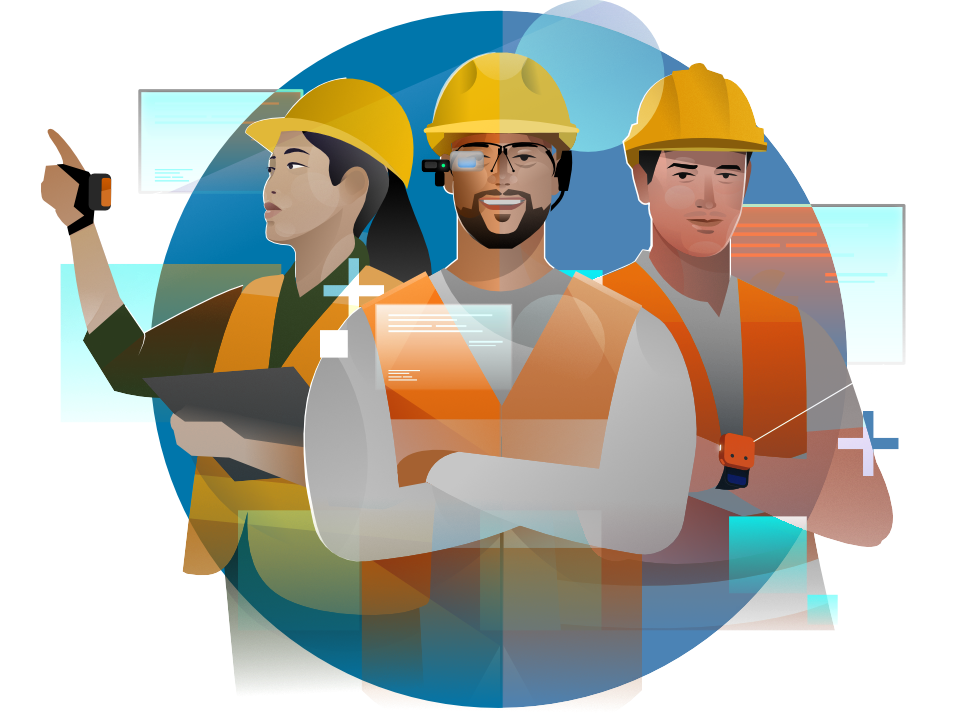
Illustration showing workers checking turbines

Why wearables?

Wearables help teams work faster, safer, and more efficiently in demanding industrial environments. Smart glasses, wearable scanners, and mobile computers free workers’ hands so they can stay focused on the task. With the right hardware, you can increase workforce productivity and maximize your ROI.

Wearables support a wide range of use cases across logistics, manufacturing, inspection, remote assistance, training, and more. 

Smart glasses for a hands-free experience

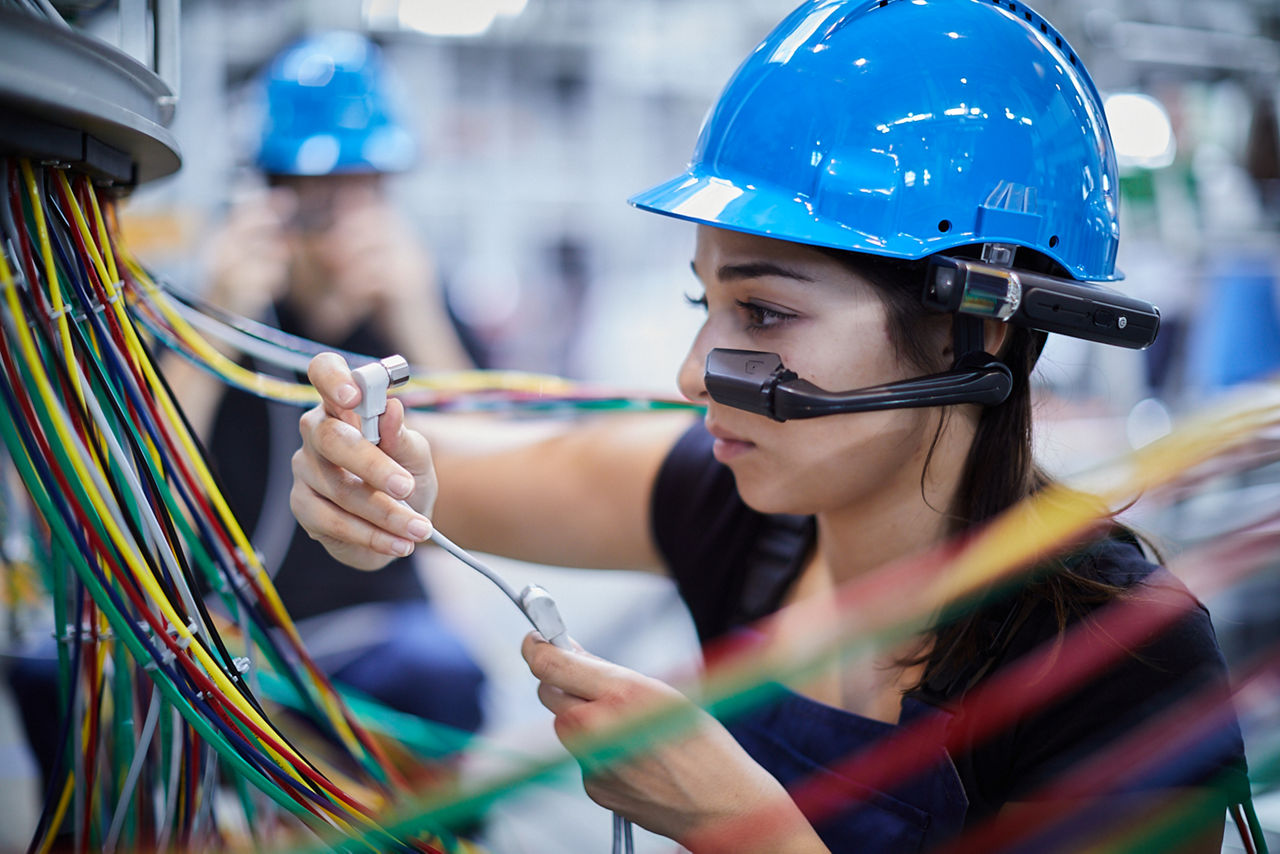
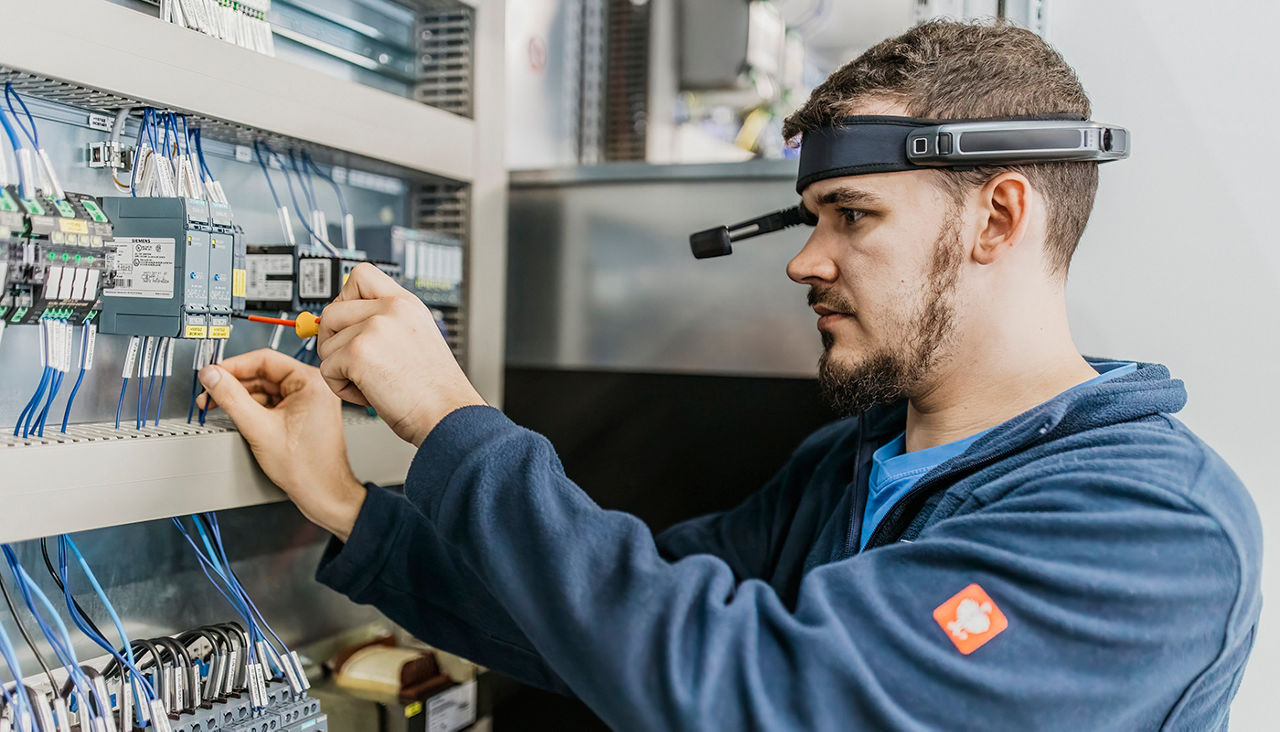
Smart glasses deliver real-time information through an augmented reality (AR) overlay or as information displayed in the line of sight, helping workers stay mobile, focused, and productive. They combine a display, camera, microphone, and speaker, with optional sensors such as gyroscopes, accelerometers, or GPS to support more efficient workflows. 

Smart glasses can collect information from sensors and retrieve data from your management or execution systems, facilitating faster and smarter operations.

Smart glasses 101: Working hands-free with AR

Read our guide to choose the right smart glasses for your use case.

TeamViewer Frontline supported smart glasses

  • RealWear Arc 3


    • Vision: Monocular
    • Supported mode: 2D
    • Display: see-through
    • Voice control: available
    • Battery life: up to 8 hours
    • Weight: 179 g
  • RealWear Navigator 520


    • Vision: Monocular
    • Supported mode: 2D
    • Display: non-see-through
    • Voice control: available
    • Battery life: up to 8 hours
    • Weight: 274 g
  • RealWear Navigator Z1


    • Vision: Monocular
    • Supported mode: 2D
    • Display: non-see-through
    • Voice control: available
    • Battery life: 8–10 hours
    • Weight: 383 g
    • Special feature: Intrinsically safe
  • Vuzix M400


    • Vision: Monocular 
    • Supported mode: 2D 
    • Display: non-see-through
    • Voice control: available
    • Battery life: 2–12 hours based on external battery choice 
    • Weight: 180 g
  • Vuzix M4000


    • Vision: Monocular
    • Supported mode: 2D
    • Display: see-through
    • Voice control: available
    • Battery life: 2–12 hours (based on external battery choice)
    • Weight: 220 g

Book a demo and discover how AR can boost your business

Read our guide to choose the right smart glasses for your use case.

Instant confirmation with smart scanners

Smart scanners verify part numbers and quantities when a barcode or a QR code are in place. They come in handheld, ring, and glove-attached forms and connect to smart glasses via Bluetooth. Ring and glove scanners allow workers to use both hands while scanning and carrying heavy items.

  • Zebra RS5100


    • Ring scanner
    • Weight: 70 g
  • Zebra Cordless Ring Scanner (6100)


    • Ring scanner
    • Weight: 76 g
  • Zebra Corded Ring Scanner (5000)


    • Ring scanner
    • Weight: 76-112 g depending on the version
  • Hyco W27


    • Ring scanner
    • Weight: 40 g
  • Hyco W28


    • Ring scanner
    • Weight: 40 g
  • ProGlove Mark 2


    • Wrist scanner
    • Weight: 40 g
  • ProGlove Mark 3


    • Wrist scanner
    • Weight: 40 g

Mobile computers

Industrial mobile computers can display information and usually integrate scanning capabilities into one device. As there are options to mount these devices, e.g. on a trolley or wear them on the body, employees’ hands stay free, and they can focus on the task at hand.

  • Zebra TC57


    • Mobile computer
    • Weight: 249 g
  • Zebra TC72


    • Mobile computer
    • Weight: 376 g
  • Zebra WS50

     
    • Mobile computer
    • Weight: 147 g

Frequently asked questions

Wearable AR solutions can help industries that require technical expertise or a lot of information during operational processes. They can also improve customer service. This is achieved by connecting with customers and resolving technical issues faster.

Smart glasses can be a helpful tool to digitalize processes that rely on frontline workers. They can help to increase worker safety, productivity, and training. By using these glasses, workers can complete their tasks more efficiently, which reduces the amount of downtime. This technology also allows for faster resolution times, which can minimize revenue loss. Additionally, it reduces the amount of travel needed for experts to assist. Overall, the use of smart glasses can be a beneficial solution to improve operational workflows.

AR smart glasses are head-worn mobile computers. They are designed to deliver the user an augmented (or mixed) reality experience. They have a display to overlay digital information in the real world. Additionally, they feature a camera to document processes, a microphone for voice inputs, and a speaker for audio output. Depending on the device, additional sensors may be tailored to specific needs.

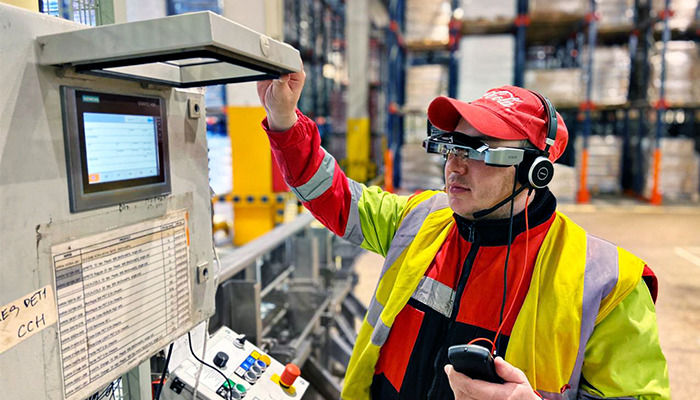
The smart glasses we support are for industrial use and are highly durable. It's worth noting that different environments have different requirements. So, there are specific devices designed for particular purposes. For instance, some smart glasses can be mounted to a helmet and are waterproof or shockproof.

Our hardware devices can be combined with prescription glasses. TeamViewer Frontline partners with Fielmann, a market leader for European optical wear.

Many smart glasses are voice-controlled, although some devices have buttons, so the employees can choose what they want to use. Frontline supports both options to ensure our solutions work in a loud environment.

With Frontline, you can design workflows and deliver tailored information to the devices. We have multiple authoring tools, and no coding knowledge is required to operate these tools.
Do you have any questions? Get in touch.

Not sure which smart glasses are the right ones for your use case? We are here to help.