
Knowledge Base
3D Model Manipulation
Last Modified: Apr 16, 2026
3D models can be quite large and running them on devices with limited capabilities can be challenging. Spatial Editor offers various display options and an optimization feature to address this issue without compromising any functionalities.
Display options
After loading the model, click on Display to see the following options:
- Render Model as Wires: When enabled, the model switches to wireframe mode, displaying only the edges of its faces. This reduces the model's complexity.
- Enable Back Face Culling: When enabled, the back faces of mesh objects are excluded from the visualization. When the model is correctly constructed, it will maintain its original appearance while improving performance. However, if the model's faces were inaccurately modeled or inverted, it may lead to gaps or holes in the mesh.
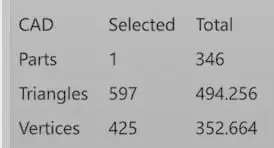
- Show CAD Statistics: When activated, the number of parts and triangles for the selected parts will be displayed in the lower-left corner. This helps the user make decisions according to the computing power of the device that is intended to be used for the particular workflow.
Transformation gizmos
The transformation gizmos allow mouse-controlled translation and rotation of parts and items (e.g., steps, components, and markers) inside a 3D scene. It is triggered when one of these elements is selected.
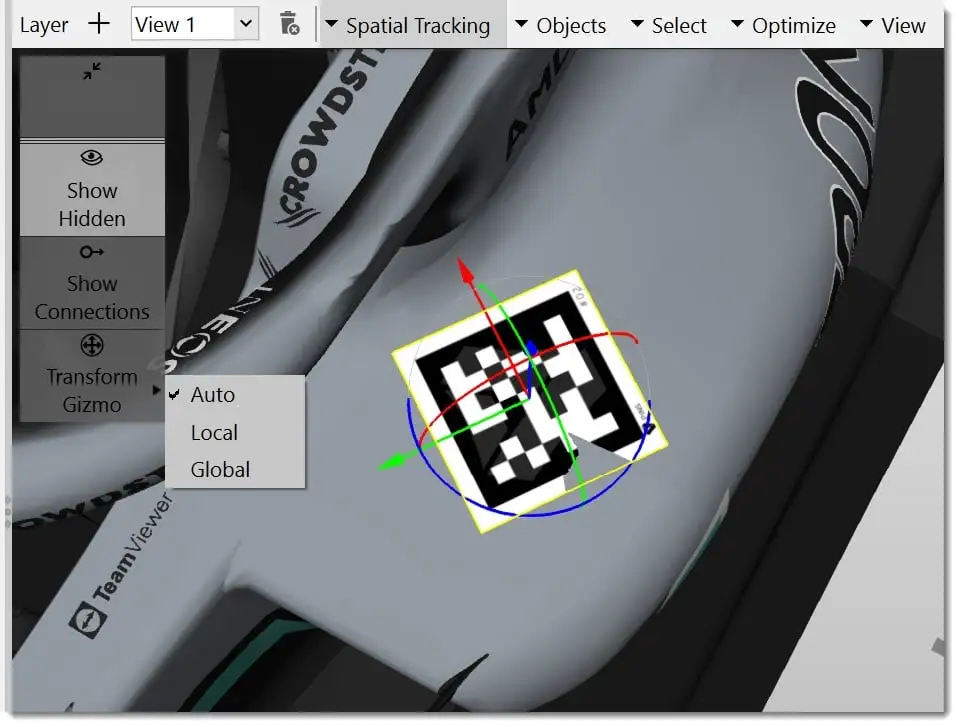
To change the position of an item or part along the selected axis, drag one of the colored arrows with the mouse. To rotate the item or part around one axis, drag the colored circle.
Transformation space
After clicking on the Full Screen button and choosing Transform Gizmo, it is possible to switch the gizmo type:
- Auto: Shows a local gizmo if only one item or part is selected and a global gizmo if more than one is selected.
- Local: The gizmo uses the axes of the selected item or part. If more than one item or part is selected, the gizmo will show the axes of the first selected item.
- Global: The gizmo uses the axes of the whole scene.
Note: Items can only be selected together with other items, and parts can only be selected together with other parts.
The scene's axes are shown in the bottom right corner of the 3D scene.
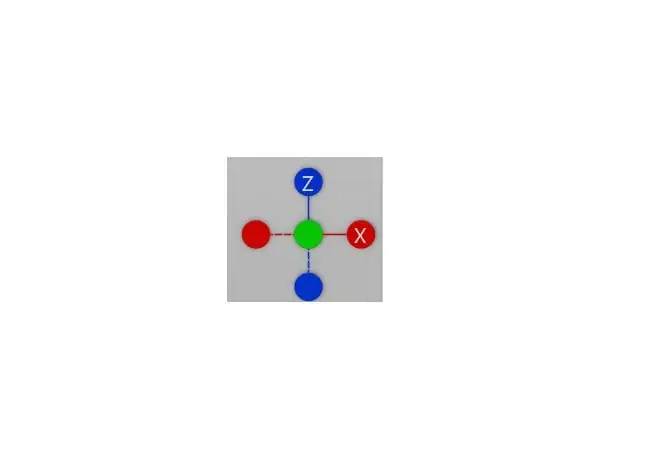
If the transformation axes (red, green, and blue) when selecting objects in the 3D scene are rotated in an unexpected orientation, try to toggle the transformation space to Local or Global in the shortcut menu on the left side of the 3D scene view.
Steps
Steps are the modular elements in a workflow. They represent actions, states, or other constructional workflow elements, such as components, markers, scene states, or condition checks.
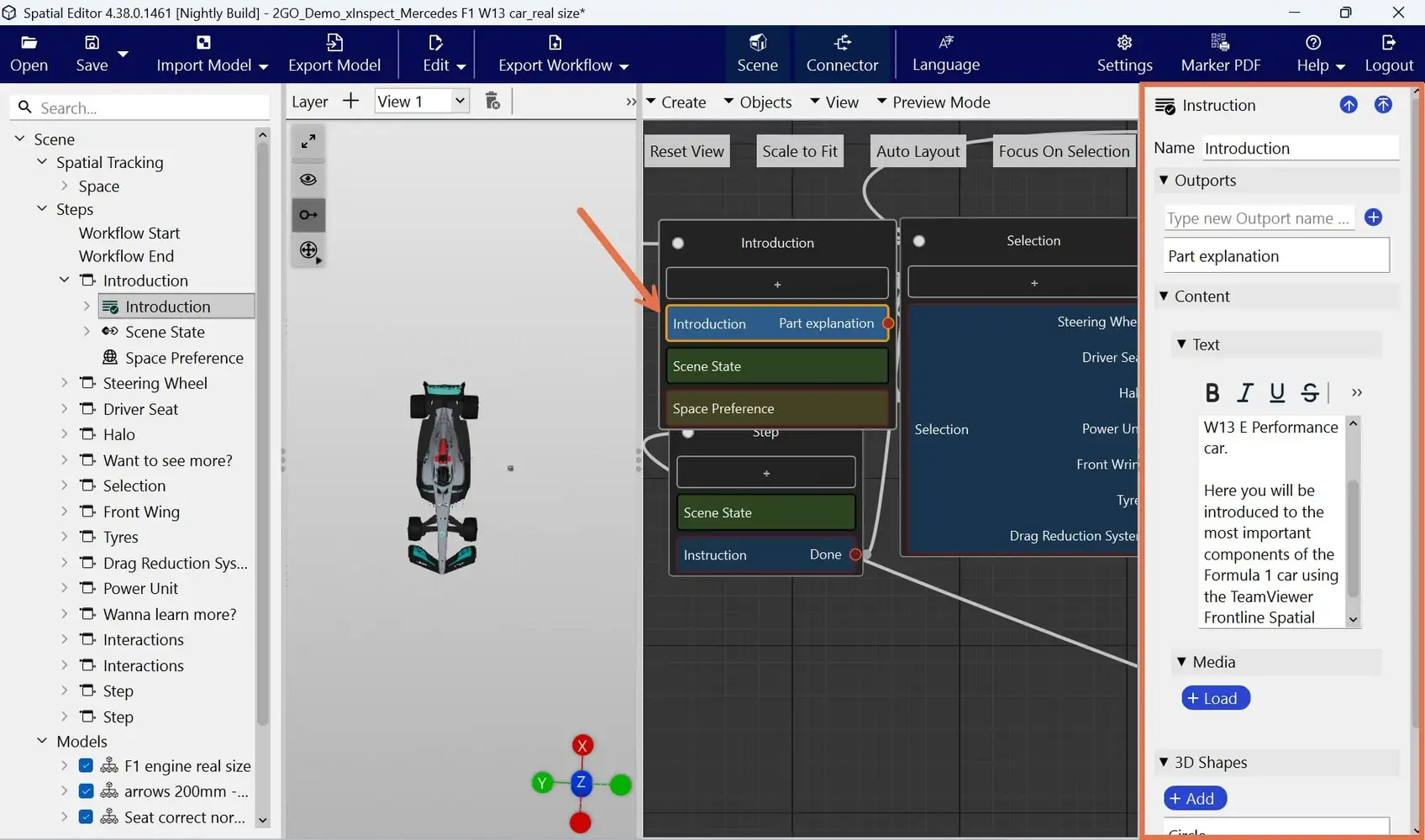
Steps are shown with models in Scene Explorer. When you select a step in the Scene Explorer, you can adjust its settings.
- Search bar: Allows users to search for steps and models
- Scene: Comprises all of the steps and models in a project
- Steps: Refers to workflow elements that can be added by the user
- Models: Refers to 3D models imported to the project
Depending on how the imported model was created, the list might be organized in assemblies. This is particularly useful for selecting multiple parts at once.
Note: All panes in the Workspace can be resized by adjusting the frames around them.
Step settings
You can select all the user-created items of a scene by clicking on Steps (displayed right under Scene).
By clicking each one separately, the settings panel for that step appears on the right of the scene. These settings are the same as the ones available when the step is added to the scene:
Apart from these, there are 2 other options that can be defined within a Step. These are:
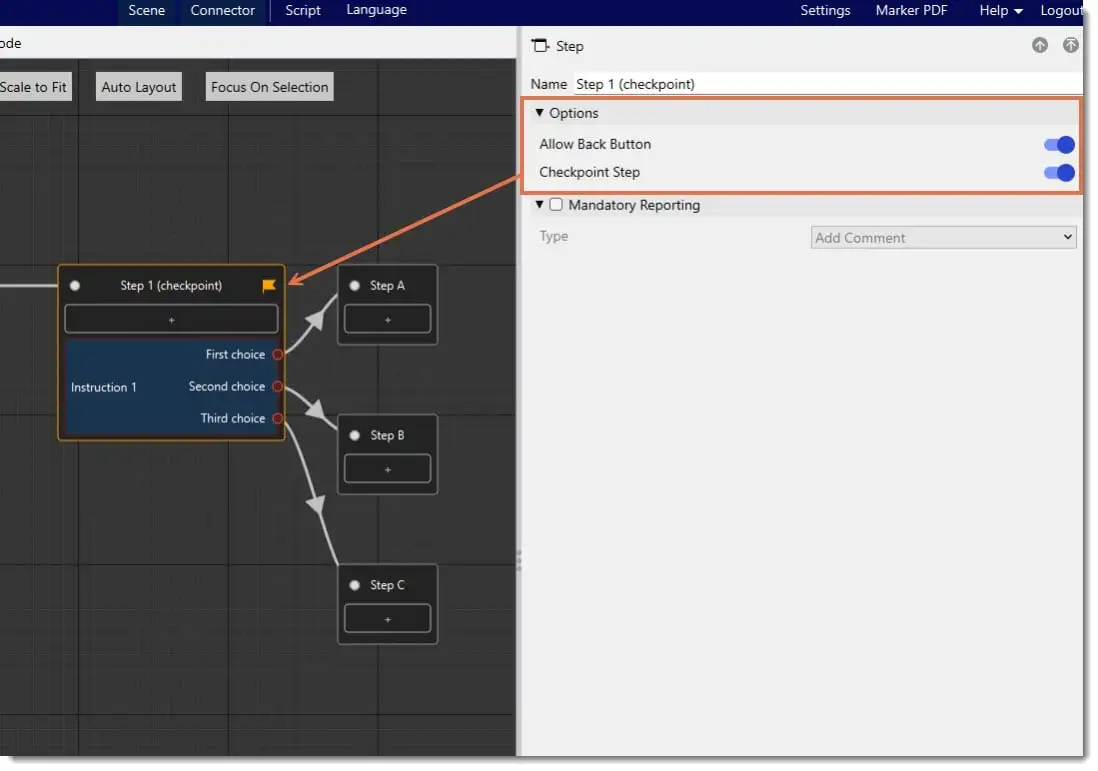
- Allow Back Button: Enables the user to return to the previous step from the current step.
- Checkpoint Step: Allows the Workplace user to return to a previously visited step during a task run. Here are more details about Checkpoint:
Checkpoints
Checkpoints make steps repeatable and give users the flexibility to return to a specific step in the workflow at any time. When a Checkpoint is added to a step, that step becomes revisitable, even if the user has already passed it.
Checkpoints will appear with a yellow Flag icon next to the Step name.
Checkpoints can be used on steps that contain any component type. For more information on how to add components and configure them, please visit our Adding content to your workflows page.
Important notes on Checkpoints:
- A step only becomes a valid Checkpoint after the user has visited it.
- From a current step, the user can return to any previously visited step when the Checkpoint option is enabled.
- When disabled within a Step, that Step cannot be revisited.
- When returned, the workflow state is restored to the moment that the Checkpoint had reached.
- Checkpoints have a linear history: if a user goes back to an earlier Checkpoint, any Checkpoints visited after that step are discarded.
- Only Checkpoints in the current active path remain valid.
- Checkpoints do not allow users to jump to all previously visited checkpoints across the entire task run.
- Checkpoints do not support revisiting steps that are no longer part of the current active path.